
Content verified by


What is heart valve repair and replacement?
Our heart specialists may recommend a heart valve repair or replacement procedure if you or your child are experiencing symptoms caused by heart valve disease, if the valve disease is severe, or if the faulty valve may cause serious and life-threatening complications like heart failure and abnormal heart rhythms.
We provide both minimally invasive and surgical heart valve repair and replacement procedures, depending on individual needs. This includes balloon valvuloplasty, percutaneous valve replacement, and surgical valve repair and replacement. For adults, we also offer keyhole heart valve surgery for quicker recovery than open-heart surgery.
Our world-leading heart specialists at Evelina London Children’s, Harefield and Royal Brompton hospitals are internationally renowned for their expertise and pioneering care in treating adults and children with heart valve disease.
Experts in heart valve disease
Our consultants offer:
- short-notice appointments, in as little as 24 hours
- fast and accurate diagnosis of heart valve disease
- the most effective and innovative treatments

What is heart valve disease?
The heart valves
The heart has 4 valves, which all work to ensure blood flows correctly through the heart in one direction. This includes the:
- aortic valve: the valve on the left side of the heart between the left ventricle and the aorta, the main artery that carries oxygen-rich blood to the body
- mitral valve: the inlet valve is on the left side of the heart between the left atrium and the left ventricle, which allows blood into the left side of the heart
- pulmonary valve: the valve on the right side of the heart between the right ventricle and the pulmonary artery, the blood vessel that carries blood to the lungs to collect and carry oxygen
- tricuspid valve: the inlet valve on the right side of the heart between the right atrium and the right ventricle
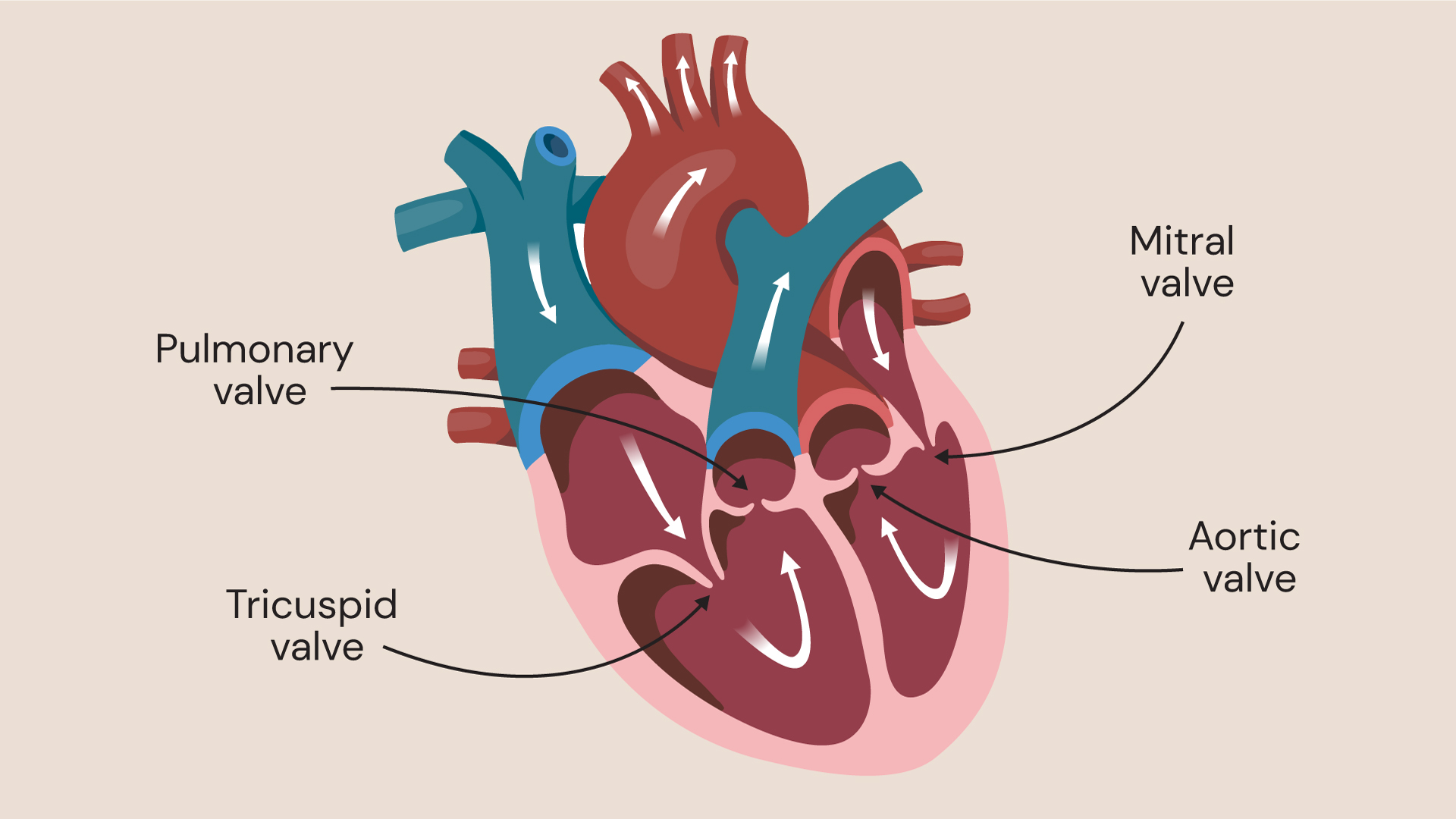
The 4 valves of the heart ensure blood flows in one direction.
Heart valve disease in adults
The heart valves open to allow blood to flow through, then close to ensure it flows in the correct direction and doesn’t leak backwards. Heart valve disease occurs when a valve can’t open and close properly. It includes:
- valve stenosis: the valve becomes narrowed and can’t fully open, which restricts blood flow
- valve regurgitation: The valve cannot close tightly, allowing blood to leak backwards
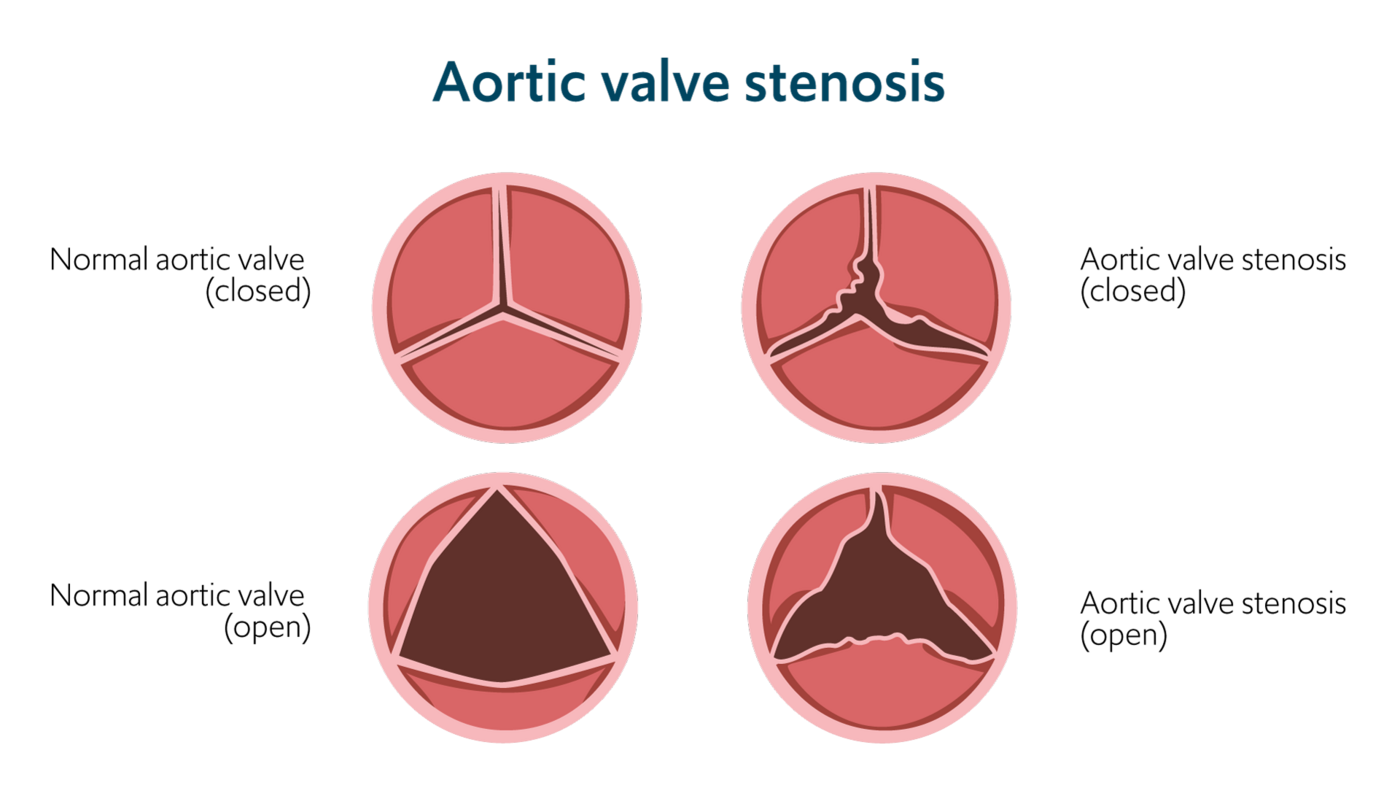
Aortic valve stenosis causes the valve to become narrowed, reducing blood flow through the heart.
Heart valve disease in children
Most cases of heart valve disease occur in adults, and the risk increases with age – this is known as ‘acquired’ heart valve disease. However, children can also be born with problems affecting their heart valves due to congenital heart disease – birth defects that affect the heart’s structure and function.
Congenital heart valve problems include:
- atresia of any valve: where the valve hasn’t formed properly and a solid sheet of tissue blocks the flow of blood between chambers. It typically affects the pulmonary valve, but can also affect the tricuspid valve
- bicuspid aortic valve: where a baby is born with 2 aortic heart valve leaflets (sometimes called cusps) instead of 3. This can narrow the opening for blood to pass through, making it harder for the heart to pump blood around the body. These bicuspid valves can also become leaky. Eventually the heart gets bigger and the heart muscle gets thicker
- Ebstein anomaly: this is an abnormality of the tricuspid valve, which is not its usual shape and is very leaky
- mitral valve disease: this can include narrowed or stiff valve leaflets, or also floppy and stretched leaflets causing it to bulge backward like a parachute. This can lead to blood leaking backwards (regurgitation)
- pulmonary valve stenosis: where the opening of the pulmonary valve is narrowed, slowing the flow of blood
Who needs heart valve repair or replacement?
Adults with heart valve disease
Many adults live with mild heart valve disease with no symptoms or problems. However, heart valve disease can progress to cause unpleasant symptoms, and it can lead to serious complications, including heart failure and heart rhythm abnormalities.
Treatment to repair or replace a faulty valve can reduce symptoms such as fatigue, breathlessness and chest pain. Treatment can also protect your heart health, prevent dangerous complications of heart valve disease and boost your longevity and quality of life.
Our consultants may recommend heart valve repair or replacement if your symptoms affect your quality of life or if the faulty valve is at risk of damaging your heart.
Children with heart valve disease
Our paediatric heart specialists will recommend treatment depending on the severity of your child’s heart valve disease.
Mild heart valve disease with no symptoms may not need treatment. Instead, regular check-ups will be scheduled to monitor your child’s heart condition. Medication may also be given to support the function of their heart.
Moderate or severe heart valve disease may lead to symptoms such as an irregular heartbeat, as well as slower growth and development. In very severe cases, the condition can lead to heart failure. Our consultants may recommend a procedure to repair or replace your child’s diseased heart valve to prevent complications.
If you’d like to find out whether you or your child could benefit from a heart valve repair or replacement, our consultants are here to help – contact our team to arrange an appointment.
Heart valve repair
Heart valve repair is a treatment to improve the function of a faulty valve. The types of valve repair include:
Balloon valvuloplasty is a minimally invasive procedure used to open up narrowed and stenotic valves. Our specialists introduce a fine, flexible tube into a blood vessel at the top of the leg. They pass it to the heart using X-ray guidance, before inflating the balloon to open up the valve and improve blood flow.
In babies and children, balloon valvuloplasty is often used to delay heart valve surgery until your child is older – perhaps as an adult. The procedure doesn’t make their heart valve normal and is not always successful, but in most cases can reduce the severity of a narrowed heart valve. The procedure may also be repeated as your child gets older to further delay open-heart surgery. In some cases, it can result in a leaky heart valve which may mean your child requires open-heart surgery.
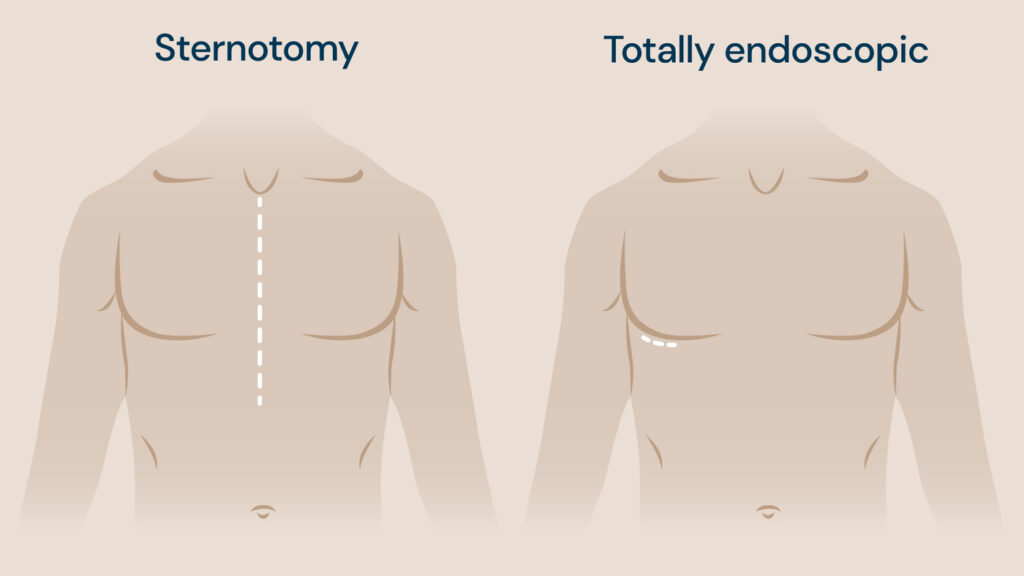
This treatment involves open-heart surgery to repair a faulty valve while under general anaesthetic (you will be asleep and comfortable throughout). Our surgeons make an incision along the breastbone to access your heart, and a bypass machine is used to take over the work of your heart and lungs.
The surgical repair will depend on your heart valve disease. Our surgeons can partially stitch the valve, helping it close more effectively. They can also patch any holes, remove excess tissue and separate valve flaps that have stuck together.
In adults, surgical heart valve repair is typically used to treat severe and symptomatic mitral regurgitation and mitral prolapse. Our consultants also offer minimally invasive keyhole heart valve surgery (see below).
In children, open-heart surgery may be recommended for more complex cases of heart valve repair where a minimally invasive approach is not possible or will be a less effective treatment.
Percutaneous heart valve repair is a minimally invasive catheter-based procedure to repair a faulty valve in adults. It is typically used to treat a floppy and leaky mitral valve.
Our specialists make a small incision over a blood vessel in your groin, neck or shoulder. They introduce a fine flexible tube, called a catheter, into the artery. They insert a clip, called the MitraClip, into the catheter and pass it into the heart using X-ray guidance. Our consultants attach the clip to the mitral valve to help it close properly and prevent it leaking.
Heart valve replacement
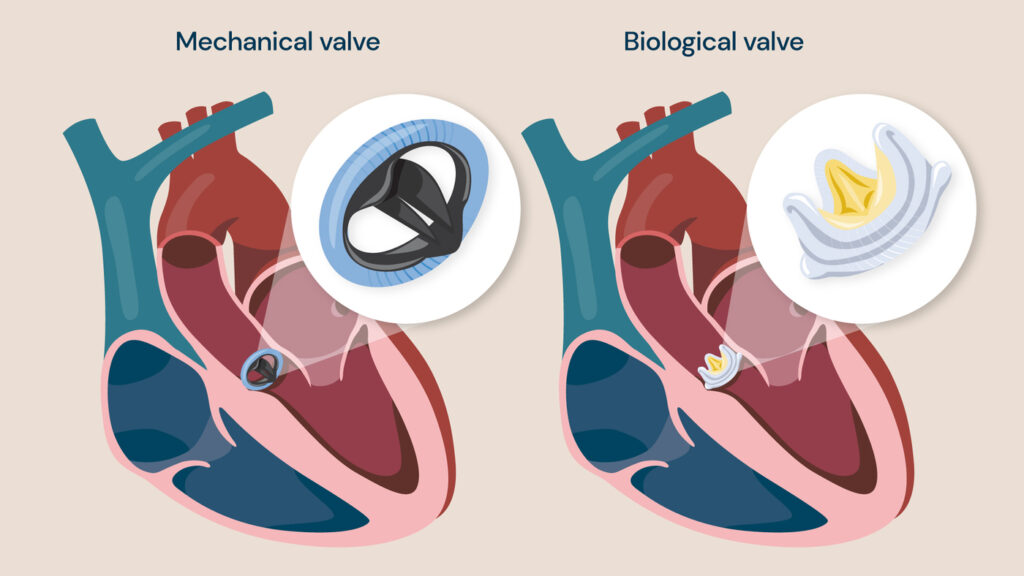
Heart valve replacement is surgery to replace the faulty valve. In most procedures, our heart surgeons remove the diseased valve and replace it with an artificial valve, which can be either a mechanical or tissue valve.
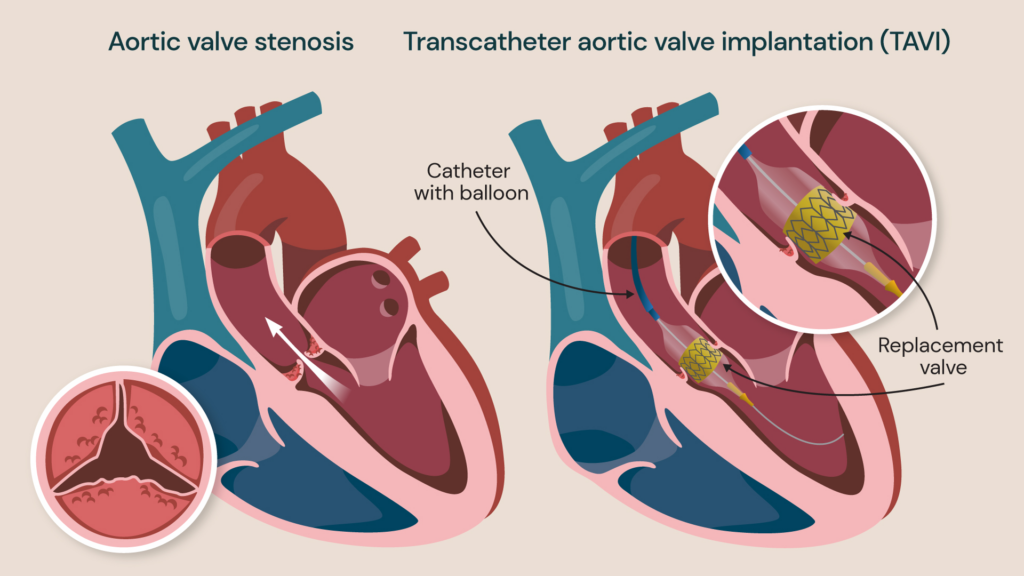
However, for adults, an innovative minimally invasive procedure called TAVI is also available in which our surgeons and cardiologists insert a new prosthetic valve inside your existing aortic valve via a minimally invasive catheter-based procedure.
Open-heart surgery can be used in both adults and children to replace a faulty valve with a synthetic or animal tissue prosthetic device. Our heart surgeons will operate on you or your child while under general anaesthetic.
Our surgeons make an incision along the breastbone to access the heart. During surgery, a bypass machine will take over the work of the heart and lungs. Our surgeons will remove the damaged or diseased valve and stitch a new prosthetic valve in place.
Open-heart valve replacement surgery is recommended when the heart valve is severely diseased and where other treatment options will not be effective.
TAVI is a minimally invasive procedure for adults in which our heart specialists insert a new valve into your heart without opening the chest.
It is most frequently used to treat aortic stenosis in people who are too frail or unwell for an invasive operation. In TAVI, our heart specialists implant a biological valve within your existing valve. The prosthetic valve flattens the old one and takes over its function.
Another option for aortic valve replacement in children and young adults is the Ross procedure. This operation swaps one of the patient’s own healthy valves (their pulmonary valve) for their damaged aortic valve. This gives the patient their own living valve as their new aortic valve, and so is particularly valuable in children of all ages, as it allows the valve to grow with them.
Our surgeons have a very broad experience with the Ross procedure across all age groups.
Keyhole heart surgery, also called totally endoscopic surgery, to repair or replace a heart valve is available at our hospitals for adults.
It is commonly performed for mitral valve replacement. Although you will still have a general anaesthetic and a heart-lung bypass machine to take over the work of your heart and lungs, minimally invasive surgery typically results in less pain, shorter hospital stays and quicker recoveries than traditional open surgery.
Our cardiothoracic surgeons make several small incisions in the chest wall, between your ribs. They insert a tiny camera through one of the incisions, which relays pictures to a monitor. Our surgeons repair the valve using fine instruments.
If you would like to speak to one of our world-leading heart specialists about the different types of heart valve repair and replacement procedures we provide, get in touch with our team to arrange an appointment.
Benefits of heart valve repair or replacement
The main benefit of heart valve repair or replacement in both children and adults is healthier heart function and reduced symptoms associated with heart valve disease, such as shortness of breath and fatigue. These procedures can also prevent complications such as heart failure and improve your overall quality of life.
Each type of procedure and heart valve has its own benefits, and our consultants will describe these in detail to help you make an informed decision on your care, or that of your child.
Risks of heart valve repair or replacement
As with any operation or cardiac procedure, there is a degree of risk in treating valvular heart disease with a valve repair or replacement.
All surgery requiring a heart-lung machine carries a small risk of stroke, kidney disease, bleeding and sternal wound infection, but our team do everything they can to minimise these risks.
Adult patients may also experience irregular heart rhythms after surgery, most commonly atrial fibrillation – a type of heart rhythm problem in which the heart beats quickly and irregularly. It is very effectively treated with medications.
If you would like to speak to one of our heart specialists about the benefits and risks of heart valve repair or replacement for yourself or your child, please contact our team to arrange an appointment.
Reviewed regularly to reflect clinical best practice
Last reviewed: 10 August 2026
Locations
Our cardiology specialists provide heart valve repair and replacement at the following locations:
Discover our heart specialists
Our world-leading heart specialists can perform all types of heart valve repair and replacement procedures in adults and children.