
Content verified by

What is the Ross procedure?
The Ross procedure is a specialist heart surgery for adults and children with diagnosed aortic valve disease. The Ross procedure involves replacing the non-functioning aortic valve in your heart with your pulmonary valve and implanting a healthy donor valve in place of your pulmonary valve.
Your aortic valve releases oxygen-rich blood from your heart to your body and prevents blood from flowing back into your heart between each beat. However, aortic valve diseases, such as stenosis (narrowing of the aortic valve) and regurgitation (blood flowing back towards the heart), change how the valve functions and can lead to complications, including heart failure.
We use the Ross procedure in severe cases of aortic valve disease where the valve is no longer functioning and must be replaced. It is of particular benefit for patients younger than 60. Our cardiac surgery consultants at Evelina London, Harefield and Royal Brompton hospitals are world-leading specialists in the Ross procedure.
Experts in the Ross procedure
Our consultants offer:
- short-notice appointments, in as little as 24 hours
- fast and accurate diagnosis of aortic valve disease
- internationally renowned expertise in the Ross procedure

Who is suitable for the Ross procedure?
The Ross procedure may be suitable if you:
- are under 60 years old (experts recommend it for younger patients)
- have congenital aortic stenosis
- have other types of aortic valve disease
However, this procedure is not suitable for everyone. Certain medical conditions can mean you’re not a good candidate.
These conditions can include:
- autoimmune diseases, such as lupus and rheumatoid arthritis
- connective tissue disorders
- coronary artery disease in 3 or more arteries
- pulmonary valve disease
If you would like to speak to one of our consultant cardiac surgeons about the Ross procedure for yourself or your child, please contact our team to arrange an appointment.
Types of Ross procedure
We perform 2 types of Ross procedures at our hospitals – the standard Ross procedure and the Ross-PEARS procedure.
Ross procedure
In the standard Ross procedure, your diseased aortic valve will be replaced with your pulmonary valve and a donor valve is used to replace your pulmonary valve. This page focuses on the standard Ross procedure.
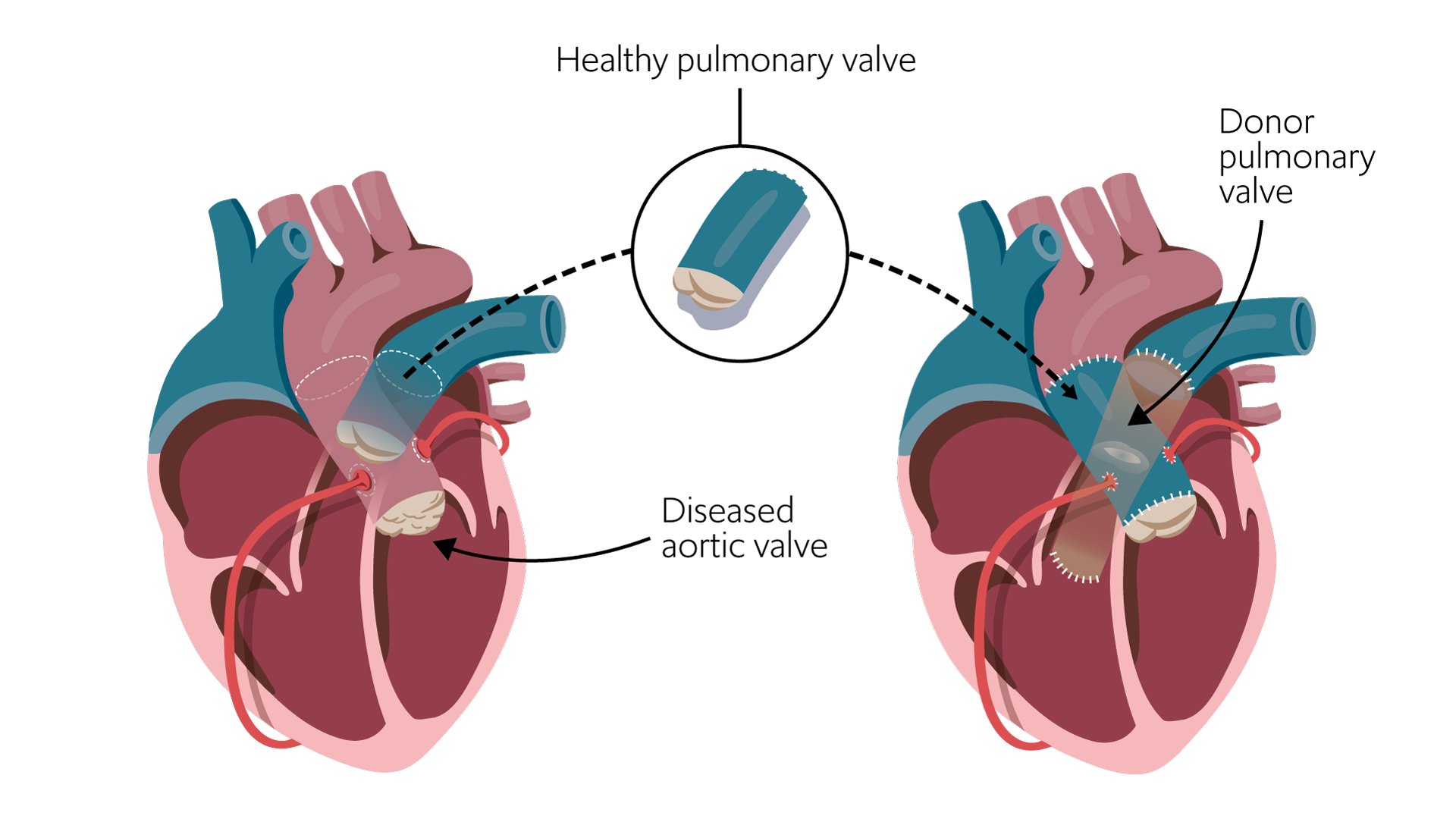
The Ross procedure is a type of aortic valve replacement in which the diseased aortic valve is removed and replaced with the patient’s own healthy pulmonary valve, known as a pulmonary valve autograft. A donor pulmonary valve, preserved by cryogenic freezing, is then used to replace the patient’s original pulmonary valve.
Ross-PEARS procedure
The PEARS (Personalised External Aortic Root Support) procedure is a type of aortic root support developed initially to help patients with the connective tissue disorder Marfan syndrome.
The Ross-PEARS procedure combines the Ross procedure with the PEARS procedure, which uses a synthetic ExoVasc polymer mesh sleeve to support the aorta and aortic valve, helping to prevent it from expanding over time.
We use advanced medical imaging and 3D printing techniques to create a personalised model of your aorta. This model helps us form the textile ExoVasc implant that fits your aorta perfectly.
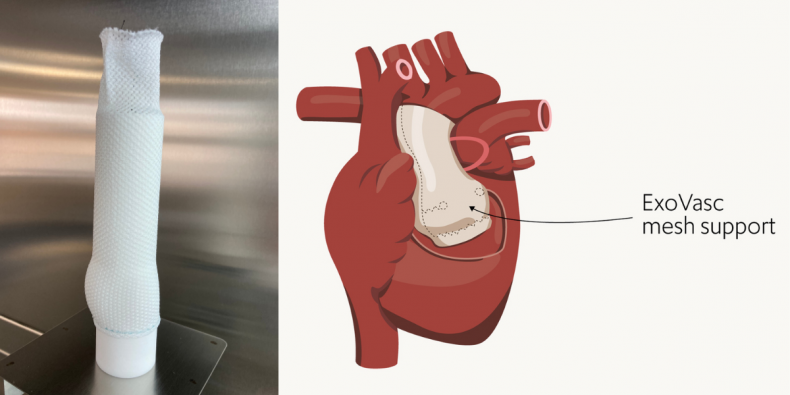
The PEARS procedure: (Left) the ExoVasc mesh support, custom-made using an anatomically accurate 3D model of the patient’s aorta; (Right) the ExoVasc mesh implanted around the aortic root to reinforce it.
How the Ross procedure is performed
We perform the Ross procedure under general anaesthetic, so you’ll be asleep throughout.
We’ll also place you on a heart-lung bypass machine, which makes it safe for our surgeons to temporarily stop your heart from beating. The bypass machine will function as your heart and lungs throughout the procedure.
Next, our surgeons will make an incision down your chest and separate your breastbone to access your heart. They’ll check your pulmonary valve to make sure it’s healthy enough to replace your aortic valve. If so, they will remove and replace your damaged aortic valve with your pulmonary valve. The healthy donor valve then replaces your pulmonary valve.
Once the new valves are in place, we will restart your heart and slowly take you off the heart-lung bypass machine. Our surgeons will secure and close your breastbone with wires and stitch the incision.
The entire procedure can take between 8 and 12 hours to complete. It is a specialist, open-heart surgery, so it requires more time than less invasive, minor surgeries.
Our paediatric (congenital) cardiac surgeons perform the Ross procedure for children at Evelina London Children’s Hospital, while our adult cardiac surgeons perform it at Harefield and Royal Brompton hospitals. Our multidisciplinary team is internationally recognised for its expertise and outcomes in the Ross procedure, giving you confidence that you are in the safest possible hands.
If you would like to speak to one of our consultants about the Ross procedure, get in touch with our team to arrange an appointment.
Recovering from the Ross procedure
After your Ross procedure, we’ll take you to the intensive care unit (ICU). You may need to be on a ventilator to support your breathing at first and we’ll monitor your heart. You’ll remain in the hospital for up to 7 days, and it can take a few weeks to recover.
Once you’re discharged and return home, you will likely experience some side effects of the surgery, such as:
- loss of appetite
- insomnia
- numbness or swelling near your incision
Our surgeons will provide specific aftercare instructions, which will help support your or your child’s recovery. There will usually be some discomfort and there may be a need for pain relief medications like paracetamol or ibuprofen.
If your child is undergoing the Ross procedure, you must watch them while playing because they need to avoid knocks or blows to the chest that could injure their incision. After a few weeks, your child should have recovered enough to return to normal activities, such as school.
As an adult, you should be able to return to work part-time after 2 months on a phased return basis.
Benefits of the Ross procedure
The Ross procedure for aortic valve disease is generally successful and offers many benefits, including:
- enhancing blood flow throughout your body
- no requirement of lifelong blood thinning medication (anticoagulants)
- relatively fast relief from symptoms of aortic valve disease
- the ability to lead an active lifestyle again
- becoming pregnant safely
Risks of the Ross procedure
The possible risks of the Ross procedure include:
- developing an irregular heartbeat (arrhythmia)
- infection
- leaky heart valve
- narrowing of the new aortic valve
- heart attack
- haemorrhage (bleeding from a damaged blood vessel)
All surgical procedures carry potential risks, including the Ross procedure. However, our team does everything possible to minimise them and ensure your or your child’s safety constantly.
If you would like to speak to one of our heart surgeons about the benefits and risks of the Ross procedure, contact our team to arrange an appointment.
Reviewed regularly to reflect clinical best practice
Last reviewed: 27 July 2026
Locations
Explore our dedicated team of cardiac surgeons
Our world-leading heart surgeons are highly skilled in managing and treating aortic valve disease and performing the Ross procedure in both adults and children.