
Content verified by

What is aortic regurgitation?
Aortic regurgitation, also known as aortic insufficiency, is a type of heart valve disease – a condition known to affect around 1.5 million people over the age of 65 in the UK.
Treatment for aortic regurgitation will depend on the severity of your condition. Minor cases may involve medication and monitoring, and more serious instances could call for an aortic valve repair or aortic valve replacement.
At Harefield and Royal Brompton hospitals, our world‑leading heart specialists provide expert diagnosis and treatment for aortic regurgitation.
Experts in aortic regurgitation
Our heart specialists provide:
- minimally invasive treatment options
- short‑notice appointments
- fast, seamless care from diagnosis to treatment

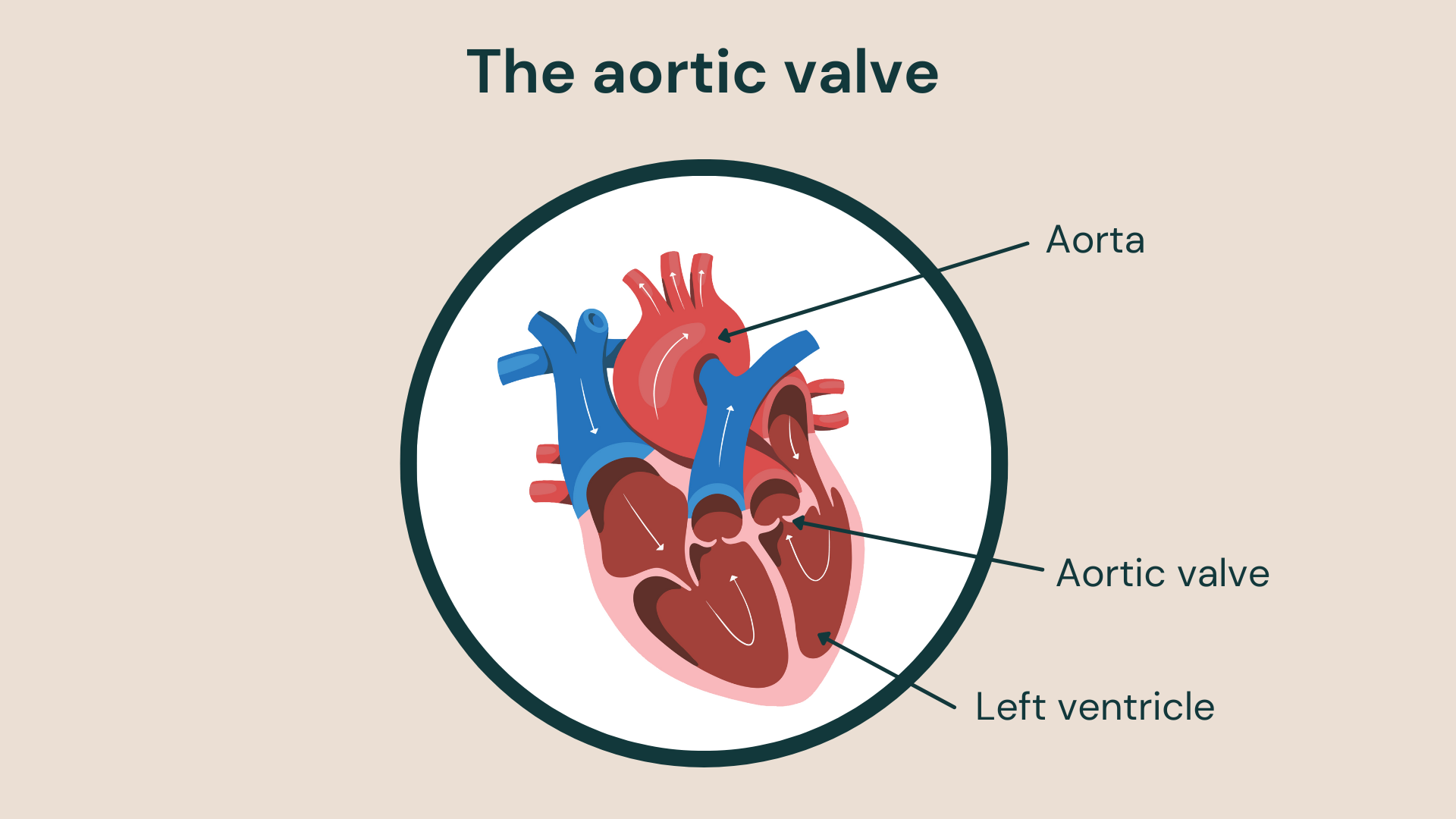
The aortic valve controls the blood flow from the heart to the rest of the body.
How aortic regurgitation affects the heart
The aortic valve controls blood flow from the heart to the rest of the body. During aortic regurgitation, the flaps of the aortic valve don’t close properly, causing blood to leak back into the left ventricle (left lower chamber of the heart) and putting added strain onto the heart.
Over time, aortic regurgitation can lead to your heart becoming weakened and enlarged, due to the extra work the left ventricle has to do to push blood through the leaky aortic valve.
Aortic regurgitation symptoms
Aortic regurgitation usually develops gradually. In fact, you probably won’t experience any aortic regurgitation symptoms for many years, so you may not even realise that you have it.
The condition can be brought on suddenly if due to aortic valve infection.
As regurgitation starts to worsen, you may experience symptoms like:
- fatigue – especially when exercising
- weakness – especially when exercising
- shortness of breath – when exercising or lying down
- arrhythmia – an irregular heart rhythm
- heart palpitations – a fluttering, rapid heartbeat
- chest pain or tightness – which can increase with exercise
- dizziness or fainting – you could feel lightheaded or even lose
- consciousness when exercising
- swollen ankles and feet – due to disturbed blood flow
If you notice any symptoms of aortic regurgitation, it is important to seek medical advice immediately. Early symptoms such as breathlessness, fatigue, or swelling of the ankles and feet can also be linked to other heart conditions like heart failure.
If you are experiencing symptoms of aortic regurgitation, get in touch to arrange an appointment with one of our specialist consultants for assessment and diagnosis.
What causes aortic regurgitation?
The aortic valve is one of the heart’s four valves. It separates the left ventricle (the heart’s main pumping chamber) from the aorta (the main artery supplying blood to the body).
Aortic regurgitation happens when the aortic valve doesn’t close properly, causing blood to leak back into the left ventricle and leading to several potential complications.
Some of the main causes of aortic regurgitation typically include:
- congenital heart valve disease – some people have an abnormal aortic valve present from birth which can make you more likely to develop aortic regurgitation
- aortic stenosis – this condition is caused by the narrowing of the aortic valve which can block or stop the valve from closing properly
- rheumatic fever – a result of bacterial infection known as strep throat which can result in a narrow and stiff aortic valve
- endocarditis – inflammation of the lining of the heart chambers and valves may damage the aortic valve
- trauma or tear of the aorta – a chest injury or dissection could result in the backward flow of blood through the valve
- rare conditions – diseases like the inherited connective tissue disorder Marfan syndrome and other autoimmune conditions can cause aortic regurgitation
If you feel you may be at an increased risk of aortic regurgitation, contact our team to book an appointment with one of our specialists.
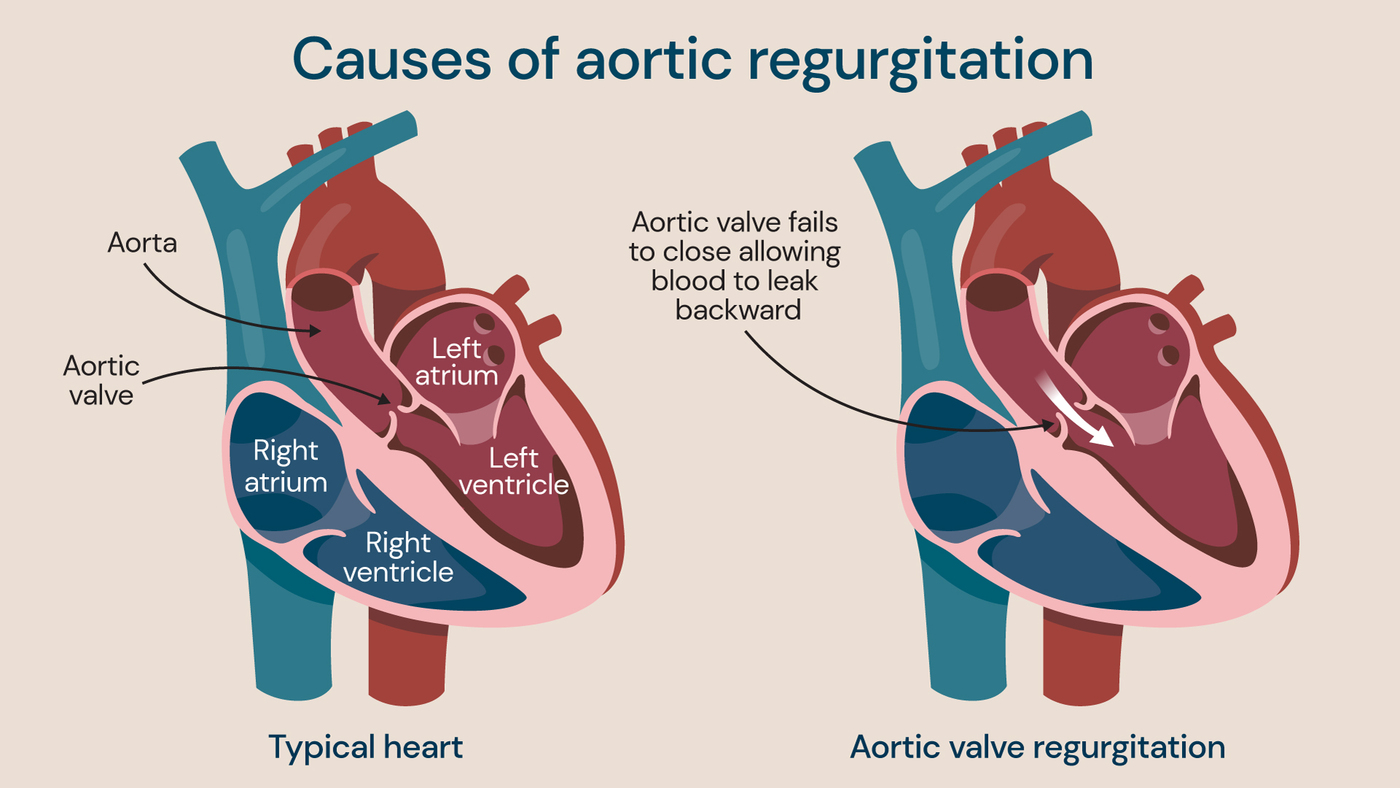
Aortic regurgitation occurs when the aortic valve doesn’t close properly and allows blood to leak back into the left ventricle.
Risk factors for aortic regurgitation
You may be more likely to develop aortic regurgitation if you:
- are an older person
- have previously had an infection that may affect the heart
- were born with a congenital heart condition
- have another type of heart valve disease
- have an underlying condition linked to aortic regurgitation, such as Marfan syndrome or certain autoimmune disorders
- have high blood pressure
Complications of aortic regurgitation
If aortic regurgitation is not diagnosed and managed appropriately, it can lead to complications, including:
- dizziness or fainting
- infections of the heart, such as endocarditis
- heart rhythm problems (arrhythmias)
- heart failure, and in severe cases, death
If you are concerned about your risk of aortic regurgitation, get in touch and our team will help arrange a specialist appointment.
Diagnosing aortic regurgitation
To diagnose aortic regurgitation, a doctor would initially perform a physical exam using a stethoscope, checking for signs such as heart murmurs. During this initial assessment, you will also usually be asked about your symptoms and your family’s medical history.
There are a range of tests available to help diagnose aortic regurgitation. These include:
- echocardiogram – used to create images of the heart, look closely at the condition of the aortic valve and aorta using sound waves
- electrocardiogram (ECG) – used to measure the heart’s electrical activity to detect signs of heart disease and arrhythmias
- cardiac MRI – used to provide detailed pictures of the aortic valve and aorta using magnetic resonance imaging (MRI)
- chest X-ray – used to show if the aorta or heart is enlarged, and help assess your lung condition
- stress test – used while exercising (or using medication to simulate exercise) to determine aortic regurgitation severity
- cardiac catheterisation – used to diagnose aortic regurgitation when other tests haven’t been able to determine the full diagnosis or level of severity. The test involves using a catheter (long, hollow tube) to inject a dye that can enhance X-ray images
If you are concerned about aortic regurgitation and would like a timely diagnosis, contact our team today.
Aortic regurgitation treatment
Treatment for aortic regurgitation will depend on the underlying cause and severity. If you aren’t experiencing any symptoms, your doctor may monitor your condition with regular follow-up appointments and recommend healthier lifestyle changes like losing weight, following a healthy diet and cutting down on alcohol.
The treatment options for aortic regurgitation include:
- medications – including drugs to lower blood pressure, calcium channel blockers and diuretics (to help prevent fluid build-up)
- aortic valve repair – including a variety of procedures to either reshape the valve flaps, patch holes in the valve, remove excess valve tissue or separate valve flaps that are fused together. Leaking replacement valves may also be repaired by inserting a plug using a catheter
- aortic valve replacement – to remove the damaged valve and replace it with a mechanical valve (made from an artificial material such as metal or carbon) or biological tissue valve (made from human or animal heart tissue). This can be done using open surgery or a minimally invasive technique via smaller cuts. In very selected cases a transcatheter aortic valve replacement (TAVR) can be considered
To discuss treatment options for aortic regurgitation, including medical management or valve procedures, get in touch to arrange a specialist appointment.
Reviewed regularly to reflect clinical best practice
Last reviewed: 01 February 2024
Locations
Diagnosis and treatment for aortic regurgitation is available at the following locations:
Discover our team of aortic regurgitation experts
From heart health to advanced interventions, our specialists are here to provide personalised care to you