

Content verified by

What is an IUD or coil?
An IUD, often referred to as a coil, is a small, T-shaped device that is placed in the womb (uterus) to prevent pregnancy. It is fitted by a specially trained doctor or nurse.
We offer safe and supportive IUD and coil removal for women – whether your device is due for removal or replacement, or you’re planning a change, such as starting a family or switching contraceptive methods.
Access private gynaecology services at St Thomas’ Hospital and Wimpole Street Consulting Rooms and Diagnostic Centre. Our gynaecology team includes experts in managing all types of intrauterine devices, including hormonal and non-hormonal coils. We provide safe, sensitive care with a choice of pain relief options to suit your needs.
Experts in IUD and coil removal
Our dedicated team of gynaecologists offer:
- fast access to treatment
- removal of copper and hormonal coils
- local or general anaesthetic options
- ultrasound-guided procedures for comfort and precision

What are the different types of IUD?
All coils have 1 or 2 thin threads attached that hang slightly from the womb into the top of the vagina. These threads help you and your doctor or nurse check that the coil is still in place, and make it easier to remove when needed.
There are two main types of coil.
The copper IUD
This is coil is hormone-free and works by releasing copper into the womb. This creates an environment that is toxic to sperm, making it difficult for them to survive, move properly or reach an egg. Copper also affects uterine secretions (discharge), which are the natural fluids your body produces, adding to its high efficacy in preventing a pregnancy.
The hormonal coil
Also known as the hormonal IUD, releases a hormone called progestogen. This affects the meeting of the egg and sperm and thins the lining of the womb to prevent pregnancy.
In addition to contraception, the hormonal coil can be used to help manage heavy periods, can be part of the treatment for adenomyosis, and protects the lining of the womb in women who have polycystic ovary syndrome (PCOS).
Both types of coil are long-acting, reversible and start working as soon as they are fitted.
Depending on the type of coil, they can remain in place for 3 to 10 years. After this, they will no longer be effective contraception and will need to be replaced. You may also choose to have your coil removed if you are planning a pregnancy, or if your needs or symptoms have changed.
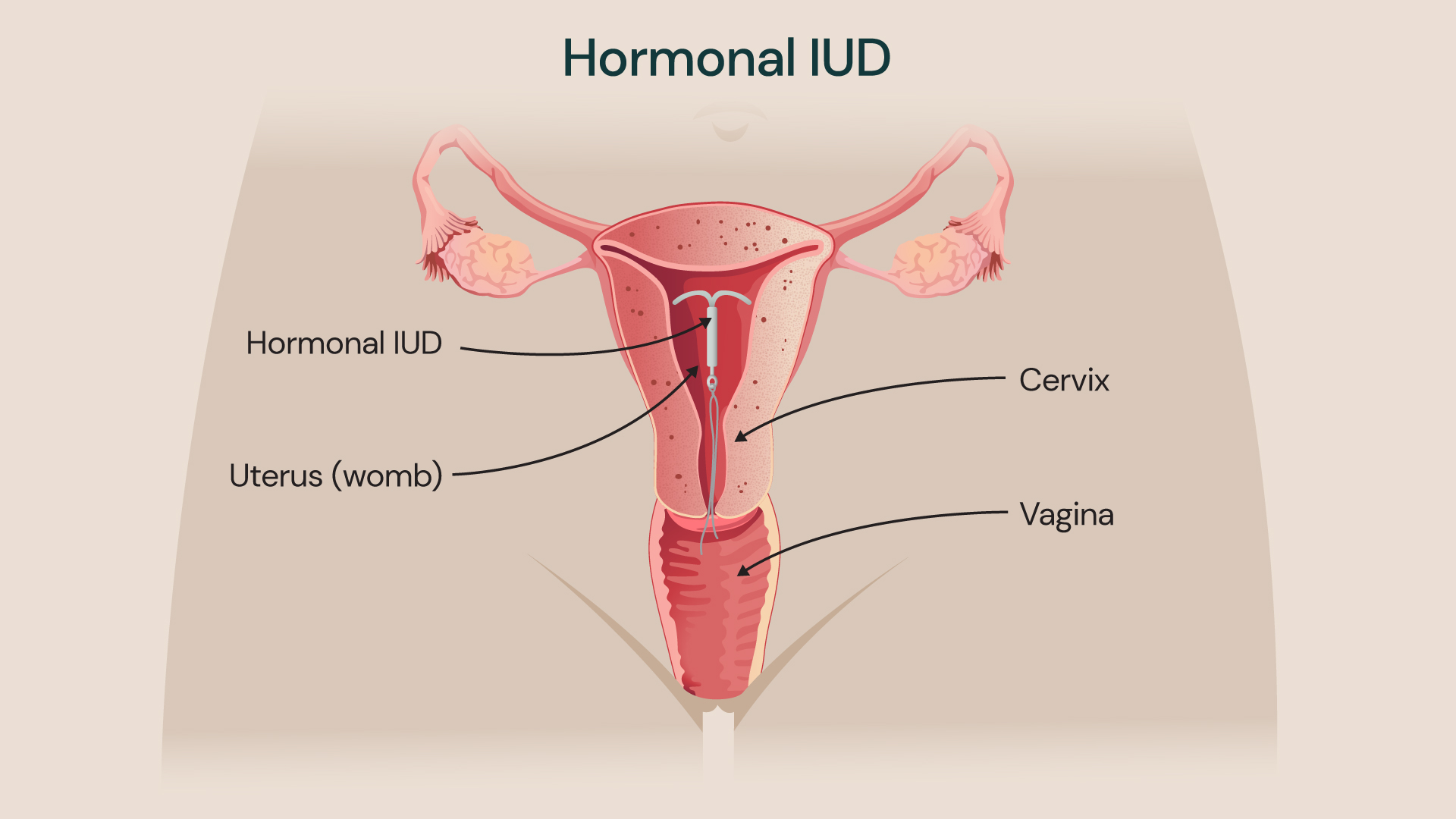
A hormonal intrauterine device (IUD) is a small contraceptive device inserted into the uterus. It releases hormones locally to prevent pregnancy and sits within the womb, with threads extending through the cervix into the vagina for monitoring and removal.
How are IUDs and coils removed?
Removing an IUD or coil is usually a simple procedure. Our gynaecology specialists can remove your IUD at any time, and you can go home on the same day.
If the threads of the device are visible at your cervix, your consultant will remove the device. Your vagina will be held open with a speculum (a smooth, tube-shaped tool). Then, they will gently pull on the threads with a special device. This takes only a few minutes and does not normally require pain relief.
If the threads are not visible, or if the device has moved or become embedded (lodged within the tissue of your womb), we may recommend:
- outpatient hysteroscopy – using a thin camera to look inside the womb, find the coil and remove it
- removal with special equipment such as a thread retriever
- removal under local or general anaesthetic – especially if the procedure is likely to be more difficult or if you’ve had discomfort during past examinations
You’ll be able to discuss all options during your consultation and before your IUD removal, including the most suitable pain relief.
You may want to take pain relief medication about 30 minutes before the removal, such as ibuprofen or paracetamol. Coil removal can be uncomfortable, but some women find it more painful, which is why we offer anaesthetic options to our patients.
Get in touch with our private gynaecology team about coil removal, with fast access to expert, personalised care.
Who can benefit from an IUD or coil removal?
You may need to have your IUD or coil removed for medical or personal reasons.
Our specialist service may be suitable for you if:
- your coil has expired or is due to be replaced
- you are planning a pregnancy
- you are experiencing discomfort, bleeding or pain
- the coil has moved or cannot be located easily
- you want to switch to a different form of contraception
- you are stopping hormonal treatment or adjusting hormone replacement therapy (HRT)
Our gynaecology team will take the time to understand your symptoms, preferences and medical history so we can tailor your care and ensure your experience is as comfortable as possible.
Private coil removal
Contact our private gynaecology team for fast access to expert IUD and coil removal advice and appointments.
Reviewed regularly to reflect clinical best practice
Last reviewed: 26 June 2026
Locations
Our private gynaecology services are offered at the following locations: