
Authors

What is TAVI?
TAVI stands for transcatheter aortic valve implantation. TAVI is a minimally-invasive procedure in which a new valve is inserted into your heart to treat severe symptomatic aortic stenosis (see below).
TAVI is also known as TAVR, especially in the USA; TAVR stands for transcatheter aortic valve replacement.
Explore our expertise in TAVI
-
Aortic valve repair and replacement
An aortic valve repair or replacement procedure treats a damaged aortic valve in your heart to enhance blood flow.
-
Cardiology
Our specialists are continuously innovating in minimally invasive cardiology procedures and improving care delivery.
-
Transcatheter aortic valve implantation (TAVI)
TAVI is a minimally invasive procedure where a new aortic valve is inserted into your heart.
What is aortic stenosis?
“Aortic stenosis is a common heart condition in which one of the heart’s valves, the aortic valve, becomes thick and stiff because of calcium deposits. The aortic valve becomes progressively narrowed, restricting blood flow,” explains consultant cardiologist Dr Vasileios Panoulas.
It’s more difficult for the heart to pump blood through the narrow valve, which can cause chest pain and breathlessness. You may also notice that you feel tired, dizzy and weak, especially during exertion.
Without treatment, aortic stenosis gradually worsens. In more advanced stages, it is called severe aortic stenosis, which may be symptomatic (causing symptoms) or asymptomatic (without symptoms).
When symptoms do develop, they can include chest pain, breathlessness and episodes of fainting. At this stage, the heart has to work harder to pump blood effectively, which puts strain on the heart muscle and, over time, can lead to heart failure and arrythmias.
The best treatment for severe symptomatic aortic stenosis is to replace the aortic valve either through heart surgery or using the TAVI procedure.
If you have severe aortic stenosis without symptoms, our specialists may recommend careful monitoring rather than immediate treatment, unless there are signs that your condition is starting to affect your heart.
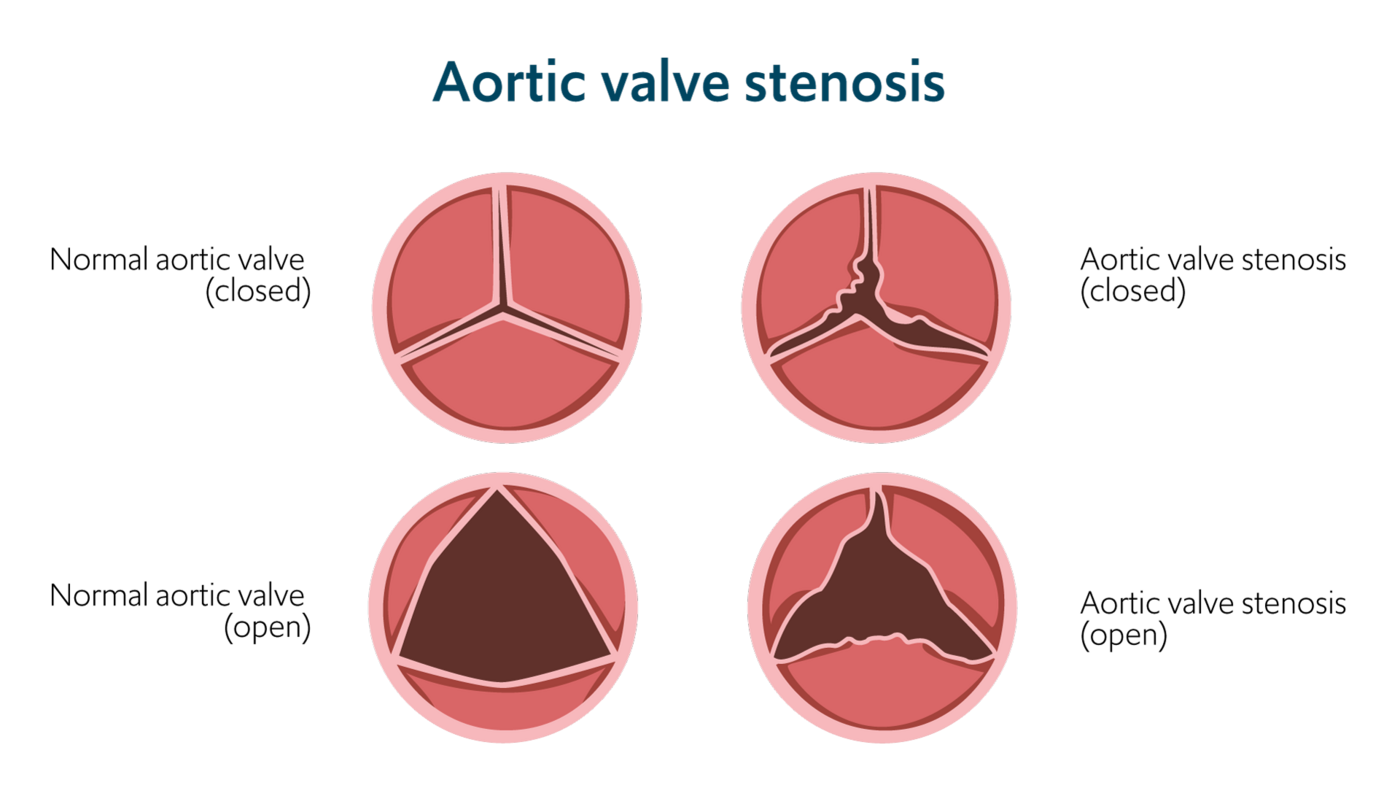
Aortic valve stenosis causes the valve to become narrowed, reducing blood flow through the heart.
What does TAVI treat?
“TAVI is used to treat people with severe symptomatic aortic stenosis, where it helps to reduce symptoms and improve life expectancy and quality of life. It is a minimally invasive alternative to surgery that we may recommend depending on a range of factors such as your age and other medical conditions. This information is used to determine your level of surgical risk and whether TAVI is suitable for you,” explains Dr Panoulas.
Below are the surgical risk levels our consultants use as part of decision making for TAVI:
- High surgical risk: People that have a higher risk of complications during surgery, such as those that are older or have certain medical conditions. TAVI is preferred over surgery for these patients.
- Intermediate surgical risk: People that are eligible for heart surgery to replace their aortic valve but carry a moderate risk of complications. Our specialists may recommend TAVI after a personalised assessment.
- Low surgical risk: People that are fit for surgical aortic valve replacement. TAVI may be an option for select patients as it is less invasive and recovery is often quicker than for surgery.
In addition to surgical risk, our consultants will also assess your aortic valve to check whether its size and structure are suitable for the replacement valves available.
What happens in TAVI?
TAVI is a minimally invasive procedure. Our cardiologists insert a new aortic valve without removing the old, faulty valve. The new valve is placed inside the damaged valve; it compresses the old valve and takes over its function.
Under local anaesthetic (you will be awake throughout the procedure), our cardiologists will insert a fine tube, called a catheter, into an artery in your groin or below your collarbone. They will use X-ray video guidance to introduce the catheter into your heart. They will position the catheter in the aortic valve’s opening. If the valve is narrow, they will gently inflate a balloon to compress the diseased valve and make room.
They will insert a new valve made from a mesh metal stent and tissue from pigs or cows. When the valve is in position, it will either expand spontaneously, or your doctor will expand it using a balloon. The new valve will sit inside your old aortic valve.
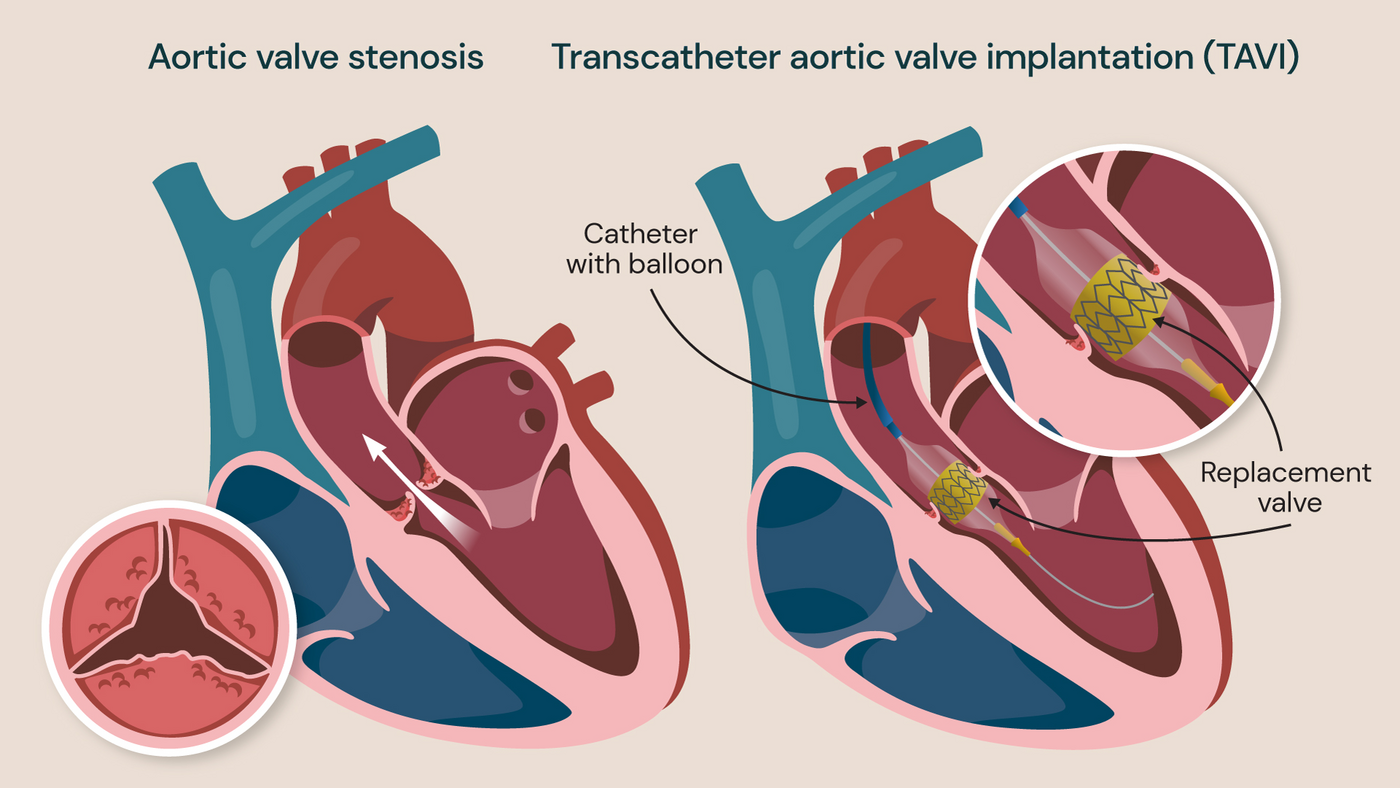
The replacement valve is inserted inside the damaged valve using a catheter.
Is TAVI painful?
The TAVI procedure should not be painful. If you experience pain or feel unwell, let our team know, and they will take action. The local anaesthetic should prevent any pain when the catheter is inserted and our experienced anaesthetist and nurse sedationist will keep you comfortable.
“After the procedure, you may notice some pain and discomfort at the insertion site, but this should get better over the first few days. The team will prescribe painkillers or recommend over-the-counter analgesia to keep you comfortable,” explains Dr Panoulas.
The benefits of TAVI
The main benefits of the TAVI procedure are:
- for high-risk patients (for whom surgery is not suitable), studies show that TAVI improves survival and quality of life when compared to medical treatment alone
- for low- and medium-risk patients (where patients are still suitable for surgery), studies show that TAVI is associated with a lower risk of death and stroke 1 year after the procedure when compared to surgical aortic valve replacement. The quality of life for these patients also improves following TAVI
- it is performed in the vast majority of cases under local anaesthetic with sedation, not a general anaesthetic
- it is a less invasive procedure than surgery
- your heart doesn’t need to be stopped, so you do not require a bypass machine
- you do not need a large incision in your chest and a cut through the sternum
- there is less time spent in hospital following surgery – about 1 to 3 days with TAVI compared with 7 days for surgery
- it is associated with less pain and a quicker recovery when compared to surgery
Risks of TAVI?
There are risks involved with any medical procedure. Our cardiology team will work to reduce complications and support your recovery.
The risk of complications with TAVI depends on your general health and the health of your heart. People who have multiple illnesses or a history of heart attacks may be more vulnerable to problems. Talk to your hospital team about the risks and benefits in your case.
Potential complications include:
- for high-risk patients (for whom surgery is not suitable), studies show that TAVI improves survival and quality of life when compared to medical treatment alone
- for low- and medium-risk patients (where patients are still suitable for surgery), studies show that TAVI is associated with a lower risk of death and stroke 1 year after the procedure when compared to surgical aortic valve replacement. The quality of life for these patients also improves following TAVI
- it is performed in the vast majority of cases under local anaesthetic with sedation, not a general anaesthetic
- it is a less invasive procedure than surgery
- your heart doesn’t need to be stopped, so you do not require a bypass machine
- you do not need a large incision in your chest and a cut through the sternum
- there is less time spent in hospital following surgery – about 1 to 3 days with TAVI compared with 7 days for surgery
- it is associated with less pain and a quicker recovery when compared to surgery
Risks of TAVI?
There are risks involved with any medical procedure. Our cardiology team will work to reduce complications and support your recovery.
The risk of complications with TAVI depends on your general health and the health of your heart. People who have multiple illnesses or a history of heart attacks may be more vulnerable to problems. Talk to your hospital team about the risks and benefits in your case.
Potential complications include:
- heart rhythm abnormalities
- bleeding, bruising or infection at the access site
- damage to the access site vessels requiring stent or vascular surgery
- slow heart rate that needs a permanent pacemaker can affect between 1 in 20 and 1 in 10 people
- heart attack
- allergy to the dye during angiography
- if there are complications during surgery, there is a risk that you may need open-heart surgery
- 2-3% of people undergoing the procedure are at risk of stroke
- rarely problems following TAVI may lead to death
Find out more about the risks and benefits of TAVI.
Alternatives to TAVI for aortic stenosis
TAVI is not the only treatment for severe symptomatic aortic stenosis. Our consultants will be able to discuss the treatment options and help you balance out the pros and cons. The alternatives to TAVI for aortic stenosis include:
Surgical aortic valve replacement: Heart surgery in which the surgeon removes the damaged aortic and replaces it with a prosthetic valve. Heart surgery is more invasive than TAVI and requires a general anaesthetic; it may be riskier if you have other medical conditions.
Sutureless aortic valve replacement: We offer sutureless aortic valve replacement, an innovative surgical approach for people with aortic stenosis. The procedure allows faster implantation and shorter cardiopulmonary bypass time. Sutureless AVR makes it easier to perform less invasive surgery through a partial sternotomy. Following surgery, patients typically experience less pain and return to activity quicker.
Minimally invasive surgical aortic valve replacement: We offer a smaller incision at the top of the collarbone through which the aortic valve is replaced. This procedure allows for shorter recovery times
Balloon aortic valvuloplasty (BAV): BAV is a minimally invasive procedure that stretches the aortic valve. Treatment temporarily treats the symptoms of aortic stenosis but doesn’t repair or replace the diseased valve. Balloon aortic valvuloplasty may relieve your symptoms for up to six months.
Reviewed regularly to reflect clinical best practice
Last reviewed: 20 July 2026
Get in touch
To find out more about the TAVI procedure, contact our team to book an appointment with one of our heart specialists.
Related articles
Discover more articles like this