
Authors

What is an aortic valve?
The aortic valve is 1 of 4 valves in your heart – alongside the tricuspid valve, pulmonary valve and mitral valve – that controls blood flow. It connects the left side of your heart with your aorta (the main artery that carries blood away from the heart). The aortic valve regulates the flow of blood through the aorta and keeps blood from congesting the heart.
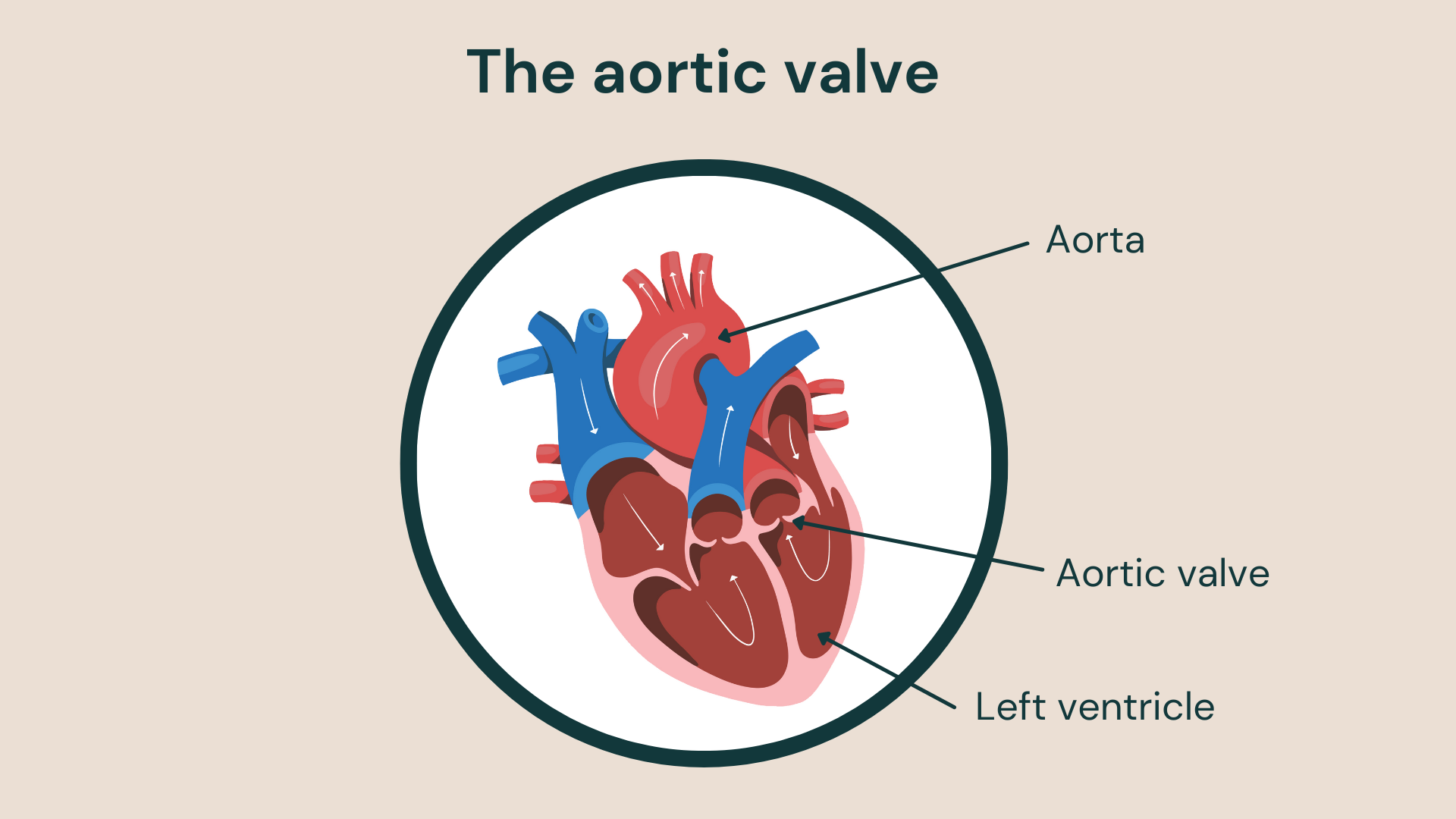
Aortic stenosis is a common condition where the aortic valve becomes stiff and narrow. Without treatment, the condition gets progressively worse and in its most advanced stages, is called severe aortic stenosis.
Severe aortic stenosis can be symptomatic (with symptoms) or asymptomatic (without symptoms). When symptoms are present, they can include chest pain, breathlessness, fatigue (tiredness) and episodes of fainting. The condition makes it harder for your heart to pump blood and over time, this can result in arrythmias (heart rhythm problems) and heart failure.
Valve replacement is the most effective treatment for severe symptomatic aortic stenosis. This can be done either with surgical aortic valve replacement (heart surgery) or transcatheter aortic valve implantation (TAVI), which is a minimally invasive procedure.
For patients that are not experiencing symptoms with severe aortic stenosis, treatment may not be immediately needed. Instead, our specialists will closely monitor the condition, unless there are signs that your heart is being affected.
Explore our expertise in aortic valve replacement
-
Aortic valve repair and replacement
An aortic valve repair or replacement procedure treats a damaged aortic valve in your heart to enhance blood flow.
-
Cardiology
Our specialists are continuously innovating in minimally invasive cardiology procedures and improving care delivery.
-
Transcatheter aortic valve implantation (TAVI)
TAVI is a minimally invasive procedure where a new aortic valve is inserted into your heart.
Surgical aortic valve replacement (SAVR)
Surgical aortic valve replacement (SAVR) is the gold standard treatment for severe symptomatic aortic stenosis, to reduce unpleasant symptoms and improve your quality of life. The procedure can be performed through a surgical incision down the centre of your breastbone, or with a smaller incision of 5-7cm as part of a minimally invasive approach.
Deciding whether to have heart surgery can be difficult to navigate. In this article, we will discuss the success rate of aortic valve replacement surgery and explore studies looking at surgical results. We’ll also look at the potential risks and complications of SAVR. Finally, we’ll explore the success rate of the minimally invasive TAVI procedure so that you can make an informed choice about your medical care.
The success rate of aortic valve replacement surgery
A long-term National Institute of Health Research (NIHR) review into the surgical replacement of aortic valves showed that these procedures offer good long-term survival.
The study examined data from more than 90 studies observing long-term outcomes for people having SAVR with a biological valve made from animal tissue.
The study showed that people with severe symptomatic aortic stenosis who had surgery to replace a narrowed valve have only a slightly reduced life expectancy than people without the condition. Post-operative survival ranged from an average of 16 years in people aged 65 or less, to between 6 and 7 years for people over 75.
The 2017 review found that aortic valve replacement surgery had an overall mortality of 2%, which the NHS website says ‘is far lower than the risk associated with leaving severe aortic disease untreated’ and a stroke risk of 3% or less.
How long do biological valves last?
“Biological or bioprosthetic valves are made of animal tissue, either porcine from a pig or bovine from a cow. They wear out more quickly than mechanical valves, making them better suited to older people. However, they have benefits over mechanical valves in that they have a reduced risk of blood clots (thrombosis), which means that long-term blood thinners (anticoagulants) aren’t usually necessary,” explains our consultant cardiac surgeon Mr Shahzad Raja.
In a NIHR study, bioprosthetic valves appeared safe, and they were linked to average lifespans when matched to the population having surgery. 10 years after replacement, the great majority of people (94%) had a functioning valve. After 20 years, more valves had failed, with 48% of valves deteriorating. The NIHR said:
“This large review indicates that bioprosthetic valve replacement for severe aortic stenosis is safe and gives survival outcomes comparable to the general population without aortic stenosis.”
“The long-term deterioration of the valves suggests a need for regular monitoring to identify people who may require a further valve replacement, especially after ten years,” explains Mr Raja.
So, if you choose a bioprosthetic valve, you may need echo monitoring and possibly a replacement valve after 10 years or so.
Risks of aortic valve replacement surgery
There are risks involved with any surgery. Serious problems are uncommon with SAVR, but it is major heart surgery. Our cardiac surgery team will work to reduce any complications and support your healthy recovery.
“The risk of complications with aortic valve replacement surgery depends on your general health and the health of your heart. People who are frail, elderly, or have multiple underlying conditions may be more vulnerable to problems,” explains Mr Raja.
You can speak to our consultants about the risks and benefits related to you. Below is a summary of the main risks:
- Infections: You could develop an infection in the wound, lungs, bladder or the new valve. Our team will give you antibiotics to reduce your infection risk.
- Bleeding
- Thrombosis (blood clots): Clots can develop, particularly in mechanical valve replacement. You will need to take anticoagulants for life to prevent blood clots if you are at risk.
- Stroke
- The valve may wear out over time, with bioprosthetic valves typically lasting for a shorter time than mechanical valves.
- Cardiac arrhythmia: 1 in 4 people develop an abnormal heart rhythm after aortic valve replacement. This usually settles, but up to 1 in 50 people will need a pacemaker to regulate their heartbeat.
- Kidney problems: In the days after surgery, your kidneys may need support to function, and some people need temporary dialysis – a procedure used to remove waste products and excess fluid from the blood.
- Sadly, in around 2% of people, aortic valve replacement surgery complications can be fatal. However, this is lower than the risks of not treating severe aortic valve disease. Over 50% of people with advanced aortic valve disease will likely die within 5 years without treatment.
Success rate of TAVI
TAVI, sometimes referred to as TAVR (which stands for transcatheter aortic valve replacement), is a minimally invasive procedure used to treat severe symptomatic aortic stenosis.
The procedure involves inserting a catheter (a fine flexible tube) into a blood vessel, usually in your leg, through a small incision that’s around 1cm. The catheter is then guided to the position of your damaged or diseased aortic valve, using X-ray video guidance. The new valve is then opened with a balloon to replace the old valve leaflets and tissue, taking over blood flow regulation for your heart.
You will be given local anaesthetic to numb the area of the incision and will be awake throughout the procedure.
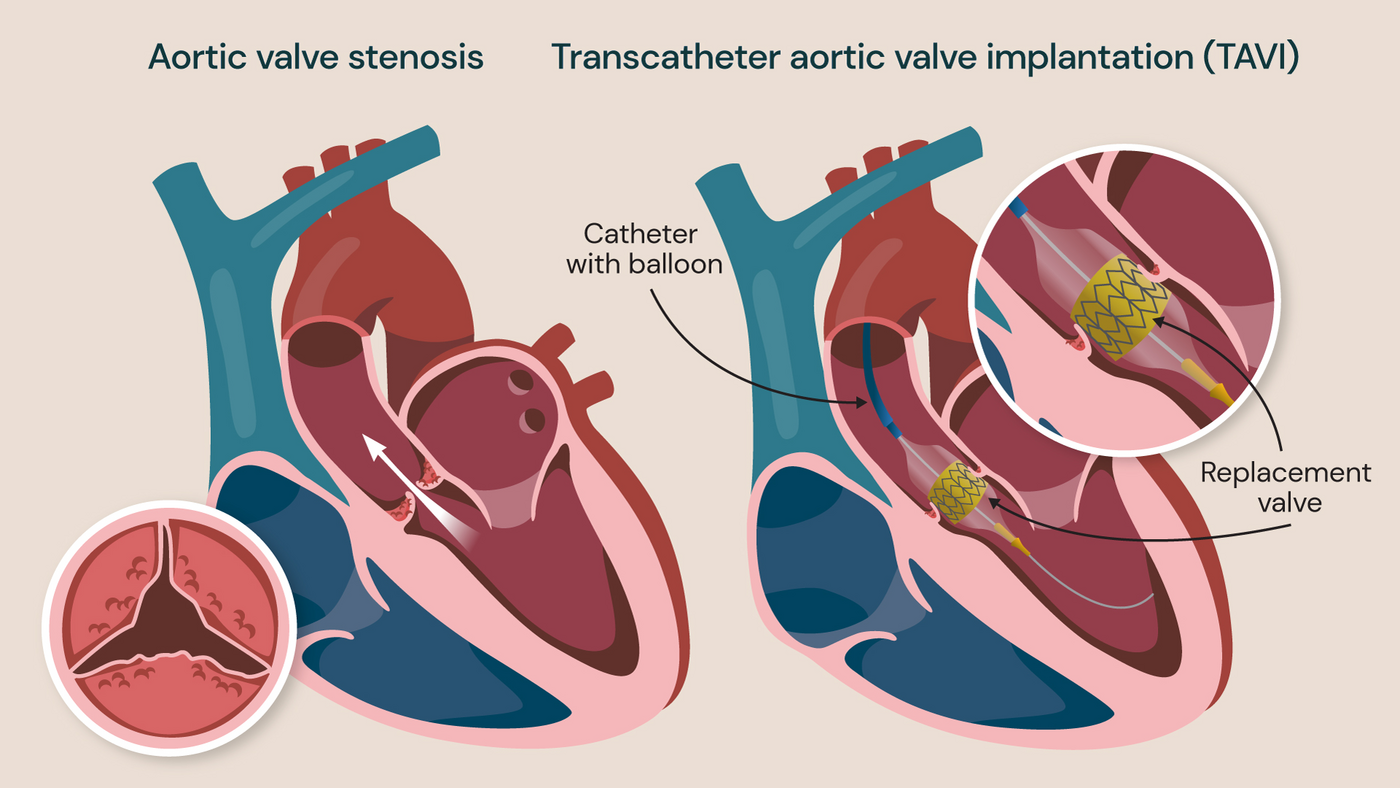
During the TAVI procedure, a new aortic valve is inserted into position using a catheter.
Compared to SAVR, TAVI is a less invasive procedure because it doesn’t involve heart surgery.
Another benefit of the TAVI procedure is that it can be performed in a cardiac catheterisation lab, also known as a ‘cath lab’, using local anaesthetic to numb the area where the catheter is inserted. This means that patients are awake throughout their procedure, avoiding the use of general anaesthetic which can be risky for some patients. TAVI is also associated with a shorter hospital stay of around 1 to 3 days, compared with around 7 days for SAVR.
For high-risk patients (where surgery may not be suitable or carries a higher risk of complications), studies show that TAVI improves survival and symptoms compared to medical treatment alone.
For low- and intermediate-risk patients (where surgery is still a suitable option), a 2025 meta-analysis (a review of the best available research evidence) found that TAVI was associated with a lower risk of death or stroke 1 year after the procedure when compared with SAVR. Separate studies showed that TAVI also improves quality of life in these patients.
While minimally invasive TAVI may seem like a better option than heart surgery, our consultants will consider a range of factors to ensure it is the right choice for you. For example, some patients may not be suitable if their aortic valve is too large or too small for the replacement valves currently available.
Your age will also be a factor in decision making. Valves used in SAVR have a well-established long-term durability, with biological tissue valves typically lasting for 10 to 15 years. TAVI valves have also shown good durability, with current evidence demonstrating that they can last for 5 to 10 years. However, longer-term studies are being conducted to understand TAVI valve durability beyond 10 years, which can be an important consideration for younger patients who will need a replacement valve to last longer.
If you would like to speak to one of our cardiac surgeons about your suitability for a TAVI procedure, we can help. Contact our team to arrange an appointment.
Reviewed regularly to reflect clinical best practice
Last reviewed: 20 July 2026
Get in touch
To find out more about aortic valve replacement surgery or the TAVI procedure, contact our team to book an appointment with one of our heart specialists.