
Content verified by


What is aortic valve disease?
In aortic valve disease, the aortic valve does not work as efficiently as it used to, limiting blood flow through it and putting extra strain on the heart. As the disease progresses, it can lead to a range of symptoms, from shortness of breath and fatigue (feeling tired) to an irregular heart rhythm and heart failure.
The only way to effectively treat aortic valve disease is with a procedure to repair or replace the aortic valve. This can be done through open-heart surgery, minimally invasive keyhole heart surgery, or the transcatheter aortic valve implantation (TAVI) procedure.
Our consultants at Evelina London Children’s, Harefield and Royal Brompton hospitals are at the forefront of care for aortic valve disease in adults and children. All our hospitals have been recognised among the best in the world.
Exerts in aortic valve disease
Our world-leading consultants offer:
- fast, accurate diagnosis with advanced imaging at our state-of-the-art facilities
- minimally invasive treatments for aortic valve disease
- short-notice appointments, available in as little as 24 hours

What is the aortic valve?
The aortic valve is a small flap of tissue (normally consisting of 3 leaflets) on the left side of your heart between the left ventricle (a chamber of the heart) and the aorta, the large vessel that carries oxygen-rich blood to the body

The aortic valve ensures that oxygenated blood flows in the right direction from the heart to the rest of the body
The aortic valve acts as a one-way gate, opening and closing as your heart beats. It opens to allow blood to flow out of the heart to supply blood and oxygen to the body, then closes to prevent backflow.
Types of aortic valve disease
Aortic valve disease occurs when the valve isn’t working properly. Aortic valve problems can affect the flow of blood around your body. The heart has to work harder to pump enough oxygen-filled blood to supply your body’s needs, putting extra strain on the heart.
There are 2 types of aortic valve disease, including:
- aortic stenosis: in aortic stenosis, the aortic valve becomes stiff and narrowed, which obstructs blood flow from the left ventricle (heart chamber) into the aorta (the largest blood vessel of the body). Aortic stenosis is the most common type of heart valve disease
- aortic regurgitation: in aortic regurgitation, the aortic valve becomes leaky and allows blood to flow back into the heart’s left lower chamber. It is also known as aortic insufficiency
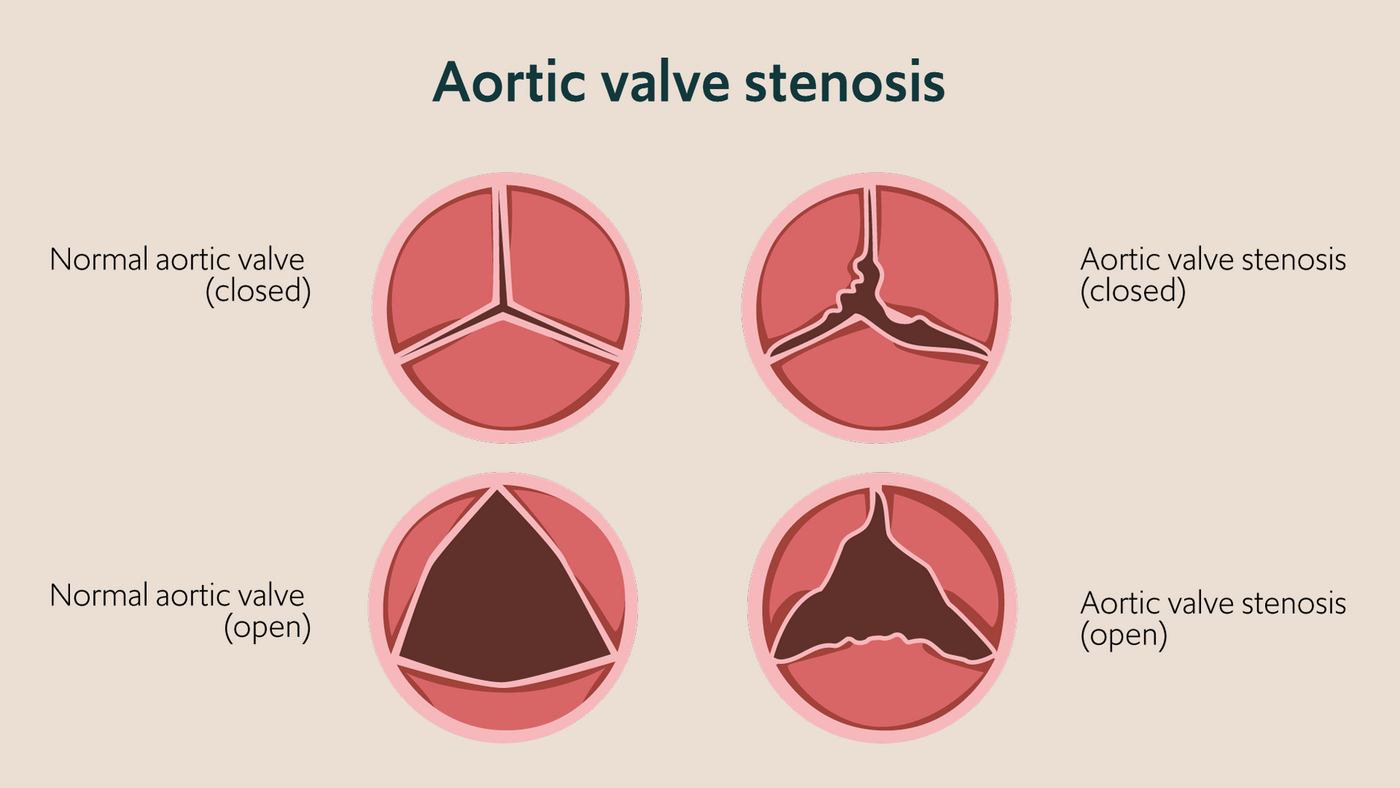
Aortic valve stenosis is the most common aortic valve disease.
Symptoms of aortic valve disease
You may not notice any symptoms in the initial phases of aortic valve disease, which can be for many years. However, as the disease progresses, it can cause symptoms.
Symptoms of aortic valve disease can include:
- arrhythmia (abnormal heart rhythm): sometimes noticed as heart palpitations, where you feel like your heart is skipping a beat, racing or beating too hard
- blood clots and stroke: if blood doesn’t flow through the heart as it should, it can make the formation of clots more likely
- chest pain or tightness, that is worse on exertion
- dizziness
- endocarditis: as with all valve diseases, aortic valve disease increases your risk of developing endocarditis, a serious infection of the valve
- fainting
- fatigue after exercise or exertion, or not being able to be active
- heart failure: if your heart can’t pump enough blood for your body’s needs, you will feel weak, tired and breathless. You may also develop swelling in the feet and ankles and congestion in the lungs, which causes breathlessness and coughing, which is worse on lying down. Heart failure is sometimes the first symptom of aortic valve disease
- shortness of breath
In children with aortic valve disease, you may notice that they don’t eat enough or are not gaining enough weight.
If you or your child are experiencing symptoms of aortic valve disease, book an appointment with one of our specialists who can help with a diagnosis.
Causes of aortic valve disease
Aortic valve disease has a range of causes, including:
- age: as you get older, your heart valves get thicker and stiffer due to the build-up of calcium deposits on the valve, making the development of aortic valve disease more likely
- congenital heart disease: children can be born with an abnormal aortic valve. For example, they could have 2 valve leaflets (called a bicuspid aortic valve) instead of 3 which can increase the risk of aortic regurgitation. Sometimes, symptoms of aortic valve disease won’t appear until they are adults
- endocarditis: this is a rare and life-threatening infection of the inner lining of the heart (called the endocardium). It can damage the aortic valve
- hypertension: high blood pressure can put strain on the aortic valve, leading to both stenosis and regurgitation
- Marfan’s syndrome: this is a genetic disorder affecting the connective tissues of the body. It can cause the aortic root (the base of the aorta connected to the heart) to become weak and dilate, putting strain on the aortic valve and making aortic valve regurgitation more likely. The condition can be effectively treated with the PEARS procedure at our hospitals
- rheumatic fever: this condition can develop as a complication of a streptococcal infection in the throat. It causes inflammation to spread to and scar the aortic valve, increasing the risk of aortic valve stenosis
If you feel you or your child may be at an increased risk of aortic valve disease, contact our team to book an appointment with one of our specialists.
Diagnosing aortic valve disease
After an initial investigation by our specialists to understand your symptoms and medical history, they may arrange some tests to help diagnose aortic valve disease if they suspect you have it.
Tests for aortic valve disease include:
- an echocardiogram: also called an ‘echo’, this test uses sound waves to visualise how blood flows through the heart and its valves. It can help determine the presence and severity of aortic valve disease
- an electrocardiogram (ECG): this test records your heart’s rate, rhythm and electrical activity. Heart rhythm problems, like atrial fibrillation, are more common if you have aortic valve disease
- cardiac MRI: magnetic resonance imaging is a type of scan that can clearly visualise the area where the aorta meets the heart
- exercise stress test: this test often involves you walking on a treadmill or riding a stationary bike while an echocardiogram or ECG is performed at the same time. It helps your doctor understand whether aortic valve disease symptoms occur during exercise. If you can’t exercise, you may be given a medication that affects the heart the way that exercise does
If you are looking for a quick diagnosis of aortic valve disease by one of our consultants, get in touch with our helpful customer service team who can book an appointment for you.
Aortic valve disease treatment
The treatment you need for aortic valve disease depends on the type you have, how severe it is, whether it’s causing symptoms, and whether it’s getting worse over time.
Treatments can include:
- medications: these can control other conditions that are making your aortic valve disease worse, such as hypertension. You may also be given blood thinning medications to prevent blood clots, as aortic valve disease can increase your risk
- aortic valve repair and replacement: our specialists are experts in minimally invasive procedures to repair and replace a damaged aortic valve. This includes keyhole heart surgery, where our surgeons can perform the procedure through several small incisions rather than open heart surgery. It also includes the TAVI procedure, where our cardiologists guide an artificial valve to your heart via your groin or shoulder and implant it within your existing damaged valve to take over its function.
If you would like to speak to one of our consultants about treatment options for aortic valve disease, please contact our team to book an appointment.
Locations
Discover our team of heart experts
Meet our team of world-leading heart specialists. They can provide a quick diagnosis for aortic valve disease, as well as the best treatment for your condition, including aortic valve repair and replacement.
Reviewed regularly to reflect clinical best practice
Last reviewed: 26 August 2026