
Content verified by
What is breast reconstruction?
A breast reconstruction is a plastic surgery procedure that recreates your breasts’ shape and structure after you’ve had cancer treatments like a mastectomy (one or both breasts removed) or a lumpectomy (removal of a breast tumour and surrounding tissue).
We can perform breast reconstruction immediately after breast cancer surgery or months or years later. There are 2 main types of breast reconstruction – breast reconstruction with implants and breast reconstruction using your own tissues (flap/autologous reconstruction). Sometimes, the procedure may be a combination of breast implants and flap reconstruction.
Our plastic surgeons at Guy’s and St Thomas’ hospitals are leaders in their field – our service is one of the largest in the UK. We are specialists in all types of breast reconstruction procedures and will help achieve your desired results.
Experts in breast reconstruction
Our consultants offer:
- short-notice appointments
- all types of breast reconstruction procedures
- fast access to personalised treatment

Why might breast reconstruction be performed?
We can perform breast reconstruction to restore your breasts’ shape and appearance after you’ve had surgical cancer treatments like a mastectomy or lumpectomy. Some people find that losing part or all of their breasts leads to low self-esteem and potentially anxiety or depression.
However, breast reconstruction can help you to achieve your desired look and boost your confidence.
Types of breast reconstruction
There are many types of breast reconstruction surgery available, and we’ll make sure we offer you one that matches your needs.
The 2 main types of breast reconstruction are:
- breast reconstruction with implants: our surgeon inserts a silicone implant under or above the muscle in your chest to create a natural-looking breast shape. Sometimes, a tissue expander is needed where an empty implant is slowly and progressively filled with saline to help the skin on your chest expand naturally.
- breast reconstruction with your own tissues (flap reconstruction): this includes DIEP (deep inferior epigastric perforator) flap where our surgeons use tissues from your lower abdomen – including fat, skin and blood vessels – to reconstruct your breasts after a mastectomy. This leaves a very cosmetically desirable result in the lower abdomen as the incisions and techniques used are the same as a tummy tuck. Tissues can also be taken from other parts of your body, including your back, bottom and thighs. If taken from the inner thigh they are called PAP or TUG flaps; if taken from the top of the bottom they are known as SGAP flaps; and if taken from the flanks they are known as LAP flaps.
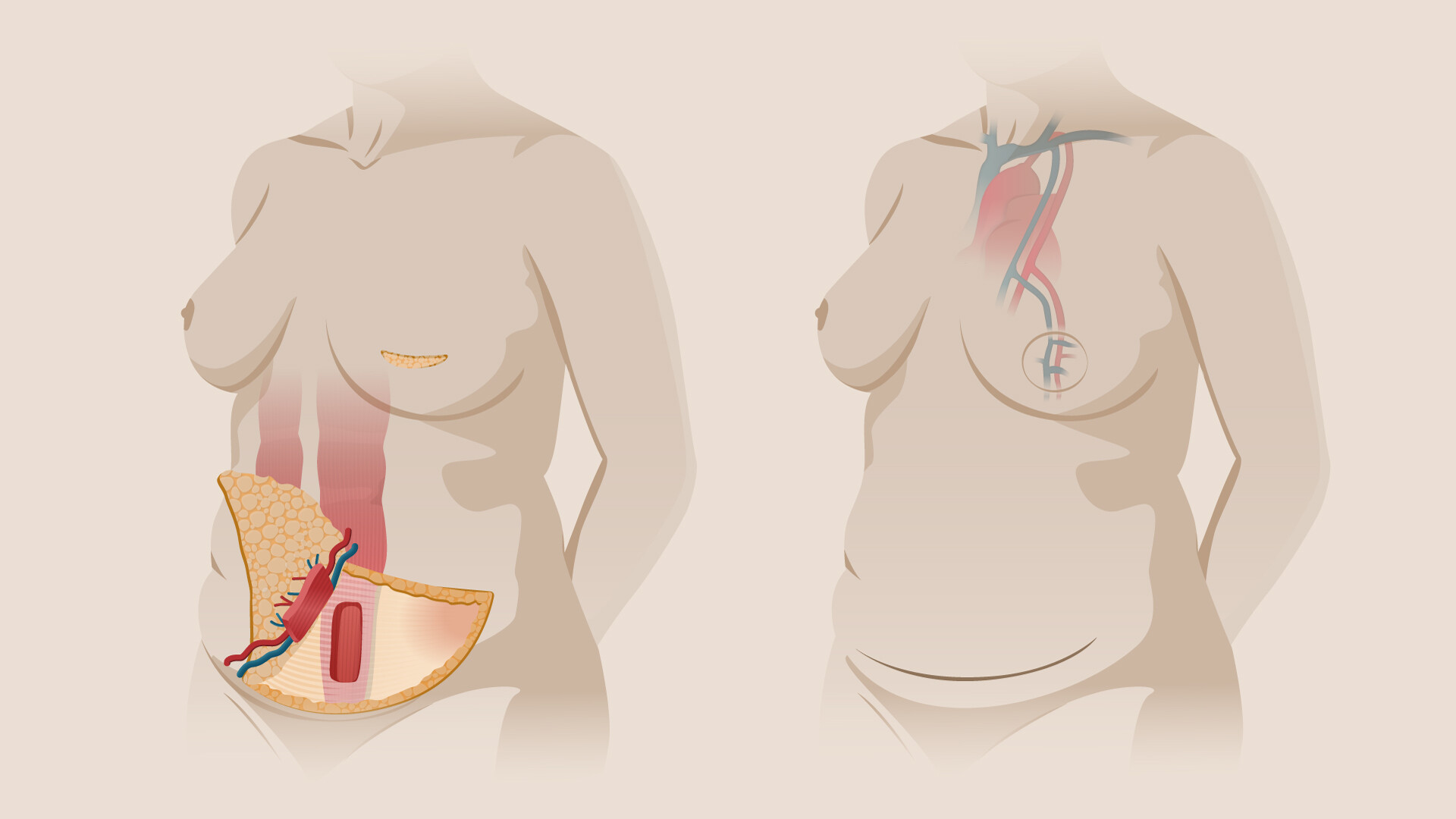
During a flap reconstruction, our surgeons use tissues from other parts of your body to reconstruct your breasts after a mastectomy. This can involve using fat, skin, blood vessels and muscle from your lower abdomen, or other parts of your body.
Our surgeons may use a combination of breast implants and your own tissues, depending on your personal needs. We may also need to reconstruct your nipples as well, by reshaping skin from your breasts, and then tattoing it. This is usually offered after you have healed from breast reconstruction surgery.
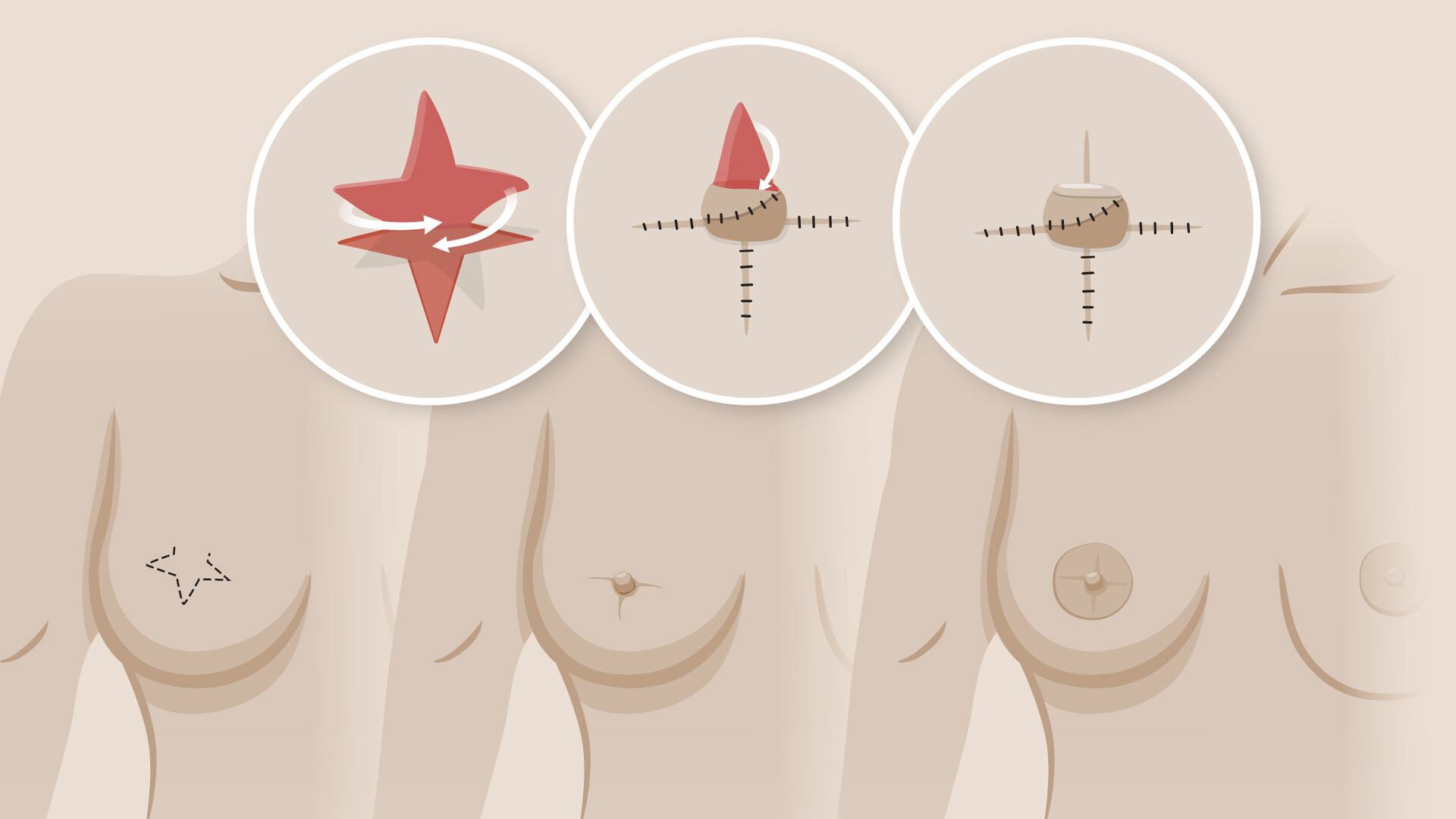
Our surgeons can also offer nipple reconstruction, usually after you have healed from breast reconstruction. After the nipple has healed, you may choose to have a tattoo for a natural looking result.
Who is suitable for breast reconstruction?
Breast reconstruction may be suitable if you have had a mastectomy or a lumpectomy. However, your overall health will also decide your suitability. We will never compromise your health for procedures like this, and we’ll always guide you based on your needs.
How much tissue is left after your mastectomy or lumpectomy can help us determine the correct reconstruction. We’ll also ask whether you’re having further cancer treatments, such as chemotherapy.
If you would like to speak to one of our plastic surgeons about breast reconstruction, get in touch with our team to arrange an appointment.
Preparing for a breast reconstruction
Before your breast reconstruction, you will have a comprehensive consultation with one of our plastic surgeons. They will ask about your health, treatment plan and any medications or other surgeries you may have had.
They will also discuss your desired results to help us meet your goals.
We’ll provide specific preparations before your procedure, too, such as:
- fasting for a set number of hours
- pausing or adjusting medication
What happens during breast reconstruction?
We will perform your breast reconstruction under general anaesthetic, which means you will be asleep during the surgery.
Depending on the type of reconstruction you’re having, our surgeon will make incisions in your chest and begin the procedure. With breast implants, they will insert these using chest incisions that sit below or above the muscle. Whereas if you’re having a flap reconstruction, our surgeons will remove the tissue from your abdomen or other part of your body to form your new breasts.
During your breast reconstruction, our team may insert a thin tube called a drain under your skin with the other end sticking out of your chest. The drain allows fluid and blood to draw away as you recover to minimise swelling and bruising. However, a drain may not always be needed.
Once we’ve completed your breast reconstruction, our surgeon will sew up your incisions, and a team member will take you to the recovery room where you’ll wake up.
How long does breast reconstruction take?
The total time your breast reconstruction takes will depend on the procedure and whether we’re reconstructing both breasts. Implant reconstruction can take about 4 hours per breast, whereas flap reconstruction can take much longer (between 4 and 8 hours per breast).
What happens after a breast reconstruction?
You’ll wake up in the recovery room after your breast reconstruction. While you may feel tired or confused at first, our friendly team will help you come around from the anaesthetic and provide pain relief medication to minimise any discomfort.
You will need to stay in hospital for a few days while we monitor your initial recovery. You cannot drive yourself home, so you will need to arrange transport beforehand.
You will also need to wear a supportive bra or compression garment, depending on your reconstruction type, during your recovery to help minimise swelling and support your breasts.
What is the recovery time for breast reconstruction?
It can take up to 6 weeks to recover fully from breast reconstruction. However, swelling and healing can take longer, and you may have to wait several months before seeing the final results.
The total length of recovery will also depend on your reconstruction type.
It’s usual to experience some pain and swelling during your recovery, so we’ll provide pain relief medication and advice to help minimise both of these issues.
Benefits of breast reconstruction
Breast reconstruction can have many benefits, including:
- restoring your confidence
- minimising feelings of anxiety or low mood
- creating natural-looking breasts
- eliminating reliance on uncomfortable prosthetics
- helping your clothes to fit better or how you desire
Deciding on a breast reconstruction is personal, so our dedicated team will ensure you receive bespoke care as soon as you get in touch.
How successful is breast reconstruction?
Experts consider breast reconstruction to be a successful procedure for many people. But, if you require further cancer treatment in the future or gain a significant amount of weight, your breasts could change. Similarly, your breasts may change naturally as you age too.
However, the procedure offers many benefits that improve the overall quality of life for most patients undergoing breast reconstruction.
Risks of a breast reconstruction
All surgeries carry potential risks, including breast reconstruction.
Some of the potential risks of breast reconstruction include:
- blood clots
- asymmetrical breasts
- bruising or scarring
- fat necrosis (the tissue used in a flap procedure dies)
- sensitivity at the donor site in a flap procedure
Our team is highly experienced in performing breast reconstructions and will do everything possible to minimise the risk of complications.
If you would like to speak to one of our plastic surgery specialists about breast reconstruction, contact our helpful team who can arrange an appointment for you.
Reviewed regularly to reflect clinical best practice
Last reviewed: 06 July 2026
Meet our reconstructive plastic surgeons
We understand the effects a mastectomy or lumpectomy can have on your body and self-esteem. Our plastic surgery specialists offer personalised reconstructive care that provides natural-looking results.