
Authors
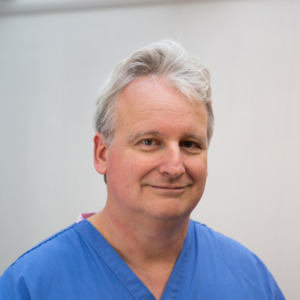


Children can experience a range of heart problems as they grow and develop. While some are completely harmless and resolve themselves over time, others may need to be referred to a specialist paediatric cardiologist for treatment.
Our paediatric cardiologists at Royal Brompton Hospital and Evelina London Children’s Hospital have put together a short guide for parents below detailing common heart conditions affecting children and how they are treated.
It includes an overview of congenital heart disease (present from birth), arrhythmias (heart rhythm disturbances) and heart murmurs, with detailed insights from our specialists.
Congenital heart disease
Congenital heart disease is the name for a heart problem present from birth and is one of the most common birth defects, affecting 1 in every 100 babies born worldwide.
There are many different types of congenital heart disease which affect the structure or the function of the heart and blood vessels, which can in turn impact the pumping of blood as it normally should. The different types of congenital heart disease can occur on their own or in combination.
“Depending on the type of congenital heart disease, specialist paediatric cardiac surgery may be needed soon after birth or later in childhood to prevent complications,” explains Dr Owen Miller, consultant in paediatric and fetal cardiology at Evelina London Children’s Hospital.
“Symptoms of congenital heart disease vary, particularly in babies and children, and can include rapid breathing, poor feeding and failure to gain weight normally. In older children there may be extreme tiredness and fatigue.”
Symptoms can be noticed soon after birth, but mild defects may not cause problems until later in life.
A specific cause of a child’s congenital heart disease is often not identified, but certain risk factors can include genetic syndromes, and the mother having smoked during pregnancy or having poorly controlled diabetes.
Ventricular septal defect in children
One example of congenital heart disease is a ventricular septal defect, where a hole is present from birth in the wall of muscle separating the lower pumping chambers (ventricles) of the heart. This causes extra blood to be pumped into the lungs, rather than to the rest of the body as it normally should.
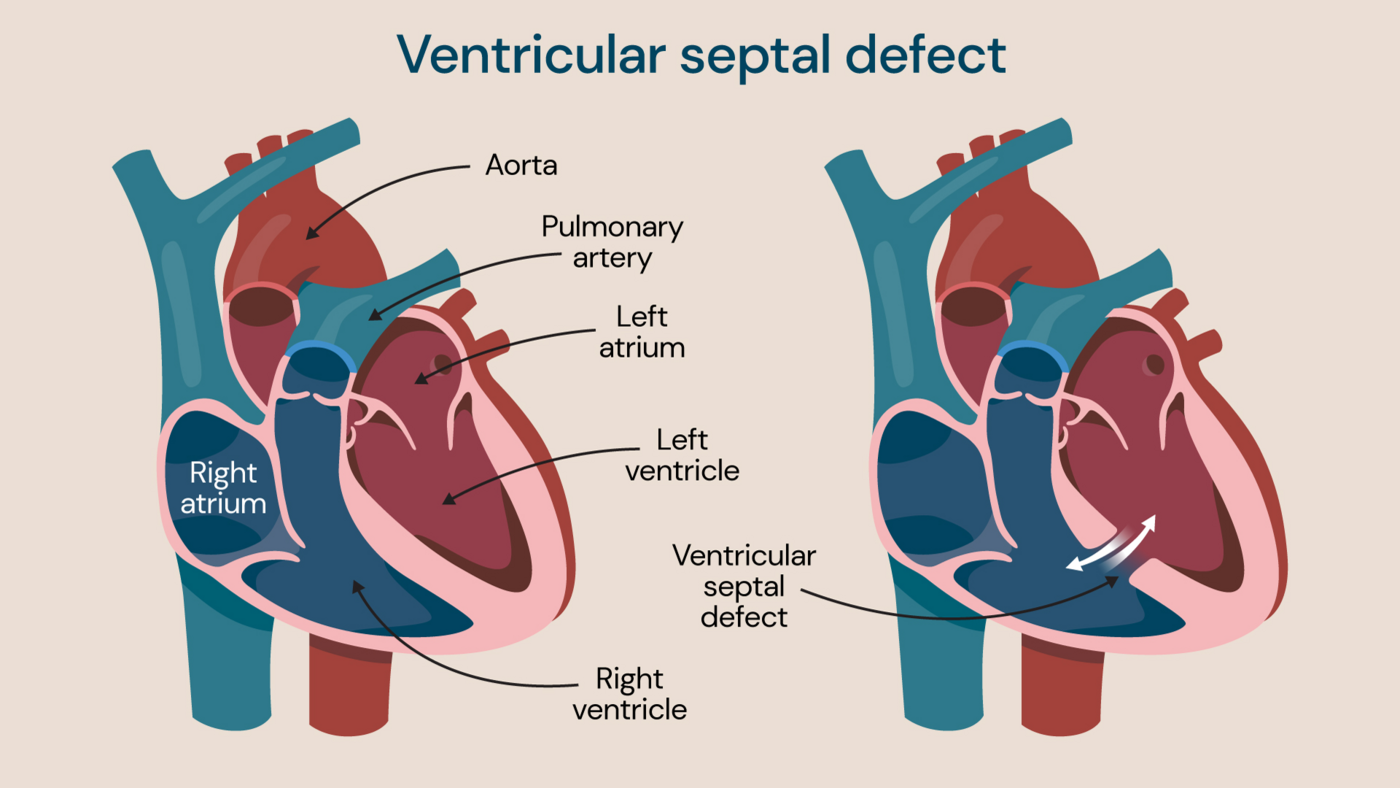
An example of a type of congenital heart disease called a ‘ventricular septal defect’, where a hole appears in the ventricles (lower chambers) of the heart. This causes some blood to be pumped into the lungs rather than to the rest of the body as it normally should.
Arrhythmias in children
An arrhythmia is where the usual regular beating of the child’s heart may be too fast, too slow or irregular. This may prevent their heart from pumping blood as it normally should.
“Arrhythmias in children are quite common, affecting 2 in every 100 school-age children. If your child has an arrhythmia, their heart may beat too fast or too slow, or it may have extra beats or skip a beat,” explains Professor Alain Fraisse, consultant paediatric cardiologist at Royal Brompton Hospital.
“In most cases, arrhythmias in children are isolated occurrences and harmless, not requiring treatment. However, they can sometimes be serious and life threatening, particularly if they affect how efficiently the heart pumps blood to the rest of the body, such as the brain.”
There are many types of arrhythmia and some are forms of congenital heart disease. However, there are other causes which include infections, fever, and side effects of medications.
Symptoms of arrhythmia include a child feeling like their heart is fluttering or skipping a beat (called palpitations), feeling weak and tired, as well as lightheaded or dizzy.
“There are different types of treatment for arrhythmias in children including medicines to control the heart’s rhythm, but also minimally invasive surgical procedures such as cardiac ablation to precisely treat the part of the heart causing the problem,” says Professor Fraisse.
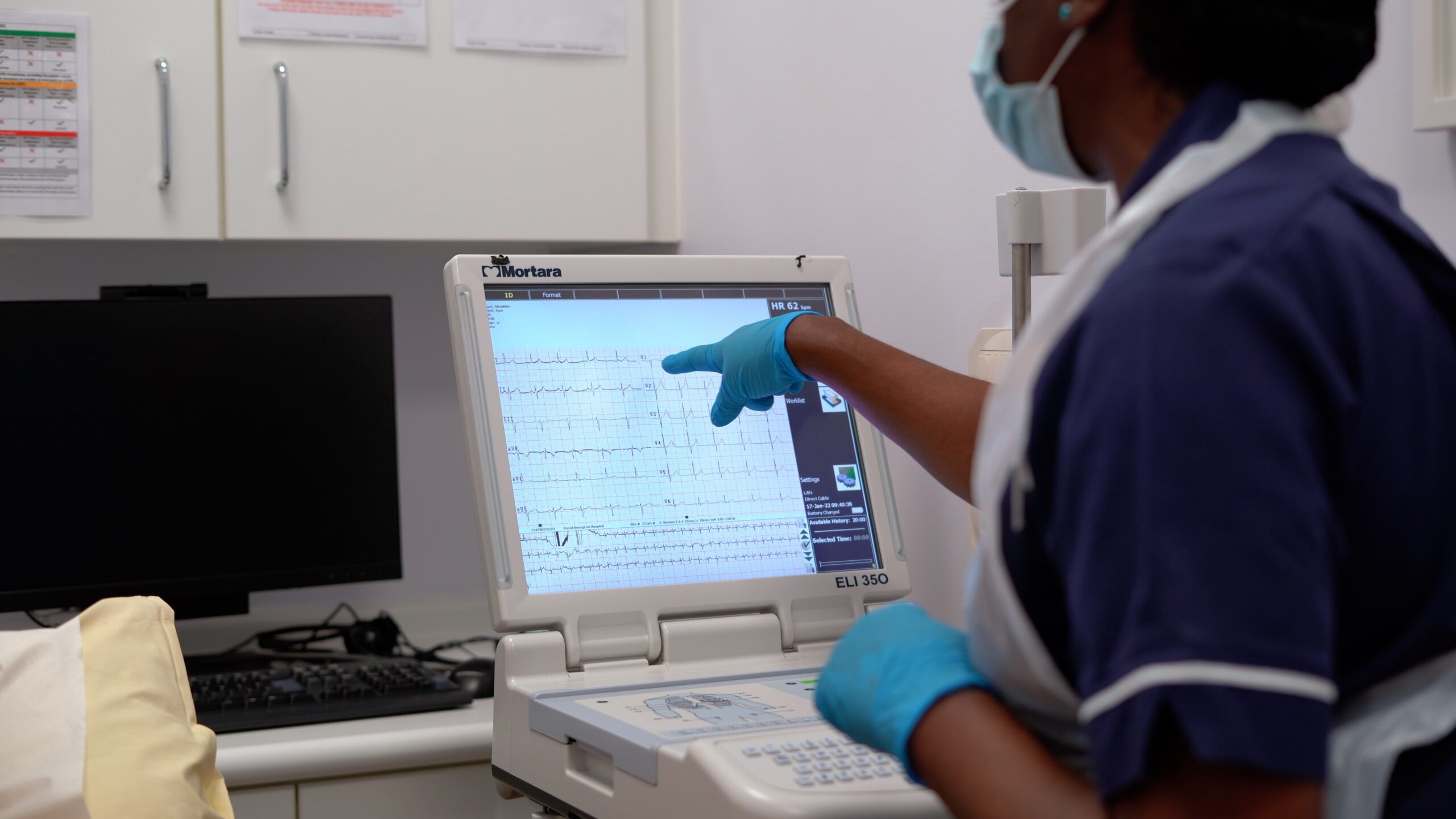
An electrocardiogram (ECG) is one of the most common heart tests which can be carried out quickly, providing our specialists with very fast results.
Heart murmurs in children
Heart murmurs are additional or unusual sounds made by the heart as the blood works its way through the heart chambers and valves of your child’s heart. It may resemble a whooshing or swishing sound.
“Heart murmurs are very common in babies and young children, with most cases being harmless and resolving with age as the heart grows and matures,” explains Dr Miller, consultant in paediatric and fetal cardiology at Evelina London Children’s Hospital.
However, a heart murmur can occasionally be a sign of a problem with the heart’s structure which affects the way blood flows through it, such as with some forms of congenital heart disease.
“If a heart murmur is thought to be due to a problem with the heart’s structure, we can conduct an echocardiogram (an ultrasound scan of the heart) to understand whether this is the case. This will help us determine the best treatment plan for your child,” says Dr Miller.
Life-long specialist care for congenital heart disease
Treatments for congenital heart disease have improved immensely in recent decades – 97% of children born with congenital heart disease can now expect to survive into adulthood.
However, this presents challenges for managing patients as they can have complex health needs that require life-long specialist monitoring and care.
Following a successful pilot in 2020, 2 of our adult hospital sites (Royal Brompton and St Thomas’ hospitals) now offer a one-stop adult congenital heart disease (ACHD) service where patients can receive all their routine monitoring diagnostic tests and see their consultant cardiologist and specialist cardiology nurse all on the same day.
“Our ACHD service greatly improves the care offered to our patients. Rather than waiting for multiple diagnostic tests that are sometimes arranged months apart on the NHS, they receive a convenient one-day service designed around them with minimal impact to their routine,” explains Professor Gatzoulis, consultant cardiologist at Royal Brompton Hospital, who led the development of the service.
With our expertise in cardiology across age groups, children diagnosed with congenital heart disease can receive life-long, joined-up specialist care at our hospitals.
Get in touch
If you are concerned about the health of your child’s heart and would like to speak to one of our paediatric cardiology specialists, please contact our team at Evelina London Children’s Hospital or Royal Brompton Hospital to arrange an appointment.
Reviewed regularly to reflect clinical best practice
Last reviewed: 01 April 2026
Related content
-
Children’s cardiac surgery
Children's cardiac surgery is used to treat a range of congenital heart issues such as damaged valves, blood clots and blocked arteries.
-
Children’s cardiology
Our paediatric cardiologists offer treatments for all heart conditions from birth to childhood.
-
Congenital heart disease
Congenital heart disease is a collective term for a range of birth defects that affect the heart. Learn more about how it is diagnosed and treated.