
Content verified by

What is tricuspid regurgitation?
Tricuspid regurgitation is a heart condition affecting the tricuspid valve, one of four valves that keep blood flowing in the right direction. When this valve does not fully close, blood flows backwards from the right ventricle into the right atrium, placing strain on the heart over time.
Left untreated, tricuspid regurgitation can worsen. The good news is that effective treatments are available, including pioneering minimally invasive procedures such as the Triclip and Pascal, which can repair the valve without open-heart surgery.
Our specialists at Harefield and Royal Brompton hospitals and Wimpole Street Consulting Rooms and Diagnostic Centre are among the leading experts in tricuspid regurgitation care in the UK, combining decades of experience with the very latest techniques.
Experts in heart health
Our leading cardiology experts provide:
- short-notice appointments, in as little as 24 hours
- fast access to treatment
- pioneering minimally invasive procedures

When there is only a small amount of blood flowing the wrong way (known as trace tricuspid regurgitation), this isn’t normally a concern.
However, in more severe cases (severe tricuspid regurgitation), this can lead to symptoms like irregular heart rhythms, fatigue, and shortness of breath, which will likely require treatment.
Across Europe, approximately three million people have tricuspid regurgitation.
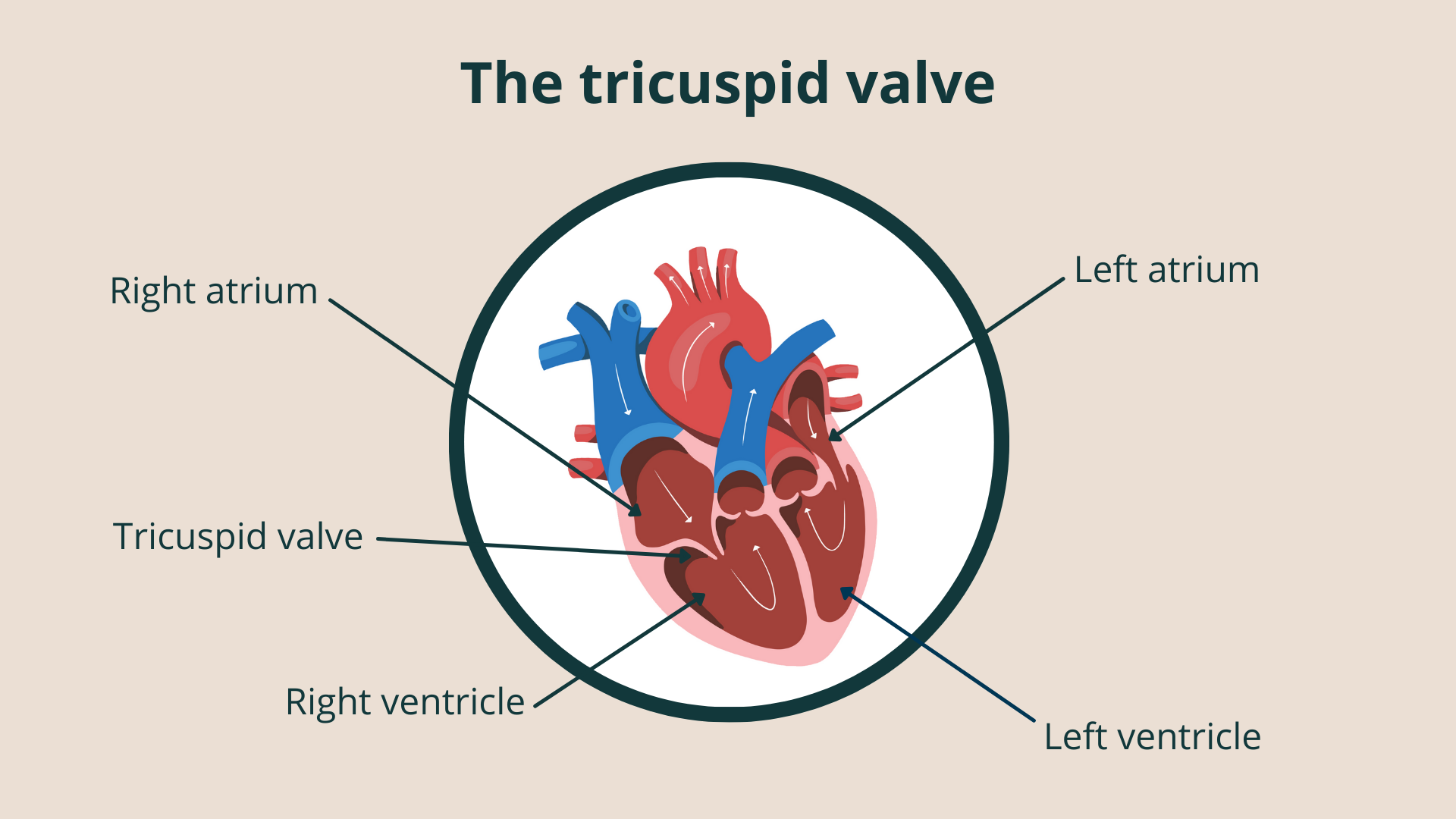
The tricuspid valve controls blood flow from the upper right chamber to the lower right chamber.
Tricuspid regurgitation symptoms
If you have trace tricuspid regurgitation, you won’t typically present with any symptoms.
Moderate or severe regurgitation, on the other hand, may be accompanied by symptoms such as:
- arrhythmias – an irregular heartbeat that can be either too fast or too slow
- shortness of breath – breathlessness particularly felt when exercising
- fatigue – a feeling of tiredness that can last for several days or longer
- pulsing in the neck – a noticeable throbbing in the neck veins
- oedema – a swelling in the stomach, feet or ankles that occurs when the heart is not working well.
Your doctor can detect other signs which may be an indication of tricuspid regurgitation. These might include:
- a heart murmur – detected via a physical exam or echocardiography, this could indicate an unusual irregular blood flow through the heart valves
- a strong pulse in your neck or close to your liver
If you experience any of the symptoms listed above, make sure to seek medical advice from your doctor. You may need to be referred to a cardiologist (a doctor that specialises in heart and blood vessel diseases).
If you are experiencing any of these symptoms, contact our team.
Tricuspid regurgitation causes
The tricuspid valve is located between the two right chambers of the heart: the right ventricle at the top and the right atrium at the bottom. It can control blood flow with thin tissue flaps (cusps) that open and close.
During tricuspid regurgitation, these flaps don’t close as tightly as they should, resulting in the backward flow of blood into the right atrium.
Tricuspid regurgitation can be caused by a variety of factors. These include:
- the most common cause is chamber enlargement caused by an irregular heart rhythm such as atrial fibrillation
- congenital heart defects – affecting the valve’s function and shape
- genetic disorders
- endocarditis – a heart infection
- rheumatic fever – an immune response to infection that can damage the tricuspid valve
- carcinoid syndrome – a rare condition that can result in the production of a hormone that damages the tricuspid valve
- chest injury
- pacemaker – placement of a pacemaker that crosses the tricuspid valve
- heart muscle biopsy procedure
- radiation therapy
You may also have a greater risk of tricuspid regurgitation if you have:
- a congenital heart defect
- heart failure
- an infection that affects your heart
- high blood pressure (hypertension)
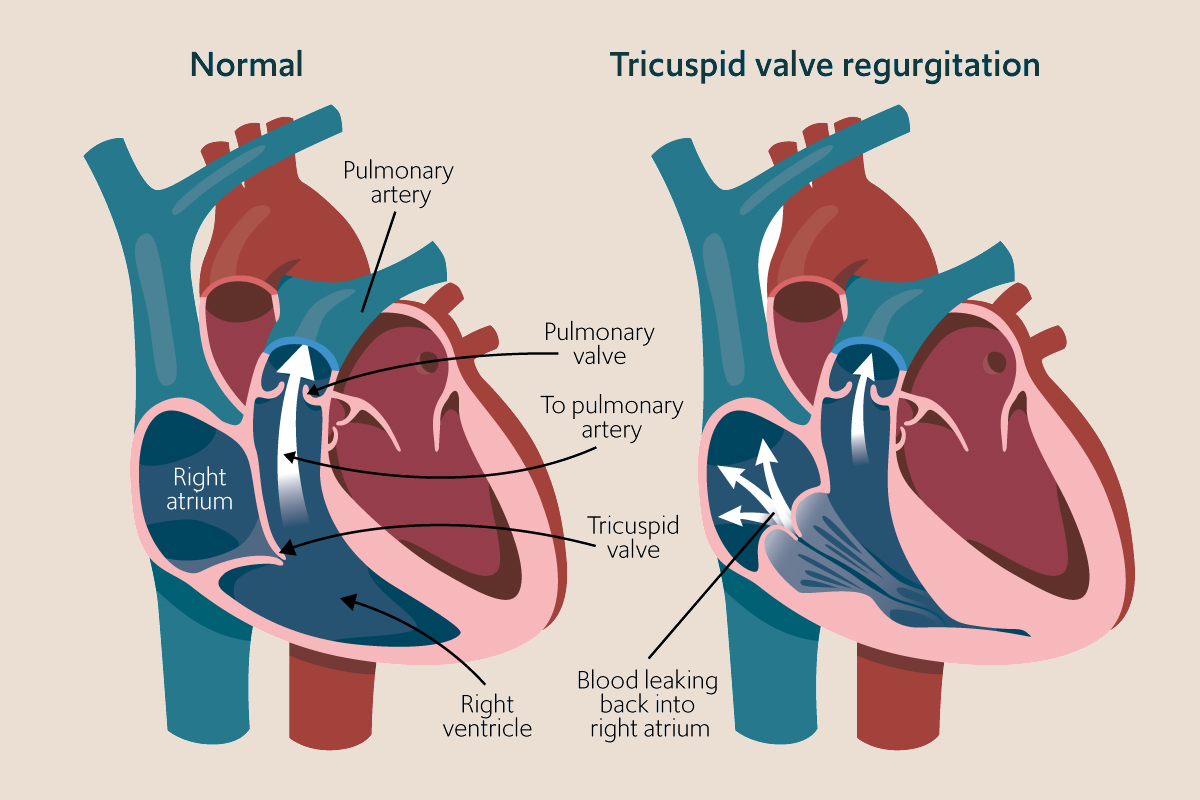
Tricuspid regurgitation occurs when the tricuspid valve does not close as tightly as it should allowing blood to flow backwards between the chambers.
Complications of tricuspid regurgitation
Left untreated, tricuspid regurgitation can lead to various complications. These include:
- heart failure – caused as a result of an increase in pressure that severe tricuspid valve regurgitation may cause in the right ventricle (lower right chamber)
Tricuspid regurgitation diagnosis
Tricuspid regurgitation can occur without symptoms and, even when present from birth, may not be diagnosed until adulthood. In fact, tricuspid regurgitation may only be discovered due to imaging tests being performed for other reasons.
The different tests available to diagnose tricuspid regurgitation include:
- echocardiogram – the primary test for tricuspid regurgitation, which uses sound waves to create images of the heart
- electrocardiogram (ECG) – this test measures the heart’s electrical activity
- cardiac MRI – a magnetic resonance imaging (MRI) test that uses magnetic fields to produce detailed images. It can assess the severity of the condition, as well as the function of your right ventricle
- chest X-ray – an imaging test that uses small radiation doses to show the condition of your heart and lungs
- cardiac catheterisation – a more rarely used test designed to determine specific causes of the condition and guide treatment choice
If you are concerned about your heart health, contact our team.
Tricuspid regurgitation treatment
The most suitable treatment for tricuspid regurgitation will depend on two key components: the underlying cause and the severity of the condition.
Mild tricuspid regurgitation may not require you to attend regular appointments with a healthcare provider, whereas moderate or severe tricuspid regurgitation could require more monitoring. Being diagnosed sooner rather than later could also make a big difference, enabling timely treatment to reduce symptoms, prevent complications and, overall, improve your quality of life.
Medications for tricuspid regurgitation
There are certain medications that may be prescribed to help treat tricuspid regurgitation and its associated symptoms. These include:
- diuretics – medications designed to remove extra fluids from your body and prevent water retention
- antiarrhythmics – medications that help control arrhythmias (irregular heartbeats)
- other medications that control or treat heart failure
Procedures for tricuspid regurgitation
In certain circumstances, a surgical or non-surgical procedure may be required to repair or replace the tricuspid valve. This may be recommended for one of the following reasons:
- if you have severe tricuspid valve regurgitation
- if you have a enlarged heart (with or without symptoms)
- if you have tricuspid regurgitation and need surgery for another condition
Procedures may include:
- Tricuspid valve repair – this can be performed with open heart surgery and involves patching up tears and holes in the valve. This procedure can help maintain heart function and make it less likely for you to need blood thinners over the long term. A new minimally invasive catheter-based procedure is also available at Royal Brompton and Harefield hospitals which uses a repair apparatus to help the valve leaflets seal correctly with each heart beat
- Tricuspid valve replacement – when it’s not possible to repair the valve, it may be removed and replaced with a valve made from biological tissue or artificial material such as metal or carbon
- Catheter procedure – an alternative to open heart surgery for tricuspid valve replacement, this procedure is recommended if you have a biological tissue valve that isn’t working. It involves inserting a catheter (long, thin tube) into a vein before guiding it to the valve
- Catheter ablation – typically recommended when the condition is causing arrhythmias (heart rhythm problems). This procedure targets tissues that are causing the heart rhythm problem
- Maze procedure – a type of heart surgery that blocks faulty heart signals which are triggering arrhythmias. This procedure creates scar tissue that redirects inconsistent electrical impulses in the heart
Reviewed regularly to reflect clinical best practice
Last reviewed: 18 May 2026
Locations
Our cardiology specialists provide care for tricuspid regurgitation at the following locations:
Discovery our cardiology experts
Meet our team of cardiologists specialising in tricuspid regurgitation. Whether it’s maintaining heart health or implementing innovative interventions, our experts are here to offer personalised care tailored to you.