
Content verified by


What is a mitral valve repair or replacement?
The mitral valve is one of the four valves in your heart. It sits between the left atrium and left ventricle (the left‑hand chambers) and ensures blood flows in the correct direction while preventing it from leaking backwards.
Mitral valve repair and mitral valve replacement are procedures used to treat mitral valve disease, where the valve becomes leaky, known as mitral regurgitation, or stiff, called mitral stenosis.
These conditions can lead to symptoms such as breathlessness, fatigue, palpitations and reduced exercise tolerance if left untreated. Treatment may involve repairing the existing valve or replacing it with an artificial valve, depending on the structure of the valve, the severity of the condition and your overall health.
At Harefield Hospital and Royal Brompton Hospital we are internationally recognised as centres of excellence for heart and lung care. We’re are also a leading centre for minimally invasive transcatheter (via a blood vessel) procedures, including advanced mitral valve repair techniques. These options can reduce recovery time and are particularly beneficial for patients who may not be suitable for open‑heart surgery. Our specialists will assess your condition carefully and recommend the most appropriate treatment approach for you.
Specialist care for mitral valve disease
Our heart specialists offer:
- short‑notice appointments, often within 24 hours
- fast access to non‑surgical and surgical heart treatments
- advanced minimally invasive and transcatheter procedures, where appropriate

Understanding your mitral valve procedure
The procedures are designed to improve the flow of blood through your heart and lower your risk of developing further heart-related problems. They can be performed as open-heart surgery (via breastbone), minimally invasive surgery (8cm between the ribs), totally endoscopic (2- 3cm opening under the right breast) or minimally invasive non-surgical procedures (transcatheter procedures).
The type of mitral valve procedure you have will depend on several factors, for example, how severe your condition is, your age and your other medical issues. Not all types of procedure are suitable for everyone.
What is mitral valve disease?
Mitral valve disease can present in different forms:
- Mitral valve regurgitation – occurs when the flaps of your mitral valve can’t close fully, causing blood to leak backwards. This can either be ‘primary’ such as mitral valve prolapse (elongation of valve leaflet chords) or flail due to rupture of the valve leaflet chords, or ‘secondary’ when it relates to a problem with the left ventricle, enlargement of the left atrium or infection.
- Mitral valve stenosis – occurs when the valve flaps become thick and potentially fuse together, reducing blood flow to and from that area of your heart. This is most often a result of previous rheumatic heart disease but can be related to age or previous radiotherapy.
When your condition becomes severe enough (patients become symptomatic or the heart function deteriorates or the heart size enlarges), a procedure to repair or replace the defective valve will be recommended.
Read more about mitral valve disease and when treatment may be needed.
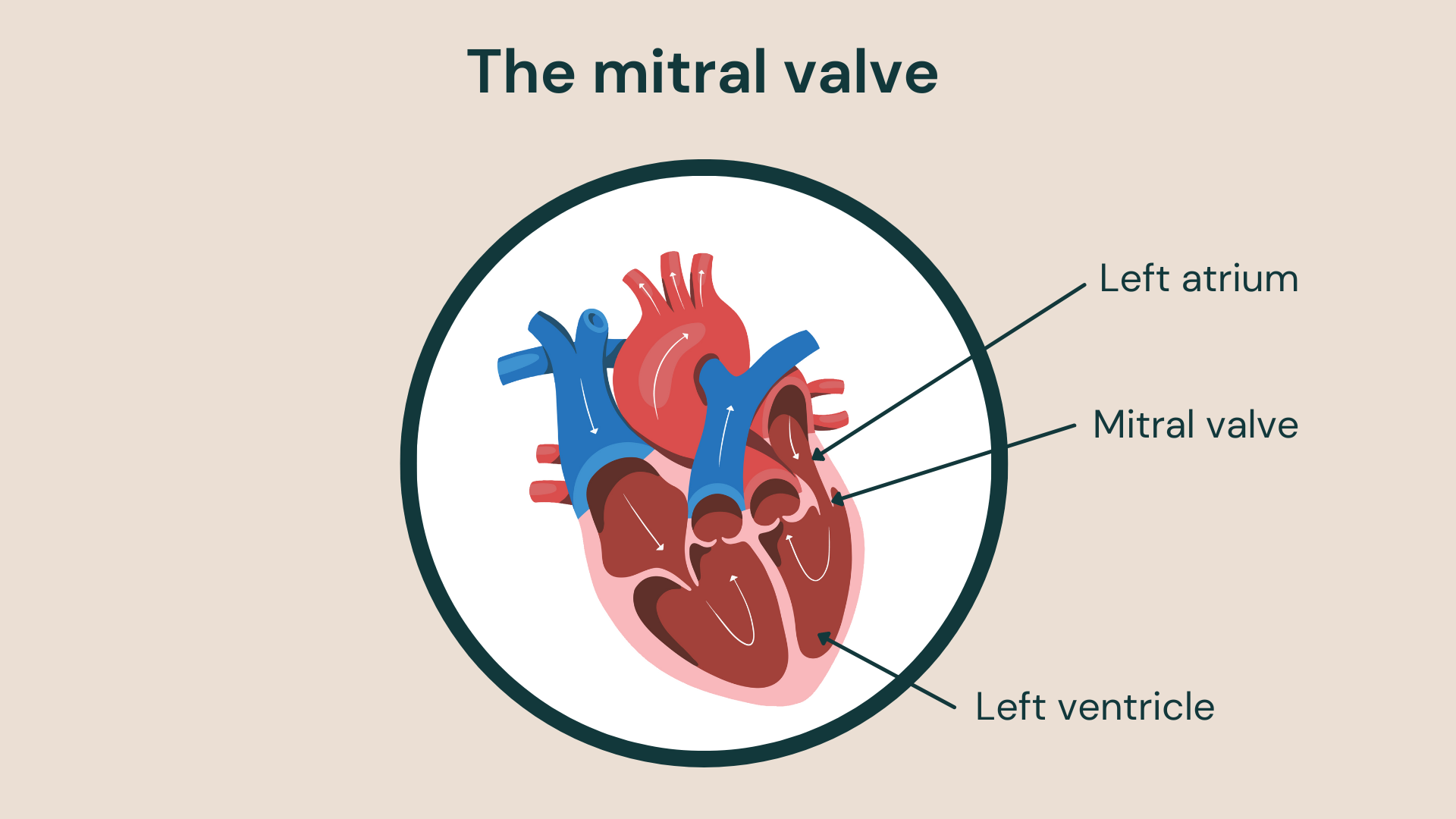
Diagram of the heart showing the position of the mitral valve between the left atrium and left ventricle.
Treatment for mitral valve disease
Mitral valve repair and replacement are both effective treatments for mitral valve disease, with important differences in how each procedure is performed and when one may be recommended over the other. Careful assessment is needed to determine the most appropriate option for each patient.
In addition to traditional open‑heart surgery, we offer a full range of minimally invasive, totally endoscopic (using advanced 4K 3D camera systems with robotic assistance) and non‑surgical transcatheter procedures. These advanced treatment options are delivered by our specialist cardiology and cardiac surgery teams, who work together to provide personalised, expert care at every stage of treatment.
What is a mitral valve repair?
Mitral valve repair is often the first step in treating mitral regurgitation and may be recommended even if you are not experiencing any symptoms.
It can be performed as open-heart surgery, minimally invasive, totally endoscopic keyhole surgery or as a transcatheter procedure.
To repair your mitral valve, a specialist may:
- use sutures or stitches to repair it
- reshape it with a ring
- remove excess tissue
- use a device to clip the valve flaps together
- attach artificial chords between the valve and heart muscle wall
If treatment for mitral valve disease has been recommended, our heart specialists can help. Book an appointment to discuss the most appropriate treatment option for you with our cardiology and cardiac surgery teams.
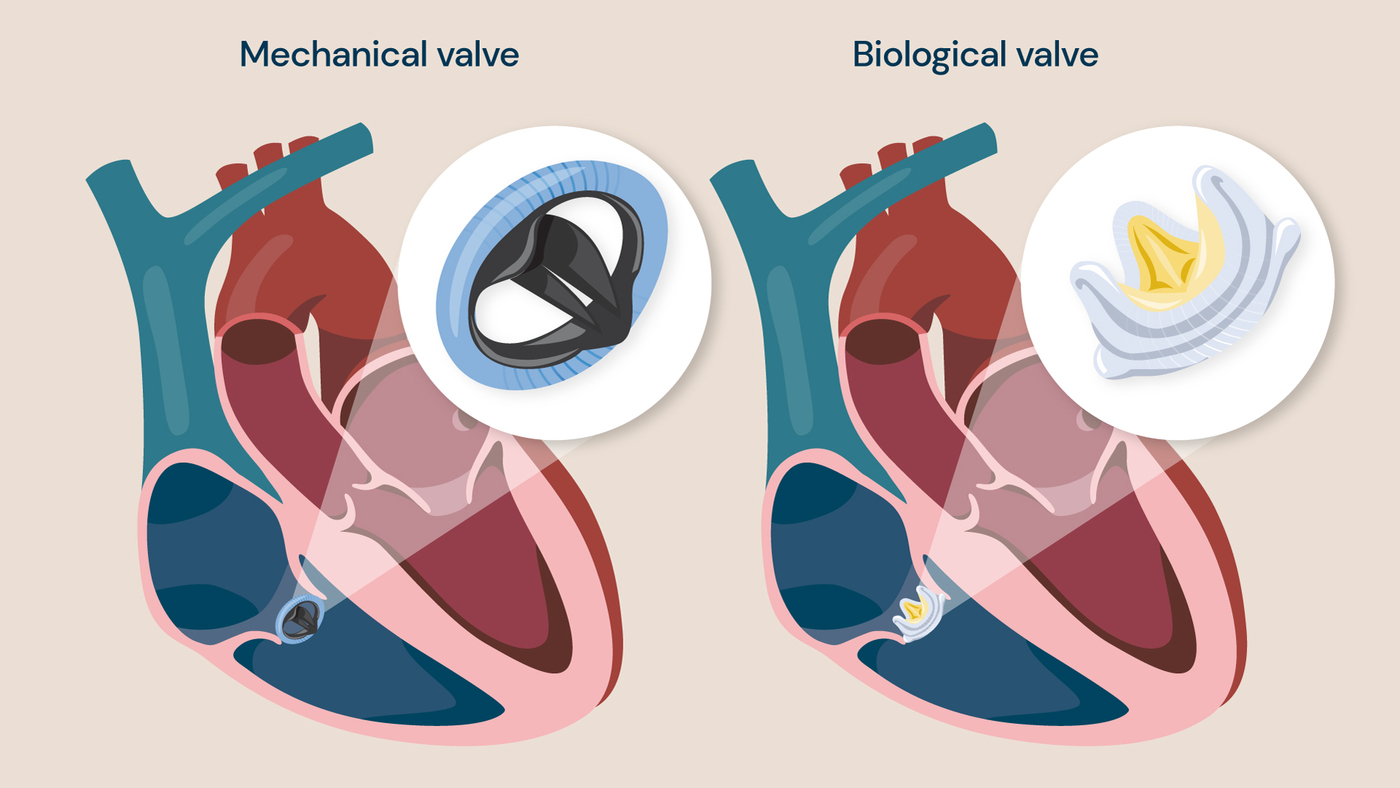
There are two types of replacement mitral valves that can be used: mechanical and biological.
What is a mitral valve replacement?
If your mitral valve disease is severe and not suitable to be repaired, a replacement will normally be recommended.
Mitral valve replacement can be performed using open‑heart surgery, minimally invasive techniques, or totally endoscopic keyhole surgery. Our cardiac surgery and cardiology specialists will recommend the most appropriate approach based on your age, overall health, condition severity and personal circumstances.
Types of replacement mitral valves and surgical approaches
Mitral valve replacement involves removing the damaged valve and replacing it with one that is either mechanical (made from synthetic materials) or made from biological tissues.
A mechanical mitral valve is highly durable, but due to an increased risk of blood clots, you will need to take blood thinning medication (anticoagulants) for life. Mechanical valves can also produce a quiet ticking sound and have a higher risk of endocarditis (infection).
Biological (tissue) mitral valves typically last between 10 and 15 years and do not require long term anticoagulants. However, they may need to be replaced later in life.
Our specialist heart surgeons were among the first to implant the Mitris Resilia valve from Edwards Lifesciences, a next generation biological valve expected to offer durability of over 20 years, making it a suitable option for some younger patients.
To find out whether mitral valve repair or replacement is right for you, book an appointment to discuss your options with one of our specialist heart teams.
Minimally invasive mitral valve repair and replacement
Our cardiology and cardiac surgery consultants are internationally recognised for their expertise in minimally invasive and totally endoscopic mitral valve repair and replacement, and have played a key role in developing and advancing several innovative techniques.
Below, you can explore the minimally invasive, endoscopic and robotic‑assisted procedures offered by our specialist heart teams, designed to improve outcomes and support faster recovery where appropriate.

Illustration showing the MitraClip device used to clip the mitral valve leaflets together during a minimally invasive mitral valve repair.
Transcatheter edge-to-edge repair (TEER) for mitral valve regurgitation
Transcatheter mitral valve repair, also known as TEER, is a minimally invasive procedure used to treat mitral valve regurgitation without the need for open‑heart surgery. The procedure uses advanced devices such as MitraClip or PASCAL, selected based on your individual valve anatomy and clinical needs.
Our expert heart teams carefully assess each patient to determine whether TEER or another treatment approach is the most suitable option.
TEER procedure details
During the procedure, a small incision is made in the groin, allowing a catheter (a thin, flexible tube) containing the TEER device to be guided through a blood vessel to the heart. Using real‑time echocardiography and x‑ray imaging, a specialist cardiologist positions and secures the device to the mitral valve to reduce leakage and improve blood flow.
The procedure takes between 1 and 2 hours, with patients reporting improved quality of life soon after. There are symptomatic improvements in 90-95% of patients.
This procedure is particularly beneficial for patients where the risk of traditional open-heart surgery is too high or not appropriate. For example, if a patient is older or the mitral regurgitation is ‘secondary’ (for example, due to a weak heart muscle).
Royal Brompton and Harefield hospitals have the most experienced TEER team in the UK.
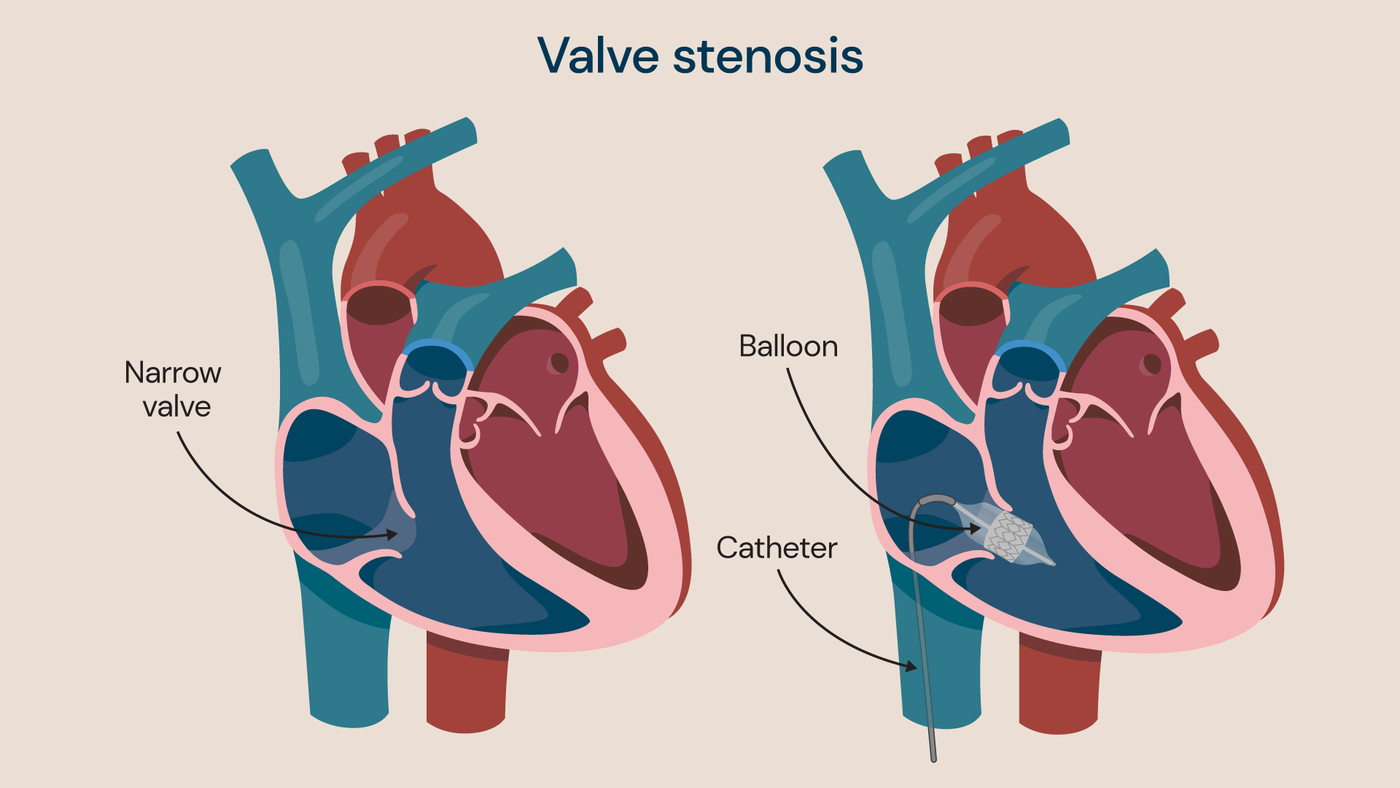
Illustration showing heart valve stenosis caused by a narrowed valve, alongside balloon valvuloplasty using a catheter and balloon to widen the valve opening.
Balloon valvuloplasty for mitral valve stenosis
A balloon valvuloplasty is a minimally invasive treatment that is delivered via a catheter. The catheter is directed to the heart via a small incision in the groin and guided by medical imaging.
When the balloon is at the site of the narrowed mitral valve, it is inflated to widen the valve, before being deflated and removed. This procedure can treat mitral valve stenosis.
Endoscopic (keyhole) mitral valve repair and replacement
Our consultant cardiac surgeons have developed a new endoscopic (keyhole) procedure to repair or replace a damaged mitral valve. This innovative treatment offers an alternative to invasive open-heart surgery.
A small 2.5cm incision is made between your ribs to place an endoscope (a thin flexible tube with a camera at the end) to perform the surgery.
A high-definition 3D camera is used to direct the procedure inside your heart, using robotic arms and it is completed in around 4 hours.
An endoscopic mitral valve repair or replacement can enhance your recovery time while simultaneously reducing the size of the surgical scar when compared to traditional open-heart surgery. Studies have shown that this procedure is also just as safe.
Patients are usually discharged in around 4 days after surgery and are back to normal activities (such as driving) within three weeks after surgery, compared to 3 months with traditional open-heart surgery.
Our surgeons have performed endoscopic heart procedures almost 1,000 times at our hospitals, making them highly experienced. Learn more about our advanced keyhole mitral valve repair technique, developed by our specialist cardiac surgeons to support faster recovery and reduced scarring.
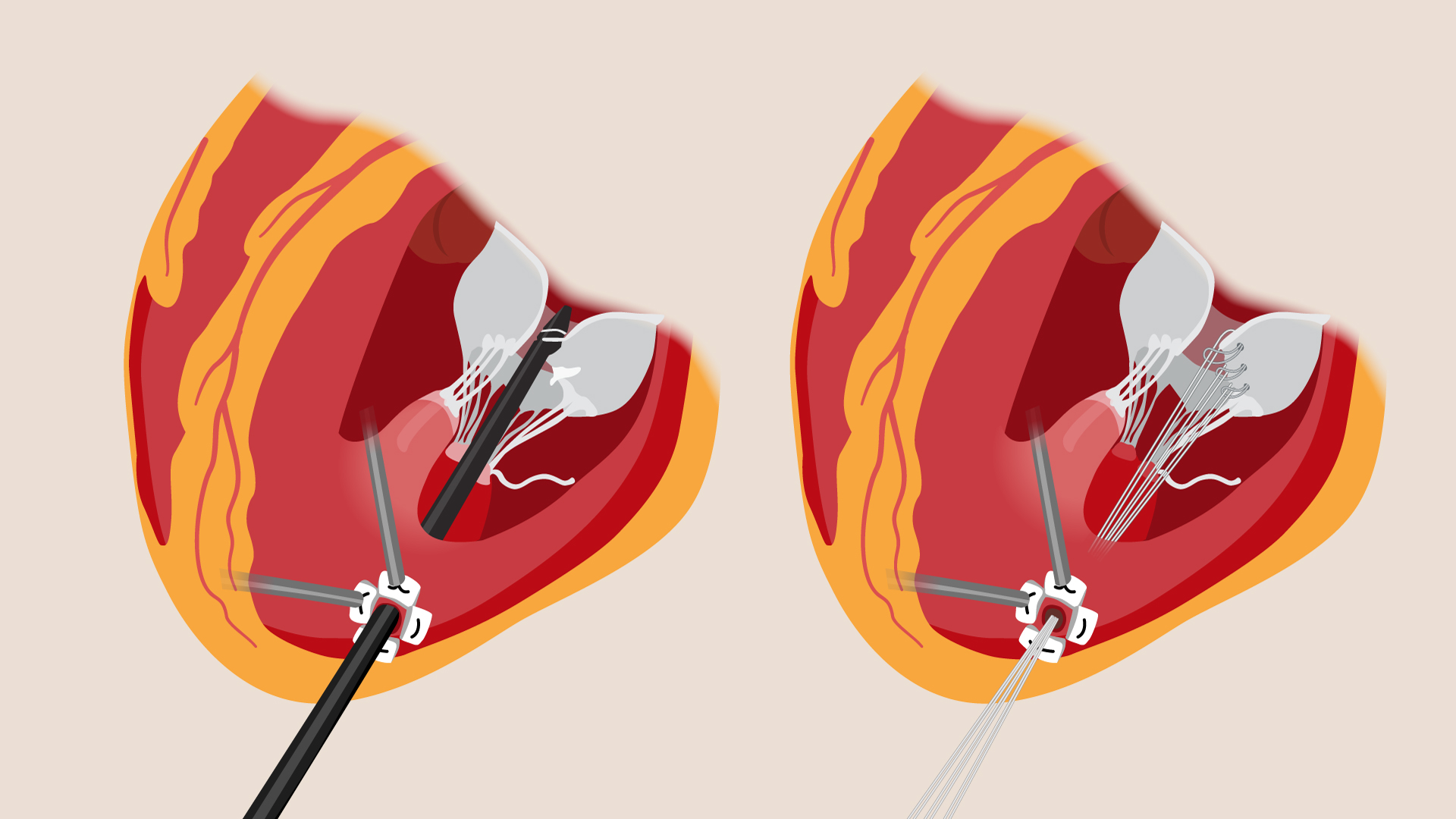
Illustration of the NeoChord procedure, a beating‑heart mitral valve repair that uses artificial chordae to restore normal movement of the mitral valve leaflets.
NeoChord beating heart mitral valve repair
In some forms of mitral valve regurgitation and prolapse, the chords (called chordae tendinea) attaching the valve leaflets to the heart muscle wall can become elongated and/or torn, resulting in the valves not opening and closing as they should.
The NeoChord beating heart mitral valve repair procedure is an innovative keyhole heart surgery that specifically repairs the chords that attach the mitral valve leaflets to the heart muscle wall.
A surgeon will first make a small incision in between your ribs to advance the NeoChord system to the heart, guided by medical imaging. During the procedure, the surgeon will implant artificial chords which are adjusted to the optimal length to help the mitral valve open and close normally again.
The NeoChord procedure is performed while your heart is still beating. This is beneficial for older patients or those that have health issues that can make traditional open-heart surgery high risk. As it is a keyhole heart procedure, the scarring is also minimal.
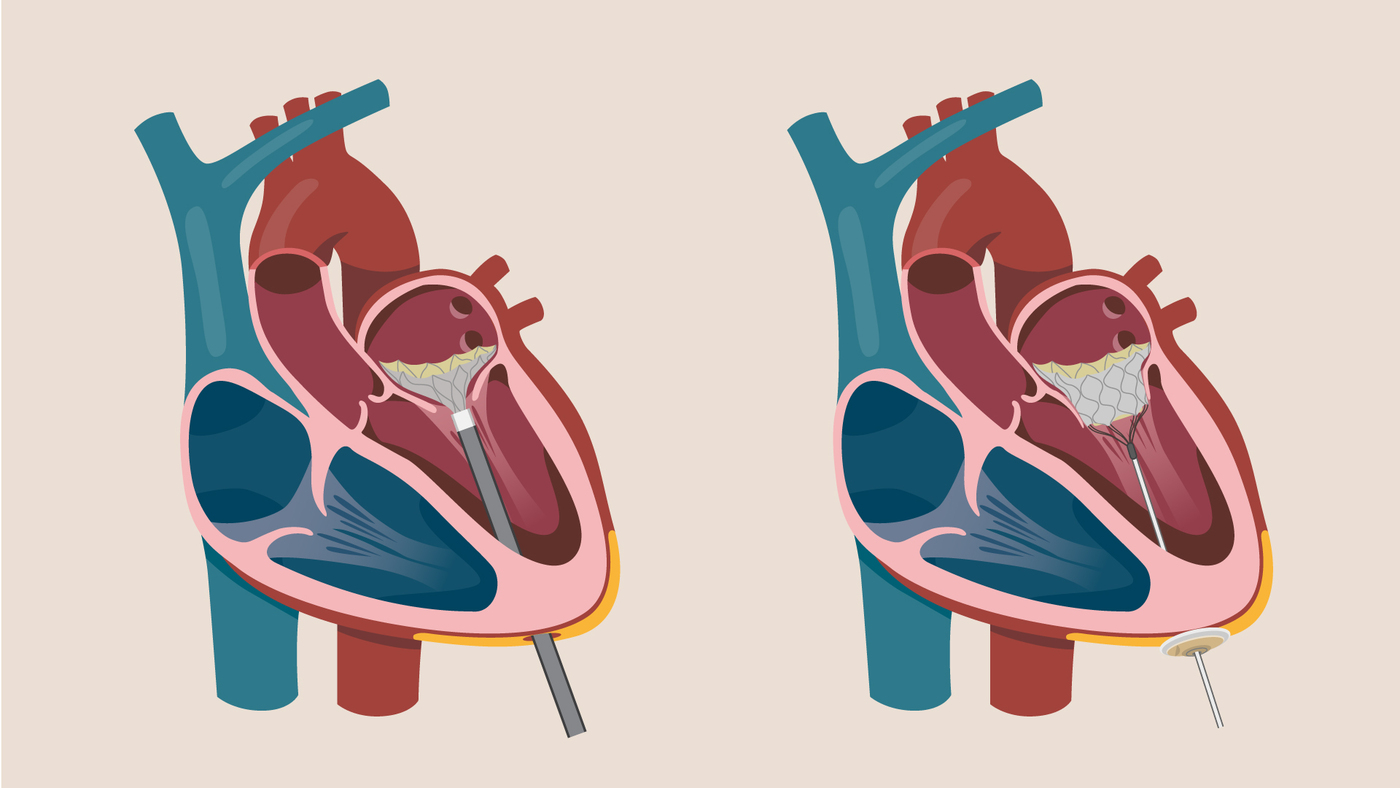
Illustration showing the Tendyne transcatheter mitral valve replacement (TMVR) device placed within the heart to replace a diseased mitral valve.
Tendyne Transcatheter Mitral Valve Replacement (TMVR) procedure
The Tendyne Transcatheter Mitral Valve Replacement (TMVR) procedure may be recommended in severe cases of mitral valve regurgitation in patients that are older, frail or have health issues which make open heart surgery high risk.
It is a minimally invasive procedure which, like our other keyhole heart procedures, requires only a small incision between the ribs. It also does not require the heart to be stopped.
The new artificial mitral valve will be fed directly into your beating heart where it is secured in place with a tether.
A research study on 100 patients with severe mitral valve regurgitation treated with Tendyne TMVR showed positive results. 93% of patients experienced no symptoms of the disease two years after the procedure.
Royal Brompton Hospital is the only centre in the UK that offers the Tendyne TMVR procedure.
As there are several procedure options, don’t hesitate to book an appointment and discuss your options further with a clinician.
How to prepare for a mitral valve repair or replacement
Preparing for your procedure is important and your doctor will advise you on what exactly you need to do beforehand.
Certain preparation advice often includes:
- stopping certain medications as advised by your doctor
- not eating or drinking anything for a certain amount of time before your appointment
- bringing a list of medications, you take with you
- advising of any allergies
- bringing personal care items such as a toothbrush
- wearing loose-fitting clothing
You may also be asked to remove any dentures, contact lenses, nail polish and jewellery before surgery.
Mitral valve repair or replacement results and recovery process
The recovery process for mitral valve repair and replacement is important as it helps enhance and maintain your results.
For traditional open-heart surgery, you will be kept in the hospital for around seven days so you can be monitored. After this time, you will be allowed to go home but will need to make sure to rest and follow any instructions given to you by your doctor.
You will not be able to drive, lift heavy objects or have sex for at least six to eight weeks. You should also speak with your doctor before doing anything strenuous.
Your recovery time may be shorter if you have a minimally invasive procedure and even quicker with an endoscopic procedure.
The results from your mitral valve procedure include:
- relieving symptoms such as chest pain and breathlessness
- reducing your chances of further heart problems such as heart failure
- enhancing your overall heart function
- allowing a normal life expectancy
To make these results last, you will need to incorporate healthy lifestyle changes into your day-to-day life. This means you should try to exercise (within your abilities), reduce your alcohol intake, avoid smoking, eat a well-balanced diet and make sure you get enough sleep each night.
All our patients are discussed in our unique, dedicated, mitral multidisciplinary team where a collegial decision is made, and the correct treatment is agreed.
Risks and complications of mitral valve repair or replacement
All minimally invasive and surgical procedures have some risks and complications associated with them, including mitral valve repair and replacement.
Some of the potential risks can include:
- infection
- blood clots
- blood loss
- malfunction of a new valve
- irregular heartbeat (arrhythmia)
- stroke
However, in our experience (over 1,000 procedures) the risks associated with mitral valve repair and replacement are very low and happen rarely.
Reviewed regularly to reflect clinical best practice
Last reviewed: 02 June 2024
Related services
-
Cardiac MRI scan (CMR)
A cardiac magnetic resonance (CMR) scan is non-invasive and shows detailed images of your heart.
-
Diagnostic tests for heart conditions
We offer a range of diagnostic tests at our state-of-the-art facilities.
-
Echocardiogram
An echocardiogram – also known as an echo – is a scan that examines the heart and surrounding blood vessels.
-
Electrocardiogram (ECG)
An electrocardiogram (also known as an ECG) is a test which is used to check your heart’s rhythm and electrical activity.
-
Heart valve repair or replacement
Our heart specialists use innovative techniques like heart valve repair or replacement to treat damaged or diseased heart valves in adults and children.
-
Mitral regurgitation
Mitral regurgitation is the most common heart valve problem worldwide. It is a dysfunction of the heart’s mitral valve.
-
Valvular heart disease
Heart valve disease occurs when the valves of the heart become diseased or damaged.
Locations
Our cardiology specialists provide care at the following locations:
Discover our cardiology and cardiac surgery specialists
Meet our team of world renowned cardiology and cardiac surgery specialists. From cardiovascular health assessments to innovative interventions, our experts are committed to delivering personalised care designed just for you.