
Content verified by

Our specialists at Royal Brompton Hospital have expertise in the ongoing monitoring of both recreational and professional athletes of all ages who have been diagnosed with cardiac conditions. Dr Sabiha Gati, consultant cardiologist, specialises in cardiac MRI scans offering diagnoses, personalised support, and treatment plans for both NHS and private patients at our hospitals.
When is a cardiac MRI recommended?
Where an ECG and echocardiogram raise initial suspicions of an underlying abnormality or pathology, cardiac MRI becomes a relevant to our athlete assessment and screening process. In cases where our specialists identify T-wave inversion or a left bundle branch block, they are likely to recommend a cardiac MRI instead of an echocardiogram for a fast and accurate diagnosis.
When compared with cardiac MRI, research shows that echocardiograms are not as effective at picking up hypertrophic myopathy in patients with a T-wave abnormality. Cardiac MRIs also provide good detail on inflammation and myocardial scarring, which are not always detected by ECGs or echocardiograms.
Preventing sudden cardiac death through screening
Dr Gati works with Cardiac Risk in the Young (CRY), a charity dedicated to preventing sudden cardiac deaths in young people aged between 14 and 35. Individuals undergo a cardiac screening assessment as part of the charity’s screening programme to determine which patients require further testing or interventions to mitigate their risk of sudden cardiac death. CRY’s data and screenings show that:
- 1 in 12 young people die suddenly from heart conditions every week
- 1 in 100 people have minor cardiac abnormalities that will require further monitoring
- 1 in 300 people have a serious cardiac condition that could put them at risk
“In the young athletic population below the age of 35, we mainly look for conditions such as cardiomyopathy, serious electrical faults such as long QT syndrome, coronary artery anomalies and myocarditis, which are causes associated with the risk of sudden cardiac death in this population,” shares Dr Gati. “After the age of 35, people are most at risk of coronary artery disease, so we would screen for this as well as atrial fibrillation.”
Sudden cardiac death in sportspeople is rare, affecting 1 in 50,000 athlete-years, and most of those deaths are due to cardiomyopathies. With competitive athletes, our sports cardiology specialists mainly offer pre-participation screening for conditions that could potentially put them at risk.
Balancing safety and return to play
Dr Gati has expertise in advising safe return to play in the athletes she sees for ongoing cardiac conditions. For patients with active myocarditis, she recommends a cardiac MRI for risk assessment, to determine whether they can safety resume exercise, including certain elements like recreational sporting events and competitions.
“In some cases of hypertrophic, arrhythmogenic or dilated cardiomyopathies, we’ll also recommend cardiac MRIs for risk stratification,” notes Dr Gati. “MRI scans can help avoid people being wrongly diagnosed with a heart condition or being told to stop playing sport unnecessarily. This is because echocardiograms can sometimes make normal hearts look abnormal, whereas MRI scans provide a more detailed picture.”
Why athlete heart scans require specialist expertise
With a limited number of cardiologists in London dedicated to interpreting scans of athletes – both recreational and professional – we’re proud to have strong expertise in both imaging and interpretation, and to run a high-volume private service.
“When it comes to interpreting athletic scans, it can be different from a normal population scan because of the physiological athletic remodelling,” explains Dr Gati. “The danger is that if you don’t have specific expertise in sports cardiology and interpreting those images, there is a possibility that you could over-report pathology in those individuals.”
Our specialists are also experts in interpreting the differences between male and female athletes in relation to their age, ethnicity and training volume, as well as in relation to the sports they play. For example, endurance athletes will show significant changes and slightly reduced function on an MRI, whereas weightlifters may display thickening of their heart muscle and may not show such significant dilatation.
The Italian model for heart screening has shown that low QRS voltages on an ECG is associated with myocardial scar and electrical abnormalities, and warrants further evaluation with an MRI, Holter and exercise test.
However, Dr Gati and her team have conducted further research in this area. “Our study suggests that low QRS voltages on the ECG isn’t associated with myocardial scar and arrhythmias,” she explains. “Our data shows that if you did see it in an asymptomatic individual without a family history, without other features on the ECG, then you can potentially clear them.”
These findings play an essential role in allowing athletes to return to sport sooner than they previously would have been advised to, with positive impacts on their overall physical and mental health.
A holistic approach to athlete heart health
Our specialists offer a holistic approach to patients within the sports cardiology service, detecting conditions and offering scans and ongoing advice.
“While I do treat professional athletes, I particularly enjoy seeing recreational athletes as they take up many challenges are involved in many different sports,” shares Dr Gati. “My holistic approach involves managing cardiac pathologies, creating exercise plans, and taking diet and nutrition into account as well.”
Our specialists are also aware of the mental health impacts of cardiac conditions and the deterioration of health for some athletes, as needing to reduce the intensity of sports can be a difficult time for them. To this end, offering mental health support during their care journey with us is a crucial part of our service, and patients can be referred for specialist counselling where required.
“Our overall aim is to help our patients to make better-informed decisions and to help manage their safe return to sport,” explains Dr Gati.
At Royal Brompton and our Wimpole Street Consulting Rooms and Diagnostic Centre, we have facilities available to see paediatric athletes, as well as adult athletes, with our sports cardiology and imaging expertise.
“We’re planning further research to help better manage athletic patients; our next project is working on the differentiation of athletic remodelling versus dilated cardiomyopathy,” shares Dr Gati. “We’re excited to work on this research project and are currently applying for investment and funding.”
Case study: Dilated cardiomyopathy versus athletic remodelling
Luke, a 31-year-old patient from Hertfordshire, has been under Dr Gati’s care for the last 3 years.
He was diagnosed with atrial fibrillation as a teenager, which was triggered by exercise. After this experience, Luke avoided intense workouts until he began Hyrox training in his late twenties.
At the end of his first Hyrox session, Luke’s heartrate rose to 230 beats per minute, prompting him to visit the cardiologist he had seen as a teenager for a cardiac MRI, who then referred him to Dr Gati with concerns of dilated cardiomyopathy.
Under Dr Gati’s care, Luke has been having regular cardiac MRIs to determine whether his symptoms and visible cardiac differences are due to dilated cardiomyopathy or athletic remodelling. “We’re still in a grey area with this,” Luke explains, “as I don’t have all the attributes needed to confirm a diagnosis.” Luke had dilated ventricles with borderline low cardiac function that has normalised with treatment, annual scans are helping him and Dr Gati to better understand the care he may need going forward.
Dr Gati initially advised Luke to avoid high intensity exercise, caffeine and alcohol, to assess what impact they have on his symptoms, which she found to be very minimal. While Luke still has an enlarged heart, he takes medications and now experiences very few symptoms day-to-day.
For peace of mind, Luke had a Reveal monitor (implantable loop recorder) fitted in his chest which links to his phone. “Fortunately, it picked up just one arrhythmia about 2 years ago, which was short-lived and nothing to be concerned about, so thankfully, the condition isn’t impacting my life significantly at the moment,” he shares.
Luke continues to see Dr Gati regularly for ongoing support, thorough assessment and cardiac MRIs, and is now looking forward to taking up road cycling again, after having initially stopped due to his condition.
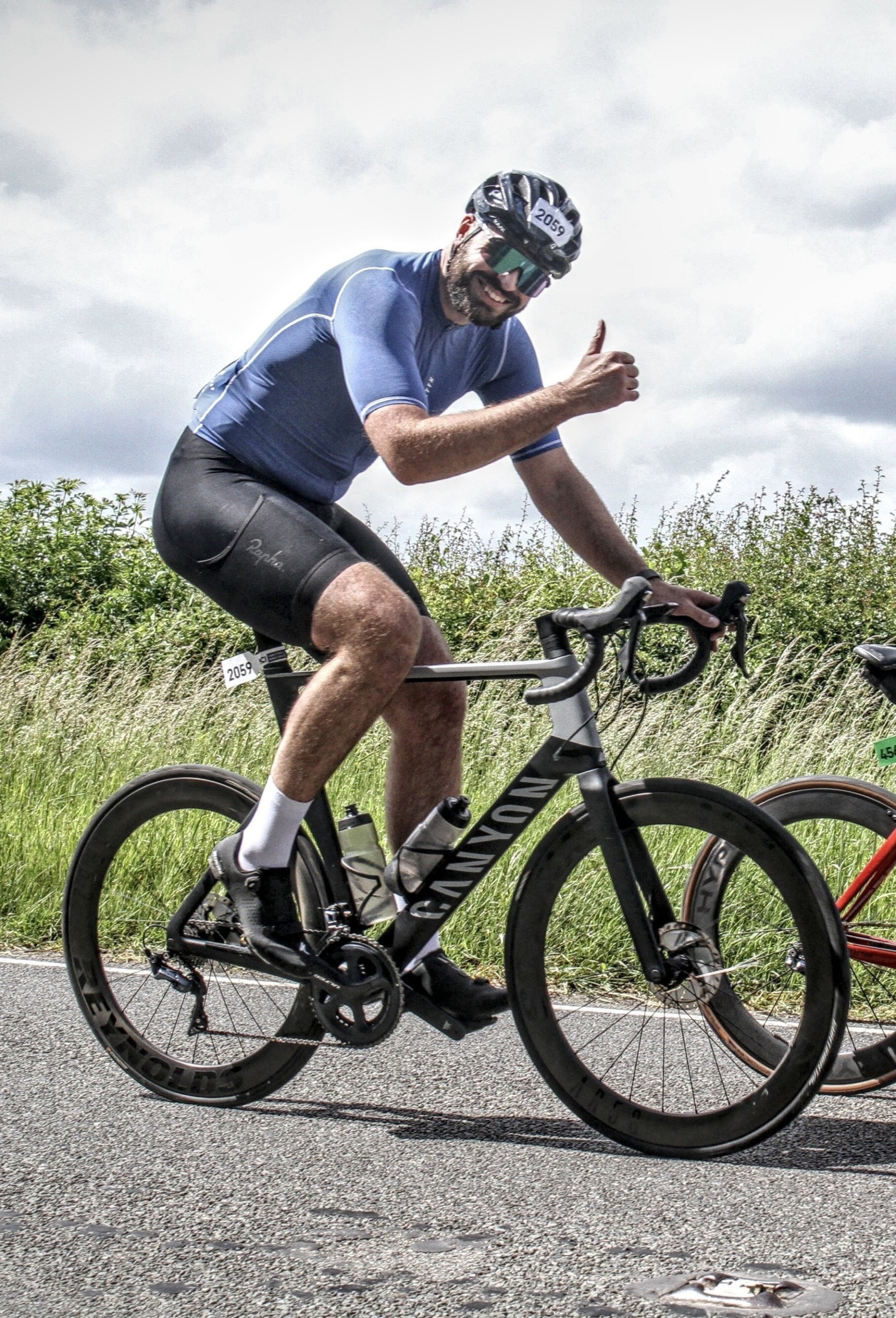
Luke taking part in a road cycling race, which he now hopes to take up again.
When to refer
Patients presenting with cardiac symptoms that occur during or after exercise can be referred to our specialist sports cardiology service in state-of-the-art facilities. Patients cannot refer themselves for cardiac MRIs and will need to see a cardiologist for assessment prior to being referred. Our consultants have expertise in diagnosing a broad range of conditions, and regularly provide ongoing monitoring and support, along with personalised treatment plans for private patients from the age of 14 upwards.
Get in touch
To find out more about our sports cardiology service for private patients, please contact our customer service team. Call +44 (0)20 3131 6858 or email [email protected].
Reviewed regularly to reflect clinical best practice
Last reviewed: 07 July 2026