
Content verified by

What is heart failure?
More than a million people in the UK are living with heart failure – a condition that occurs when your heart is not able to pump blood around your body properly. In most cases, this happens because the heart has become too weak, or too stiff, often following a heart attack or because of other conditions like cardiomyopathy.
Heart failure is categorised according to how severe it is, with 1 being the least severe and 4 being classed as end-stage heart failure. A left ventricular assist device (LVAD) is a treatment that may be recommended for certain people living with heart failure.
At Harefield Hospital, our LVAD expertise means we have some of the UK’s highest success rates, with our consultants having performed this type of procedure for over 30 years. We’re the only centre in the country to offer minimally invasive LVAD surgery as well as standard open surgery, and are proud to be a specialist centre visited by international medical teams for training opportunities.
Experts in ventricular assist devices
Our world-leading cardiac surgeons offer:
- individually tailored LVAD surgery
- short-notice appointments
- accelerated access to expert treatment

What is a left ventricular assist device?
A left ventricular assist device, or LVAD for short, is an implantable pumping device that can take over some or all of your heart’s pumping action that circulates blood around your body. There are several manufacturers of LVADs, but our expert team at Harefield Hospital use the most advanced and well tested LVAD device, the Heart Mate 3 by Abbott, for our patients.
The use of this device requires you to have open heart surgery. The procedure can be performed either through a standard open approach or a minimally invasively, where possible.
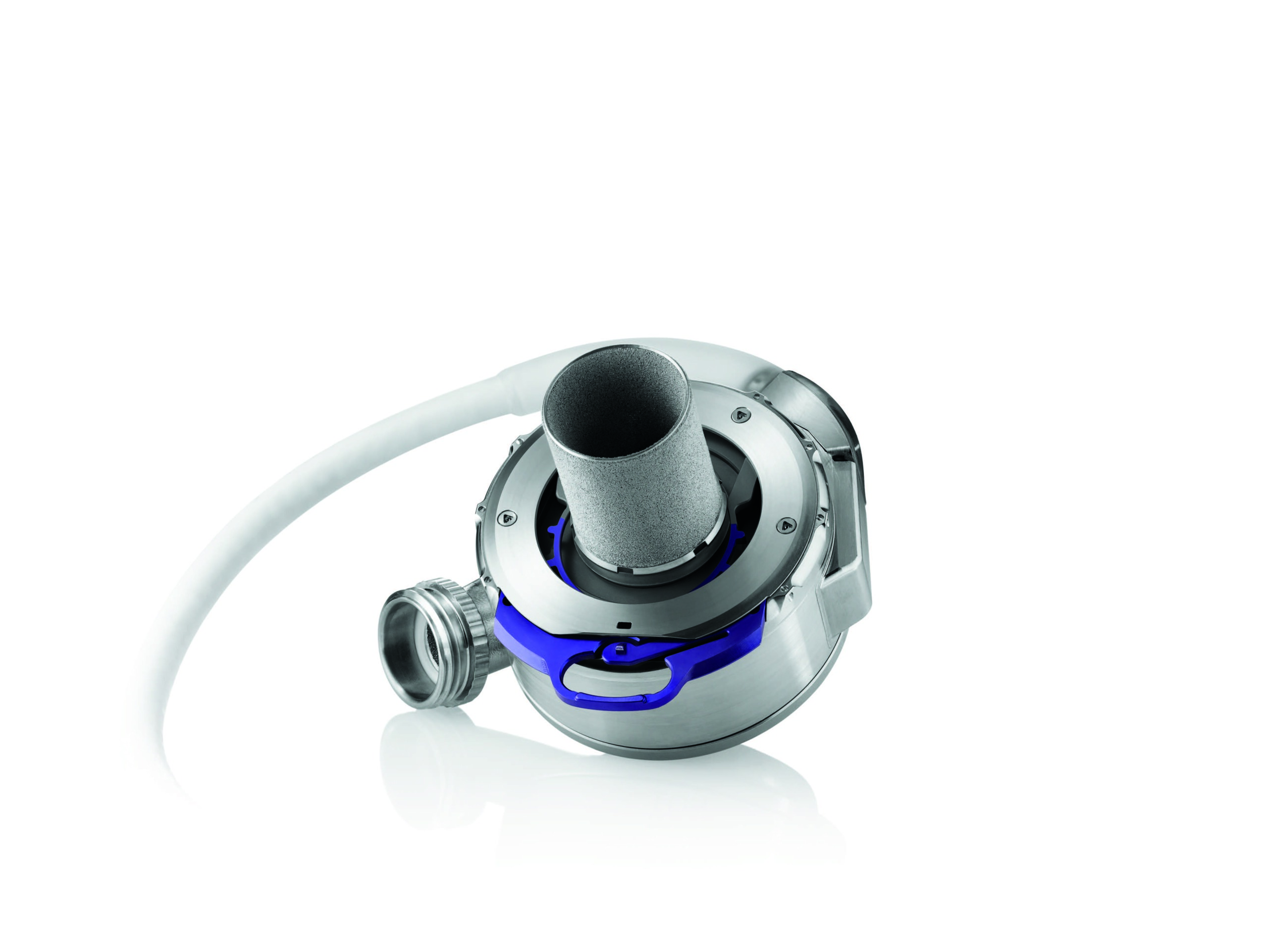
Heart Mate 3 left ventricular assist device (LVAD). Image courtesy of Abbott Laboratories.
Why would you need a left ventricular assist device?
You may be recommended to have a left ventricular assist device if:
- you are waiting for a heart transplant – As donor hearts are not always readily available, this is a life-saving measure
- a heart transplant is not an option – in which case, LVAD can be used as a long-term treatment for your heart failure, helping you live longer
- you have potentially recoverable heart failure, and LVAD may help toward possible long-term recovery of your heart (however indication is relatively uncommon)
- your recovery from heart surgery is complicated by unrecoverable heart failure
Contact our team to learn more about whether a VAD would be a suitable option for you.
How does a ventricular assist device work?
The heart has 4 chambers, 2 of which are particularly large and are located towards the bottom of the heart. The left ventricle is responsible for pumping blood into your aorta, which is the large artery that leaves your heart and that pushes blood around your body. In people with heart failure, the left ventricle cannot do this properly without help. LVAD works by taking over this function.
One end of the LVAD pump is attached to the left ventricle of your heart, and the other is attached to your aorta. Blood flows from the left ventricle into the LVAD which then pumps it back out into the aorta, so it can easily supply the rest of your body.
The LVAD is powered through a special cable called the driveline. This connects the pump inside your body to a small controller outside your body, passing through an opening in your skin. The controller monitors the LVAD and regulates the power needed to keep it working. An external battery pack powers the system and can be carried in a bag or holster.
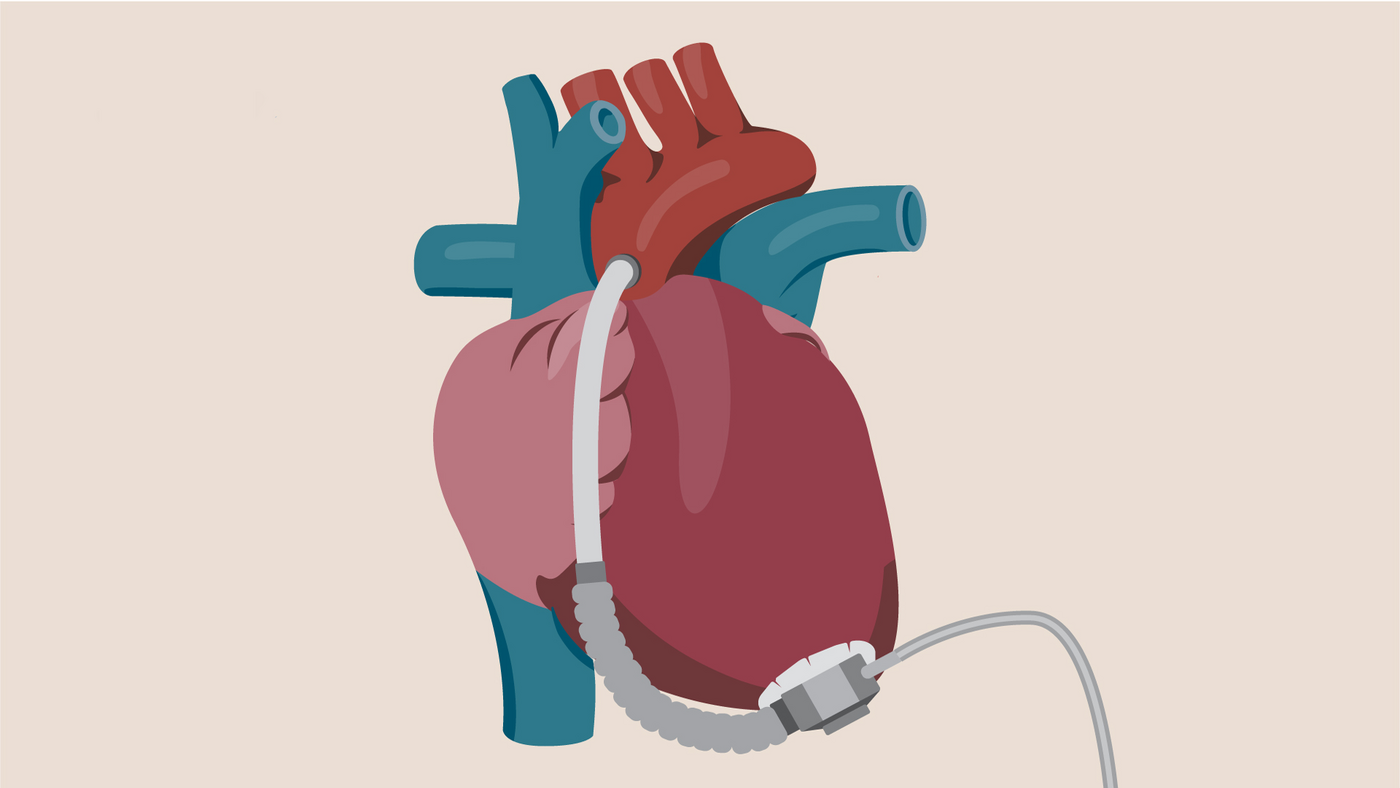
A left ventricular assist device, or LVAD for short, is an implantable pumping device that takes over some or all the role of pumping blood around your body.
Understanding the battery system on a ventricular assist device
Since ventricular assist devices do such a crucial role in keeping you alive, their battery system is extremely reliable. 2 batteries are always connected to the controller so that if one runs out, the other can take over and power the device for several hours.
If your battery starts to run low, the device will alert you to the fact that it needs changing. There is also additional back-up circuitry on the device so that if the initial circuit fails, the back-up will automatically take over.
In addition, an adapter will enable you to plug the controller directly into the main national grid or even to your car charging port.
The average battery life of an LVAD battery is 4-6 hours.
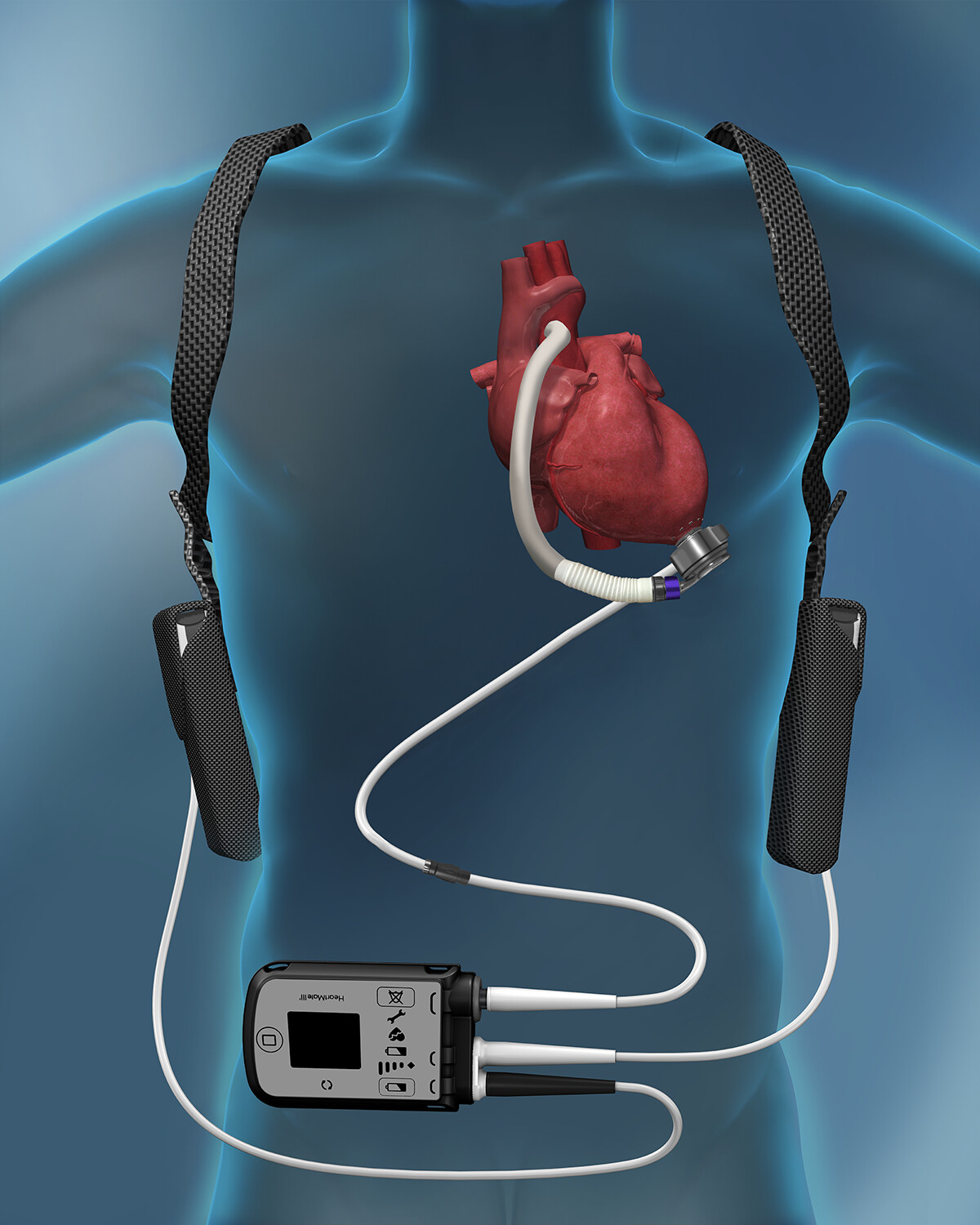
Left Ventricular assist device (LVAD), image courtesy of Abbott Laboratories.
How to prepare for LVAD surgery
A ventricular assist device can be implanted through an anterior midline chest incision (sternotomy) or through a number of smaller incisions on either side of the chest (anterior thoracotomies).
Before your surgery, our expert team will talk to you about what to expect, and answer any questions that you may have.
Our team will also tell you what practical steps you need to take ahead of your surgery, and what you need to know about your recovery. This will include things like:
- when you should stop eating and drinking ahead of your surgery (as the procedure will be performed under general anaesthetic)
- bringing a list of all your usual medications and their dosages with you to the hospital on the day of your surgery
- what to bring to the hospital to keep you comfortable during your stay
- what you should avoid wearing on the day of your surgery, like contact lenses, dentures, jewellery, and nail polish
Pre-screening and diagnostic tests before LVAD surgery
You will also need to have a range of tests before your surgery to ensure that having a LVAD implant is the best treatment for you. For that, you will be admitted a few days earlier. Some of the tests you can expect to have may include:
- a cardiac catheter study to check the function and pressures in different chambers of your heart
- an echocardiogram which shows our team the structure and function of your heart
- a chest X-ray and lung function test to examine the lungs and their function
- an electrocardiogram (ECG) to check the rhythm of your heart
- blood tests to assess other organs function and need for preoperative assessment and optimisation
If you have any questions at any stage of the preparation for your LVAD surgery, our experienced surgeons and surgical care team will be happy to answer them for you. Contact us to speak to a member of the team.
What happens during LVAD surgery?
LVAD surgery is often performed through a standard midline chest incision but in some cases may be carried out minimally invasively. At Harefield Hospital, we offer highly experienced care that can offer both approaches safely, setting us apart from other centres. We are the only provider of minimally invasive LVAD surgery in the country.
Irrespective of surgical approach, LVAD surgery takes at least 3 hours to perform and will be carried out under general anaesthetic. This anaesthetic is delivered intravenously, which means that it passes through a needle into your veins. It will put you to sleep and ensure that you do not feel any pain during your surgery.
You will also be connected to a ventilator, which is a machine that helps you to breathe while you are having surgery. You will have a catheter inserted into your bladder to drain it during your procedure and to ensure you can continue to pass urine without having to regularly get up while you recover.
You may be connected to a heart-lung bypass machine which ensures stability while your procedure is being performed.
In the standard sternotomy approach, our surgeon will make one long incision along the middle of your chest, usually around 20-25cm. They will then open your sternum (chest bone) to perform the surgery.
In a minimally invasive procedure, our surgeon makes 3 incisions in either side of the chest and groin, usually around 5-10cm each, and performs the surgery by spreading the ribs apart.
There are 3 main steps involved in LVAD surgery:
- The main pump of the LVAD is inserted into the tip of your heart.
- The tube section of the LVAD is attached to your aorta.
- A cable is tunnelled and brought out through an opening in your skin that connects the pump to the control unit and battery pack.
Once your surgery is complete, you will be taken to the intensive care area so that you can wake up gradually as the anaesthetic wears off and your body adjusts to the LVAD. Our teams will continue to monitor you while this happens.
Recovery and aftercare following LVAD surgery
You will need to stay in hospital for several days. You are likely to need to spend a few weeks following your left ventricular assist device surgery recovering and learning to manage your LVAD.
In the initial post-operative period, in addition to your urinary catheter, you will also have tubes to drain fluid and blood from your chest. You will have lines for delivery of medicine in your veins and monitoring your blood pressure from your arteries. Any discomfort will be managed by our expert pain management specialists. These will all be removed within the first few days.
Before you leave the hospital, our team will show you how you should care for your new LVAD, including how to charge and change the battery, how to clean incision sites and what you should do if you have any concerns. You will be given medicine to help your native heart as well as anticoagulant to protect the LVAD from clot formation.
If you have any questions about recovering from your surgery, our friendly team will be happy to speak to you. Contact them to learn more.
Benefits of a left ventricular assist device
Implanting a left ventricular assist device requires surgery under general anaesthetic, so it will only be recommended where the benefits of the treatment considerably outweigh the risks associated with the procedure.
The key benefits of having a ventricular assist device all relate to improving your quality of life and include:
- a potential return to exercise
- a potential return to work
- better breathing
- less fatigue
- longer life
- more strength
- recovery and healing of the heart
Risks of a ventricular assist device
As with any surgical procedure, there are also risks associated with getting a ventricular assist device. Some of those potential risks and complications include:
- bleeding that would need blood transfusion or return to operating theatre
- blood clots that can dislodge to other parts of the body
- infections including the device itself
- issues with the right ventricle of the heart that would need temporary support
- other organ dysfunction, for example kidneys needing temporary support
- stroke
- death
Our consultant surgeon will talk to you about the benefits and risks of getting a left ventricular assist device and help you make an informed decision about your care.
Reviewed regularly to reflect clinical best practice
Last reviewed: 28 September 2026
Locations
Our specialists can see patients in the following location:
Discover our team of cardiac surgery specialists
Meet our team of renowned cardiac surgery specialists. From cardiovascular health assessments to innovative interventions, our specialists are committed to delivering personalised care designed just for you.