
Content verified by

What is an adenoidectomy?
An adenoidectomy is a surgical procedure to remove enlarged adenoids – small glands at the back of the nose and throat that can affect breathing, sleep and ear health in children.
As part of our specialist paediatric ear, nose and throat (ENT) service, adenoidectomy can help treat breathing difficulties, recurrent ear infections, glue ear, snoring and sleep apnoea caused by enlarged adenoids. Our expert surgeons provide tailored care for children using proven surgical techniques.
Treatment is available at Evelina London Children’s Hospital, providing access to highly specialised paediatric ENT care in central London.
Expert adenoidectomy care for your child
At Evelina London Children’s Hospital, our ENT specialists offer:
- quick access to specialist appointments
- accurate diagnosis and clear treatment planning
- timely surgery when needed

What are enlarged adenoids?
Adenoids are small pieces of tissue in the back of the nose and throat, just above the tonsils. Although you can see your child’s tonsils, you cannot see their adenoids because of their position. Adenoids are part of the immune system and play a role in protecting the body from infections. They can swell when unwell.
From around the age of 5 to 7, your child’s adenoids start to shrink and their role in fighting infections reduce as your child gets older. However, their adenoids can sometimes remain enlarged. This is rare in adults but much more common in children.
The treatment that cures large adenoids is an adenoidectomy.
What are the signs of enlarged adenoids?
If your child has enlarged adenoids, they may experience:
- a runny/stuffy nose
- problems sleeping, snoring and sleep apnoea
- ongoing cough
- difficulties swallowing
- swollen neck glands
- a blocked feeling in your ears
- recurrent ear infections
- bad breath
- heavy mouth breathing
If your child is experiencing any of these symptoms, our specialists can assess their adenoids and recommend the right treatment. Complete our online enquiry form to request an appointment.
What is an adenoidectomy?
Adenoids are a patch of tissue containing immune cells at the back of the nasal passage. Like tonsils, they help fight infections caused by harmful bacteria and viruses.
When your child has an infection affecting the ears, nose or throat, adenoids can become inflamed and enlarged. This can feel sore and make breathing difficult.
An adenoidectomy is the surgical removal of the adenoids. This may be recommended for your child if their adenoids often become infected and enlarged, and they don’t respond to conservative measures and possibly treatment such as antibiotics.
Research studies show that removing the adenoid does not increase the risk of getting colds or infections.
Adenoidectomy is a common procedure in children, and our specialist team at Evelina London Children’s Hospital has extensive expertise in delivering safe, effective care.
We support your child before, during and after treatment to ensure comfort and confidence at every stage. Complete our online enquiry form to contact our team and arrange an appointment.
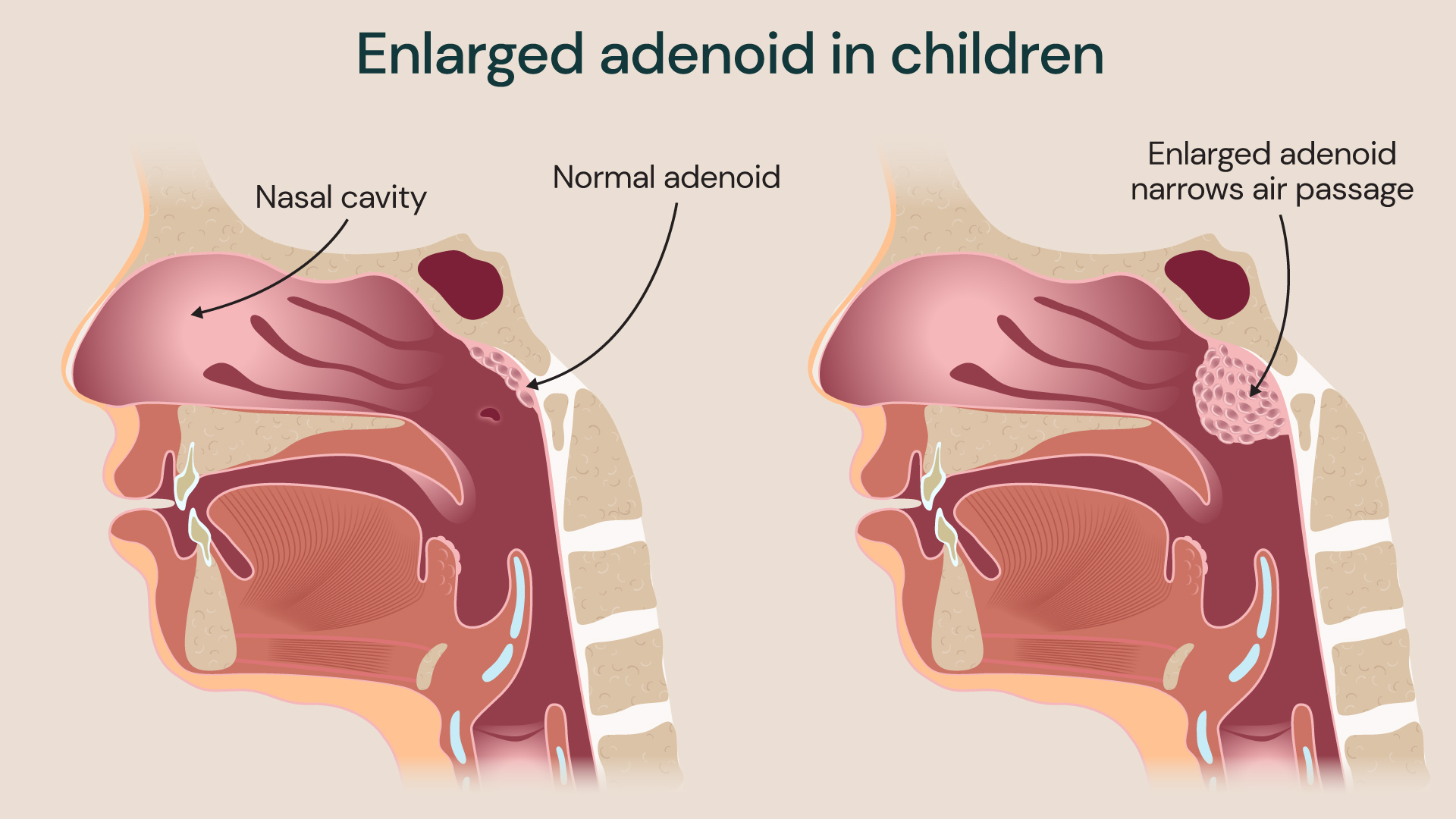
Adenoids can become inflamed and enlarged in response to infection, narrowing the airways.
How does an adenoidectomy work?
Before your child undergoes an adenoidectomy, one of our ear, nose and throat (ENT) consultants may look inside their nose with a light or a small, thin tube with a camera attached. The reason is to check for any blockages before removing the adenoids. This will depend on the age of your child.
We perform adenoidectomies under general anaesthetic, meaning your child will be asleep during the procedure. Once the anaesthetic has taken effect, the surgeon will remove their adenoids through the mouth. The surgery is either done by carefully cutting them out or using special tools that apply heat or radio frequency energy to remove them.
The process of an adenoidectomy is the same regardless of whether you are an adult or a child. The whole procedure takes around 30 minutes to complete.
Sometimes, surgeons can perform a tonsillectomy (tonsil removal) or grommet surgery (ear draining) simultaneously as an adenoidectomy if they are also causing problems.
How to prepare for an adenoidectomy
Before an adenoidectomy, your child must avoid food and drink for a set time as the procedure requires an empty stomach. We perform adenoidectomies as a day case, meaning your child can go home on the same day.
Recovery and aftercare
Immediately after an adenoidectomy, we’ll take your child to the recovery room and provide medicine to relieve pain and swelling.
It’s normal after the operation for your child to:
- feel nauseous
- have a blocked nose
- have a sore throat
- temporarily have a nasally-sounding voice
- have bad breath
It takes around one week to recover from an adenoidectomy fully, although they may feel blocked in the nose for a little while longer.
When your child is recovering, it’s best to:
- keep them off school for the week to rest
- stop them from being around many people to reduce the infection risk
- alternate paracetamol and ibuprofen to reduce pain and swelling
- help them keep eating and drink plenty of fluids
Following your surgeon’s aftercare guidance is important for recovery. If you have any questions or need further advice, our specialist team can provide support. Fill in the online enquiry form to speak with our team.
Why might someone need an adenoidectomy?
An adenoidectomy can be a necessary treatment if your child’s adenoids are enlarged and causing other persistent symptoms. Frequent ear infections, including glue ear (a middle ear infection), difficulty breathing and sleep apnoea, are all symptoms that cause pain or block the airways.
The best way to treat these symptoms is with an adenoidectomy.
Adenoidectomies are generally carried out for children. Surgeons can perform adenoidectomies on adults experiencing these problems, but it is uncommon as your adenoids will have usually disappeared by early adulthood.
Risks of an adenoidectomy
Although an adenoidectomy is a simple procedure, as with all surgeries there are some risks associated with it. Rare complications can include:
- bleeding that needs a second surgery to stop it
- tooth damage (knocks or chips can occur)
- infection
- difficulty breathing due to swelling in the throat
- nasal regurgitation
- adenoids growing back needing further surgery
Complications are uncommon in adenoidectomies. However, if your child experiences the below, seek urgent medical care:
- pain that is getting worse or doesn’t subside with pain relief medication
- a fever or high temperature
- a stiff or painful neck
- inability to drink fluids
Book an appointment with us
At Guy’s and St Thomas’ Specialist Care, we prioritise your children’s health and wellbeing throughout their time with us. We provide high-quality care and have created a child-friendly environment to help them relax while undergoing ear, nose and throat treatment.
Evelina London Children’s hospital is home to paediatric consultant ear, nose and throat surgeons, audiology consultants, speech therapists and specialist nurses who work together to provide comprehensive care for your child.
Book a consultation with our specialists today. Our supportive team is here to help you through the process of an adenoidectomy from beginning to end.
Reviewed regularly to reflect clinical best practice
Last reviewed: 28 January 2025
Locations
Our paediatric specialists perform adenoidectomy for children at the following location:
Discover our children's ear, nose and throat experts
Evelina London Children’s hospital is home to world-leading paediatric consultant ear, nose and throat surgeons, audiology consultants, speech therapists and specialist nurses who work together to provide comprehensive care for your child.