

Content verified by

What is ingrown toenail surgery?
An ingrown toenail is where the nail of your child’s toe, often their big toe, curls and pierces the surrounding skin. Left untreated, the condition can cause pain, inflammation and infection of the toe, and it can be incredibly challenging for your child to take part in physical activity.
The condition can generally be managed at home, but in severe cases will require surgical treatment. There are 3 types of ingrown toenail surgery – partial, bilateral and total. All types can be performed as day-case procedures and aim to relieve your child’s pain and discomfort, stop infections from occurring and prevent the toenail from growing inwards again.
Our world-leading children’s plastic surgeons at Evelina London Children’s Hospital are experts in treating ingrown toenails, so you can feel confident that your child is in safe hands. We can provide the most effective treatment to minimise the risk of recurrence.
Experts in ingrown toenail surgery for children
Our consultants offer:
- short-notice appointments
- fast and accurate diagnosis
- all types of ingrown toenail surgical procedures

Ingrown toenail symptoms
Ingrown toenails are an extremely uncomfortable problem that generally affects the big toe on one or both sides.
Ingrown toenails can cause symptoms like:
- pain or pressure in the toe when walking or putting pressure on it
- inflammation and swelling
- fluid build-up around the nail
- overgrowth of skin around the toe
- bleeding
- white or yellow pus on the nail’s side
Ingrown toenails can become painful and may lead to infection if left untreated. If you think your child may have an ingrown toenail, it is important to seek medical advice quickly.
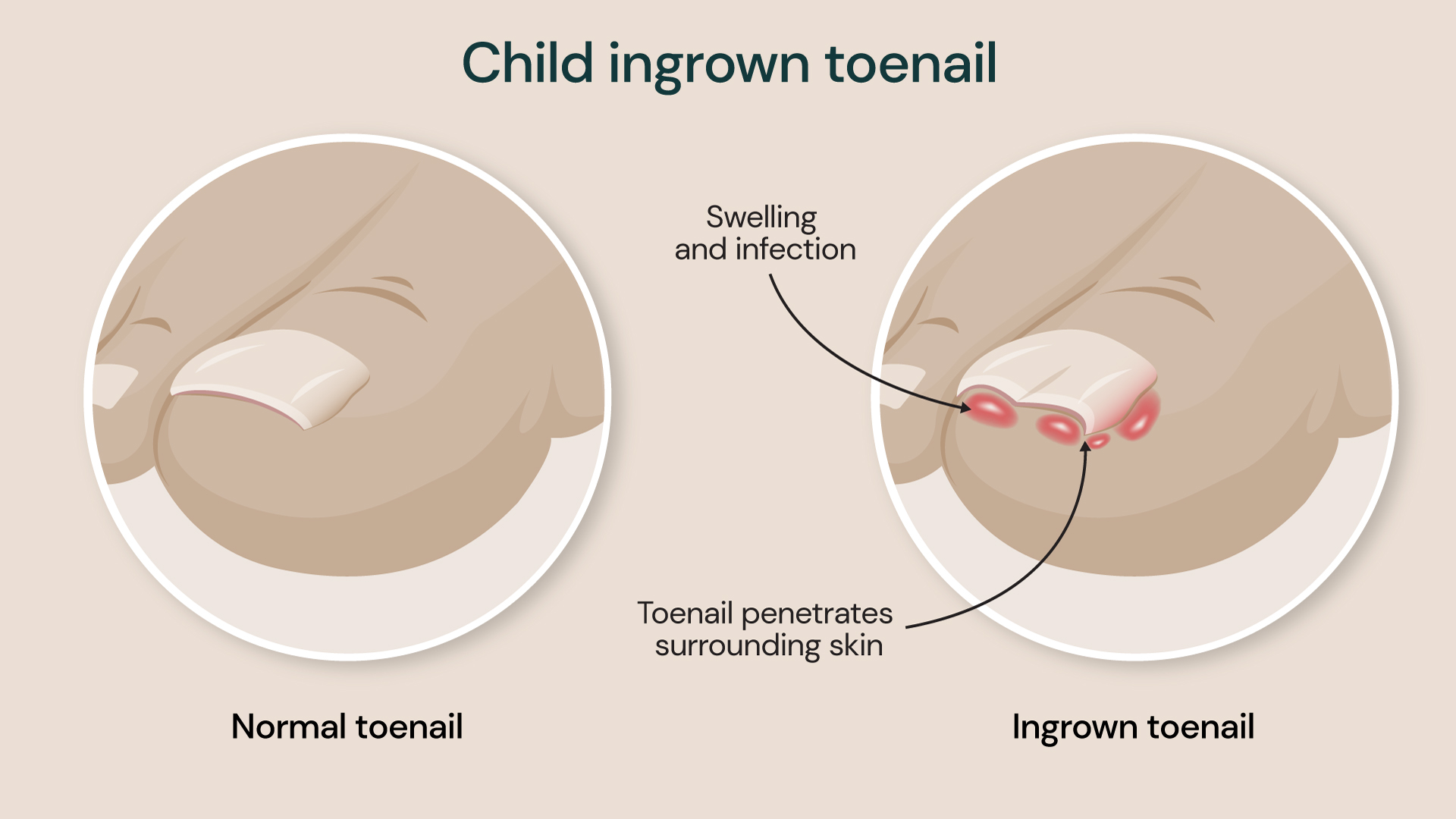
Ingrown toenails occur when the nail penetrates the surrounding skin of the toe
Generally, you can treat ingrown toenails at home. However, in severe cases, they may need surgical treatment to stop them returning.
If you would like to speak to one of our specialists about an assessment and treatment options for your child, get in touch with our team to arrange an appointment.
Types of ingrown toenail surgery
The 3 types of ingrown toenail surgery are partial, bilateral and total. In partial nail removal, the surgeon removes a tiny piece of the nail with a particular solution to stop it from growing back. The solution encourages the rest of the toenail to grow back normally.
Bilateral toenail removal is where the surgeon removes the nail from both sides of the affected toe and treats it to prevent it from growing back. In a total nail removal, the surgeon removes the entire toenail and treats it with the solution to stop it from returning. A total toenail removal means your child will no longer have a toenail on that toe.
What causes an ingrown toenail?
Ingrown toenails can occur for many reasons, but the most common are:
- cutting toenails too short
- cutting the edges
- wearing shoes that are too tight or narrow
- an injury, such as stubbing your toe
- the natural shape of the nail being curved at the sides or fanned
Why might ingrown toenail surgery be performed?
We might recommend that your child has ingrown toenail surgery if their ingrown toenail has not responded to other treatments. We’ll also advise surgery if your child’s symptoms interfere with their daily life and make it challenging for them to perform physical activity.
Who is suitable for ingrown toenail surgery?
Your child may be suitable for ingrown toenail surgery if:
- their ingrown toenail hasn’t responded to other treatments
- their symptoms are severe
- their toenail repeatedly become infected
We’ll discuss your child’s options during a consultation and inform you if we think surgery is the right course of treatment.
If you are concerned about your child’s ingrown toenail and would like to discuss treatment options with one of our paediatric plastic surgeons, contact our team to arrange an appointment.
Preparing for ingrown toenail surgery
Before your child’s ingrown toenail surgery, we’ll let you know of any preparations you must follow to support them before and after their treatment. We may also advise you to buy pain relief medications, such as paracetamol or ibuprofen, to give to them once they are home.
We’ll discuss any specific fasting your child must follow based on the type of anaesthetic they’ll have. We’ll cover your child’s toe with a dressing when they leave the hospital, so bring along open-toe footwear that won’t restrict their toe during the journey home.
What happens during ingrown toenail surgery?
Our team will either perform your child’s ingrown toenail surgery under general anaesthetic (so they’re asleep) or local anaesthetic (the area is numbed but your child will be awake). We typically use general anaesthetic when performing ingrown toenail removal surgery in children. This is because it helps prevent them from moving and keeps them safe.
Once the anaesthetic has worked, we’ll begin by carefully removing the affected part or the entire toenail, depending on the severity of your child’s case.
Having removed the affected part of the toenail, we may treat the area with a phenol solution or surgically remove sections. Phenol solution destroys the nail bed in the area where part of the nail was removed and prevents its return. However, the remaining toenail will continue to grow as normal – just not in the area where the solution was applied or where surgical removal happened.
If we need to remove the whole toenail, we may also remove the nail bed to prevent it from growing back.
How long does ingrown toenail surgery take?
Ingrown toenail surgery generally takes up to 1 hour to complete, but may take longer if more than one toenail needs treatment.
What happens after ingrown toenail surgery?
After their ingrown toenail surgery, we’ll take your child to the recovery room. Once they’re fully awake, we may then give them some pain relief medication.
Most children can go home on the day of their procedure but foot elevation is key to reduce swelling and pain, while also speeding up healing and recovery.
When your child is at home, they could experience some discomfort and swelling of their toe. However, we’ll tell you how to administer pain relief medicine to ease their discomfort.
What is the recovery time for ingrown toenail surgery in children?
It can take a few weeks for your child’s toe to heal completely. During this time, you must help them keep it clean and follow their surgeon’s instructions to minimise the risk of complications.
Your child must avoid baths and submerging their treated foot in water for up to 5 days. They may also find physical activity challenging for around 2 weeks. However, once their wound heals, they should be able to return to their normal activities.
If you would like to speak to one of our consultants about ingrown toenail surgery for your child, get in touch with our team to arrange an appointment at a time that suits you.
Benefits of ingrown toenail surgery
Our children’s plastic specialsits consider ingrown toenail surgery an effective treatment for children with ingrown toenails, and the results are usually successful.
The treatment can also offer many benefits, including:
- relief from pain and discomfort
- stopping the infection from returning
- preventing the toenail from growing inwards again
Our dedicated paediatric team can help if your child’s ingrown toenail causes them significant symptoms.
Risks of ingrown toenail surgery in children
As with any medical procedure, there are certain risks involved. Potential risks include infection and bleeding. However, our team takes every precaution and provides all the necessary information to help your child fully recover at home.
Alternative ingrown toenail treatments for children
You must take great care to minimise the risk of an ingrown toenail occurring again if your child does not require surgery. To do this effectively, make sure to cut their toenails straight across and do not leave sharp edges.
You should also ensure that their shoes are not too tight around their toes, which encourages the nails to press into the sides of the toe and become ingrown.
Speak to a paediatric specialist for your child’s ingrown toenail
If you would like to speak to one of our children’s plastic surgeons about the benefits and risks of the different types of ingrown toenail surgery, contact our team to arrange an appointment.
Reviewed regularly to reflect clinical best practice
Last reviewed: 02 July 2026
Locations
Our children's plastic surgery service is located at:
Discover our paediatric plastic surgeons