
Authors

Where is the gallbladder and what does it do?
The gallbladder is a small organ that stores bile, a digestive fluid made by your liver. It is located on the upper righthand side of your torso, just beneath your liver.
The bile concentrates in your gallbladder, and when you eat food – particularly fatty foods – it releases bile into your small intestine. Releasing bile helps your body to break down fats from the food you eat and to absorb fat-soluble vitamins, such as vitamins A, D, E and K.
While it does have a useful job, the gallbladder is an organ you can technically live without, as your liver still makes bile without it – it just manages the bile differently. If you need to have your gallbladder removed, the bile just drips into your intestine directly, instead of being stored in the gallbladder. You will be able to live a normal life following gallbladder removal, although you should be mindful of your intake of fatty foods as you may experience some digestive changes.
-
Cholecystectomy (gallbladder removal)
A cholecystectomy (gallbladder removal) treats symptoms or complications around gallstones in adults and children. Book a cholecystectomy consultation.
-
Peroral endoscopic myotomy (POEM)
A peroral endoscopic myotomy (POEM) procedure treats problems with the muscles in your oesophagus, like achalasia. Learn about the POEM procedure.
-
Hernia repair
Hernias usually develop in your abdomen. Without surgery, hernias can be dangerous. Learn about hernia repair.
What are common gallbladder problems?
There are several types of gallbladder issues you can have, ranging from common and easily treatable to more severe conditions requiring surgery.
“The gallbladder can become inflamed, infected or fill with gallstones, bringing uncomfortable symptoms including pain, nausea and vomiting. However, it is treatable with medication or, in more severe cases, gallbladder removal surgery, with our specialist team at St Thomas’ Hospital.” Mr Husam Ebied, consultant general and abdominal wall surgeon at St Thomas’ Hospital.
Our specialists can provide treatment for gallbladder conditions including:
Gallstones
Gallstones are a common problem affecting between 10-15% of adults in the UK. Gallstones are small deposits of cholesterol or pigment that form in the gallbladder, ranging in size from as small as a grain of rice to as large as a golf ball. Gallstones can block bile flow but can be symptomless, especially if they are small.

The gallbladder sits just below the liver, and can fill with gallstones which can result in unpleasant symptoms such as pain, nausea and vomiting.
Gallbladder inflammation
Gallbladder inflammation is usually caused by a gallstone blocking a duct, and this inflammation can be either long-term or sudden (acute). Symptoms can include severe, constant pain with the gallbladder area feeling tender to touch, fever and, in some cases, signs of infection. Gallbladder inflammation often needs urgent treatment.
Bile duct stones
Bile duct stones are gallstones that have moved into the bile ducts, blocking bile flow from the liver. This causes a build-up of bile in the liver, leading to jaundice (yellowing of your skin and eyes), as well as dark urine, pale-coloured stools, and severe pain in the gallbladder area.
Gallbladder dysfunction
If the gallbladder doesn’t empty properly, you might experience symptoms such as bloating, nausea and ongoing pain after eating. Gallbladder dysfunction can occur without you having any gallstones. After a thorough evaluation, our consultant may recommend lifestyle changes, pain management, or medications to help alleviate your symptoms. In select cases, they may suggest gallbladder surgery.
Gallbladder polyps
Polyps, also known as growths on the gallbladder lining, are often small and harmless and tend not to cause symptoms unless they’re larger in size. If you start to experience pain in the gallbladder area, our specialists can carry out a scan to check for polyps, and can monitor them for any signs of growth.
Gallbladder cancer
Gallbladder cancer is very rare, but it’s often discovered late because its symptoms can mimic those of other health issues. Symptoms include persistent pain in the upper right abdomen, where the gallbladder is located, weight loss and jaundice. If you experience any of these symptoms, don’t hesitate to contact our specialists for an assessment.
What are the symptoms of gallbladder problems?
The symptoms you experience in relation to gallbladder problems will vary depending on the specific gallbladder condition you are experiencing. If you have symptoms that recur over a long period of time and that affect your everyday life, gallbladder removal surgery is usually recommended.
You should be aware of recurring symptoms including:
- fever
- indigestion, nausea and vomiting
- pain in the upper right abdomen (often triggered after fatty foods)
- yellowing of the eyes or skin (jaundice)
Jaundice indicates that the bile flow is blocked, while a fever usually occurs when the gallbladder is inflamed. Symptoms such as indigestion, nausea, vomiting and severe pain can come with several types of gallbladder issues, including gallstones, inflammation, bile duct stones, polyps or infection, so you will require further investigations to determine the cause of your symptoms.
“If you have fever or severe pain or yellow colour of eye and skin, you should seek urgent medical attention,” shares Mr Ebied.
If you have experienced any of the symptoms of gallbladder issues, don’t hesitate to contact our customer care team to book a consultation with our gallbladder experts.
What treatments are available for gallbladder problems?
Which treatment is best for your gallbladder problems depends on the severity of your condition and the underlying cause.
Mild symptoms
In cases of gallstones without severe symptoms, it may be that no immediate treatment is required. If this is the case, our consultants may recommend a watchful waiting approach to monitor the situation and only proceed to treatment if things worsen. If you have mild symptoms, treatment typically includes pain relief, anti-nausea medication, and dietary adjustments, such as sticking to a low-fat diet.
Bile duct blockage
“In cases where gallstones block your bile ducts, we may suggest a procedure called endoscopic retrograde cholangiopancreatography (ERCP) to remove them,” explains Mr Ebied. An ERCP allows bile to drain into the small intestine.
You may then require a keyhole procedure to remove gallbladder (also called cholecystectomy).
Gallbladder infections
Our specialists usually treat gallbladder infections with antibiotics and sometimes they might recommend drainage procedures if surgery is not immediately possible. If you have recurrent symptoms, complications, or gallbladder dysfunction, the best treatment is usually gallbladder removal surgery, which permanently resolves the issue.
What happens in gallbladder removal surgery?
Gallbladder removal surgery involves the removal of your gallbladder in a keyhole procedure while you’re under general anaesthetic. Our surgeon will make several small incisions in your upper right abdomen, around where your gallbladder is located, and will insert small instruments and a video camera into the area to help them perform the procedure.
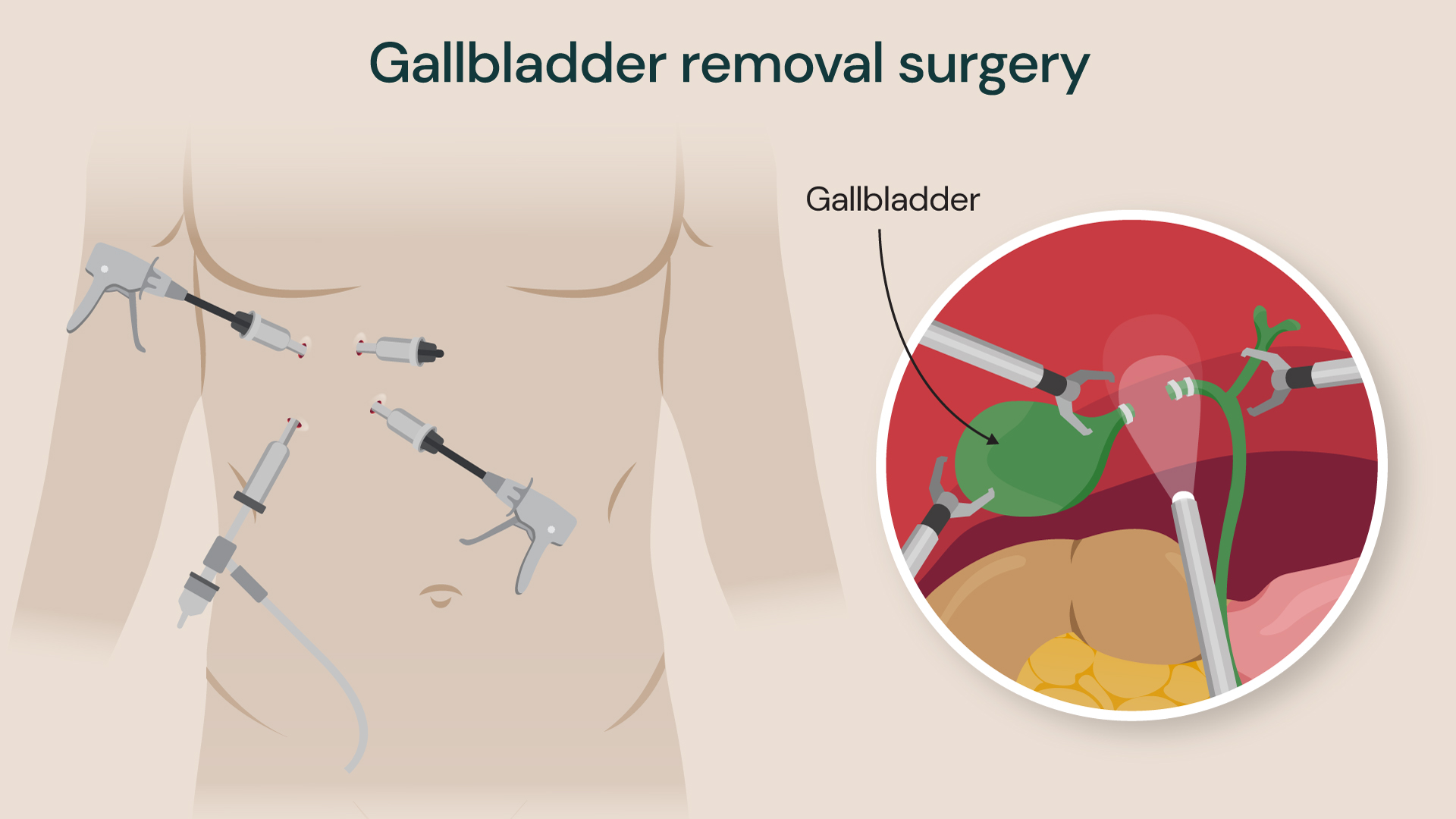
Illustration of laparoscopic gallbladder removal surgery (cholecystectomy), where specialised instruments are inserted through small incisions in the abdomen to detach and remove the gallbladder safely.
What happens in gallbladder removal surgery?
Gallbladder removal surgery involves the removal of your gallbladder in a keyhole procedure while you’re under general anaesthetic. Our surgeon will make several small incisions in your upper right abdomen, around where your gallbladder is located, and will insert small instruments and a video camera into the area to help them perform the procedure.
The camera shows our surgeon real-time images of your gallbladder, and this minimally invasive technique allows us to remove your gallbladder without the need to make a large incision. This reduces scarring, improves your pain levels and enhances your recovery, and generally means you can go home sooner after your surgery.
“Gallbladder removal surgery usually takes 1-2 hours to complete and, while it’s very rare that we would need to convert to open surgery in the case of complications, it’s important to be aware that this is a possibility,” explains Mr Husam Ebied. “At St Thomas’ Hospital, we have both great NHS and private facilities, and our specialists have the expertise to perform the most complex of operations with minimal risk.”
As with any procedure, gallbladder removal surgery does come with some possible rare complications. These can include blood clots, infection, injury to surrounding structures, bile leaking into your stomach, and a small chance of gallstones being left in your bile duct.
There is also a very rare possibility of needing to convert from keyhole surgery to open surgery. Our consultant will explain these risks to you thoroughly so that you will be well-informed ahead of your procedure.
What is the recovery period after gallbladder removal surgery?
Our gastrointestinal specialists will advise how long your recovery should take based on your individual condition, but most patients return to their daily activities within about 2 weeks. Some people may experience bloating and diarrhoea as the body adjusts to not having a gallbladder, but this usually only lasts for a few weeks before resolving itself.
Get in touch
If you have symptoms of a gallbladder problem and would like to see our specialists for an appointment, don’t hesitate to get in touch with our customer care team who can help you book an initial consultation to discuss your options for gallbladder removal.
Reviewed regularly to reflect clinical best practice
Last reviewed: 08 May 2026